8 Fascinating Facts About Ancient Rome
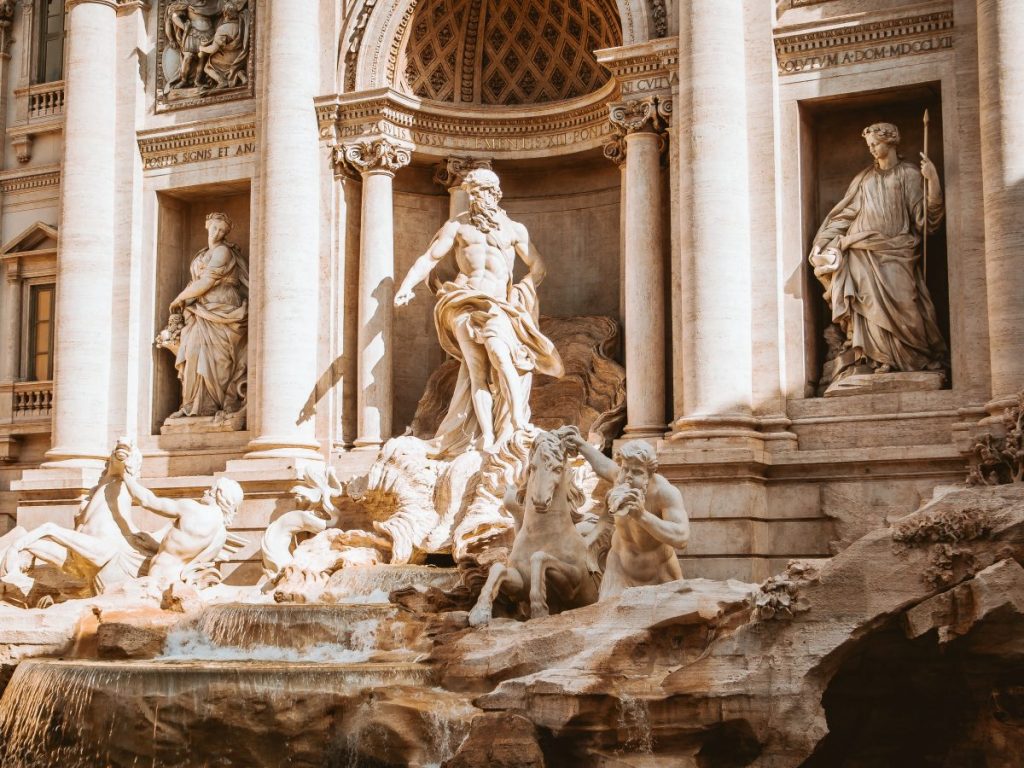
Ancient Rome, an empire that once expanded across three continents, captivates us with its might, ingenuity, and culture. This civilization, which sprang from a small Latin village to rule the known world, has left an indelible mark on our modern society. From inventing concrete to developing the legal system that serves as the foundation for Western law today, the Romans were true pioneers. The legacy of Ancient Rome has not faded with time, and here are 8 fascinating facts to prove it.
1. The City on Seven Hills
Rome is famously known as the “City on Seven Hills.” The seven hills—Aventine, Caelian, Capitoline, Esquiline, Palatine, Quirinal, and Viminal—were the cradle of Roman civilization. Here, communities formed, merging and growing into the Rome we know today. The Palatine hill is of particular significance as it is considered the birthplace of Rome and is steeped in mythology, being the location where the she-wolf famously nursed Rome’s legendary founder, Romulus.
2. The Republic, Not a Monarchy
Contrary to popular belief, Rome was not always ruled by emperors. In fact, the Roman Republic existed for about five centuries before transforming into an empire in 27 BC when Julius Caesar’s adopted son Octavian became Emperor Augustus. During the time of the Republic, Rome was governed by two consuls, elected by the people to serve for one year. This unique political system laid the groundwork for modern representative democracy. The Republic also saw the rise of great leaders such as Cincinnatus, who famously relinquished his power after saving Rome from invasion.
3. The Roman Numerals

One of the most significant contributions of Ancient Rome to modern civilization is the Roman numeral system. This unique numbering system, which utilizes the letters I, V, X, L, C, D, and M to represent numbers, was used for everything from marking dates on monuments to keeping track of financial transactions.
Even today, Roman numerals are prevalent in various aspects of our lives. Namely, whether you decide to research the UNRV site and find out which Super Bowls have been played, or learn your birth date in Roman numerals, this ancient system is still relevant today. The use of Roman numerals also highlights the lasting impact of Ancient Rome on our language and culture.
4. The Colosseum and Gladiators
The Colosseum stands as a testament to Ancient Rome’s engineering prowess and its love for grand entertainment. This world-famous amphitheater, completed in AD 80, held up to 50,000 spectators and hosted a variety of events. The most iconic were the gladiatorial games. These brutal battles between men and beasts captivated Roman society and have become synonymous with Ancient Rome. However, what many people may not know is that these spectacles also served as a way for emperors to gain favor with the public and assert their power.
5. Aqueducts and Roads
The Romans were skilled engineers who revolutionized the way we build structures. They developed an advanced system of roads, which are still in use today in some parts of Europe and built impressive aqueducts to supply water to their cities. The iconic Pont du Gard aqueduct in France, with its three tiers of arches spanning over 50 kilometers, is a prime example of Roman engineering. These feats of engineering not only allowed the Romans to expand their empire but also facilitated trade and communication within it.
6. The Spread of Christianity
Ancient Rome was a polytheistic society, worshiping many gods and goddesses. However, in the early 4th century, Emperor Constantine the Great converted to Christianity and made it a legal religion in Rome. This marked a significant turning point in history, as Christianity would go on to become the dominant religion of the Western world. The influence of Christianity can still be seen in many aspects of our lives today, from holidays like Christmas and Easter to the spread of religious art and architecture.
7. Latin, the Language of Scholars
Latin was the official language of Ancient Rome, and it spread throughout the empire as its borders expanded. This led to Latin becoming the lingua franca, or common language, of scholars and academics in the Western world for centuries. The legacy of Latin is evident in various fields, from medicine to law, where many terms and phrases are still used in their original Latin form. For example, “et cetera” is derived from the Latin phrase “et cetera,” meaning “and the rest,” and is often abbreviated as “etc.” in English.
8. Legacy of Art and Architecture
The Romans were not only skilled engineers but also talented artists and architects. From intricate mosaics to imposing structures like the Pantheon, their art and architecture still inspire awe today. The Roman style of construction had a significant influence on Western architecture, with columns and arches becoming signature elements in buildings such as government offices and churches. Even their artwork continues to be revered, with many famous sculptures and paintings from Ancient Rome displayed in museums around the world.
Nevertheless, the legacy of Ancient Rome continues to shape our modern world in countless ways. From language and engineering to politics and religion, this once-great empire has left a lasting impact on our society. As we continue to marvel at the achievements of Ancient Rome, it is clear that it will forever hold a special place in history. Knowing how to research Ancient Rome is not enough; we must also continue to appreciate and learn from its fascinating past. Keeping the legacy of Ancient Rome alive is not just our responsibility but also a privilege that allows us to connect with our rich cultural heritage.