House bills passed to Senate for consideration
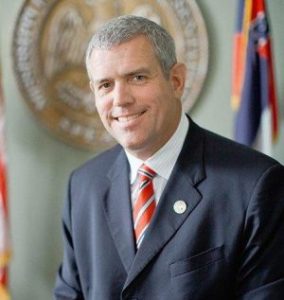
By Speaker of the House Philip Gunn
This week begins the eighth week of the 2022 Legislative Session. All general bills that originated in the Mississippi House of Representatives and passed with a floor vote have now been sent to the Senate for consideration on that end of the Capitol. Of the House bills that survived passage to the Senate, I would like to highlight some of the critical pieces of legislation.
House Concurrent Resolution 39 addresses the flaws within our state’s initiative process. HC 39 proposes an amendment to the Mississippi Constitution to create a new ballot initiative process. The former process was nullified in May 2021 by the Mississippi Supreme Court when it struck down Initiative 65, or the medical marijuana initiative. Under the new process, Mississippi voters could change current statutes or introduce new laws by a ballot initiative. The people need to have a voice, another avenue outside of the legislature to demonstrate their will on certain matters of importance to a significant majority of the state population. The former process had issues, mainly because any initiative passed would be put into the Mississippi Constitution. We believe placement in the state statute, or law, is more appropriate and beneficial to Mississippians as a whole. After several failed amendments, HC 39 passed in the House of Representatives by a vote of 92-26.
House Bill 1029 would create the Mississippi Broadband Accessibility Act. The act establishes the Mississippi Broadband Commission, coordinating all broadband expansion efforts in the state and administering all federal broadband expansion programs. The commission would be compromised of seven members: three appointed by the Governor and four appointed by the Lieutenant Governor, two of those being recommended by the Speaker of the House. Some of the funds in the bill come from the American Rescue Plan Act and the Infrastructure Investment and Jobs Act, both passed by Congress in 2021. House Bill 1029 passed by a vote of 111-6.
Several other bills introduced in the House would also deal with federal funds from the American Rescue Plan Act. For example, House Bill 1421 would establish a grant program for rural water associations; House Bill 1425 would establish a grant program to assist in wastewater and drinking water infrastructure programs; and House Bill 1427 would provide a premium to law enforcement and firefighters across the state.
House Bill 884 would establish the Accelerate Mississippi Scholarship Program. These scholarships would be available to eligible students for dual-credit and dual-enrollment courses and career and technical education courses that lead to industry certification—the bill passed by a vote of 114-5 and will now go through the process in the Senate.
Several bills this session dealt with the elections process. Among these was House Bill 1510, which revised provisions related to elections’ integrity, including authorizing the Secretary of State to audit local elections. After much discussion, debate, and several amendments, the bill passed 75-43.
Once general bills were out of the way, we began working on appropriations and revenue bills. With appropriation bills determining how much money is appropriated to various state agencies, the House is responsible for looking at the preliminary budgets of approximately fifty state agencies, including the Departments of Education, Transportation, Insurance, Health, Medicaid, and Human Services. These bills represent half of the state’s budget; the other half is currently being considered by the Senate and will be sent to the House for consideration later in the legislative session.
Budgets include reverse repealers, a clause that ensures that a bill cannot become law before going to a conference committee for further revisions. With reverse repealers in place, many appropriations bills were voted on in a block to help speed up the process, thus permitting us to work through all the legislation on the House Calendar more efficiently.
In the coming weeks of this legislative session, we will begin considering general bills that passed through the Senate, finalizing appropriations and revenue bills, and appropriating more of the funds from the American Rescue Plan Act and the Infrastructure Investment and Jobs Act.