Happy Gardeners learn about tactics for climate change issues
Special to The Clinton Courier
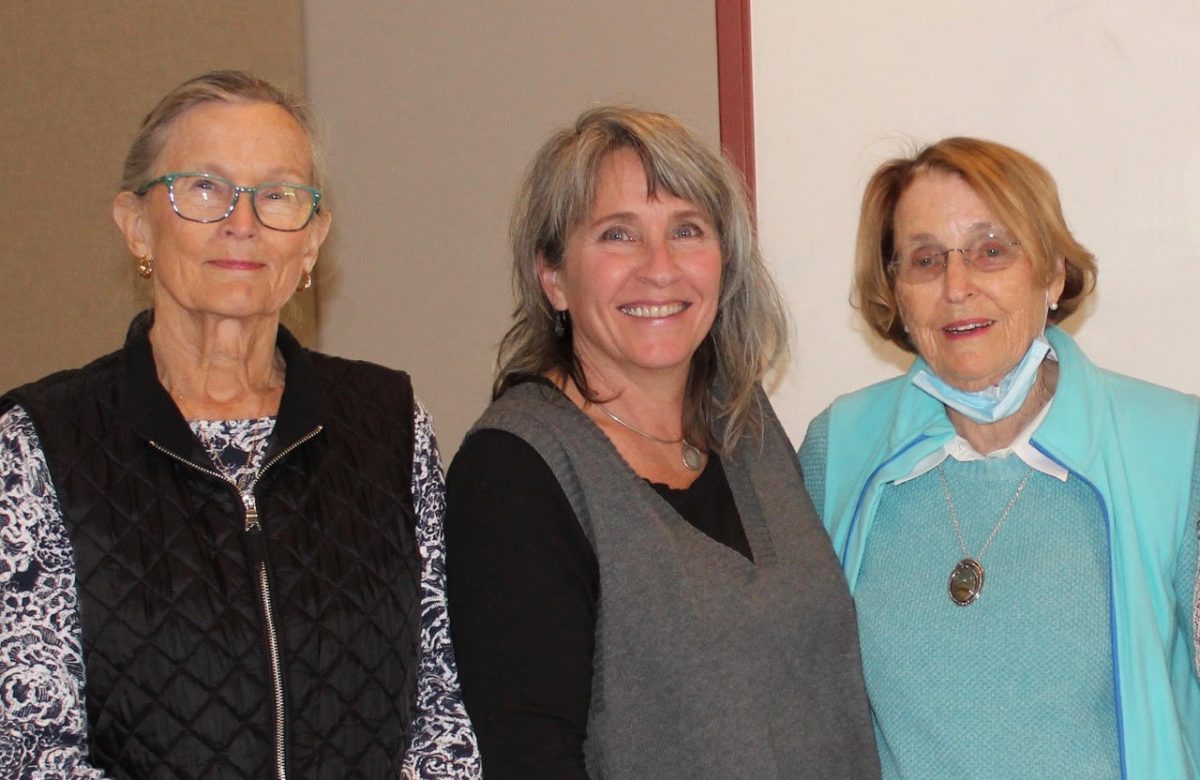
Climate change challenges with ways to counteract its impact was the subject for Happy Gardeners in January. Pictured (l to r) are Sandy McGuire, hostess for the meeting with Diane Eubanks (not pictured); Michelle Cheroni, featured speaker; and Barbara Barnett, who introduced the speaker, her niece, to the membership.
As the topic of climate change continues to appear in headlines and discussions, its effects on local lawns and gardens highlighted a recent presentation at the Happy Gardeners Club meeting. Retired teacher Michelle Cheroni of Hazlehurst shared information about climate change and the challenge for local gardeners. Enhancing the presentation with slides of colorful flowers and plants, she described herself as a “retired rehiree” who enjoys working with Mississippi State’s Mississippi Agricultural and Forestry Experiment Station’s Truck Crops Branch.
“The impact of climate change shows up in a variety of ways for gardeners, one being unpredictable growing seasons,” Cheroni said. She noted that recent days of twenty-degree temperatures do not negate the fact of climate change, which affects native plants and neighborhood wildlife, such as butterflies, birds and bees.
Climate change encompasses global warming, which is the long-term warming of the planet and only one aspect of change, with the broader range of changes bringing shifts in flower and plant blooming times, rising sea levels, shrinking mountain glaciers and increasing ice melts.
Carbon pollution represents a growing threat by bringing invasive plants, pests and diseases. Stewards of the environment are urged to continue support of stopping climate change and protecting wildlife and habitats in their areas.
Cheroni discussed a variety of methods for counteracting warmer winters, heavy rains and droughts, including reduction of energy consumption and the use of gas tools, opting instead for battery-powered tools. Home gardeners can plant native species in gardens, reduce water consumption, mulch, compost, collect rain water in barrels and plant trees. Planting trees serves to absorb and store carbon pollution from the atmosphere, and shade trees planted near homes can reduce energy for cooling in the summer. Cheroni pointed out that problems arise as warmth causes early blooming and heavy rains saturate the ground, causing uprooting of trees.
Members received several Mississippi State University Extension Service publications for gardeners and the National Wildlife Federation’s publication, “Backyard Solutions to Climate Change.”
Cheroni retired after a twenty-five-year teaching career in special education and as student services coordinator.