Happy Gardeners Club learns about honeybees
Special to The Clinton Courier
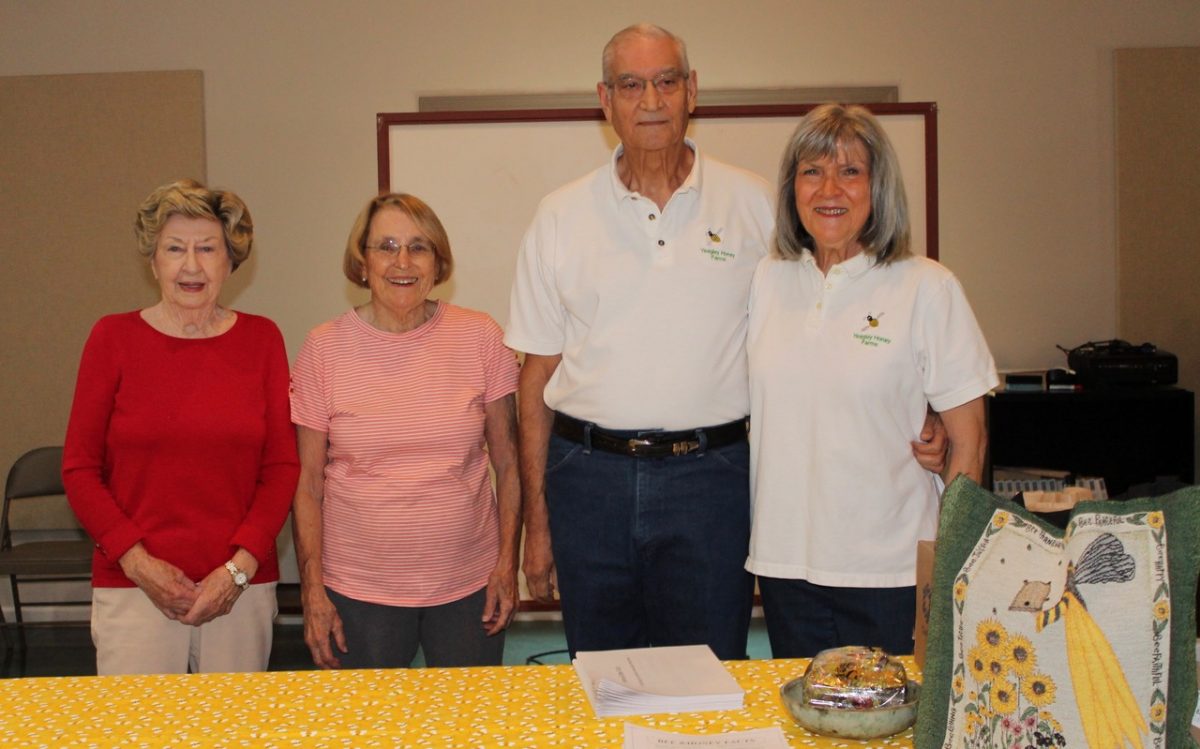
Happy Gardener members heard facts about the honeybee, Mississippi’s official state insect, at the September 26 meeting, when beekeepers Cheryl and Stan Yeagley shared facts about their life with bees.
Cheryl Yeagley, a member of the Happy Gardeners club, introduced her husband, Stan Yeagley, and showed an array of materials that included packets of facts on bees and honey, honey candies, and a collection of books about bees and their production of the sweet substance that Stan Yeagley says has been called “God’s gift to man.”
Stan’s review of the magical world of honeybees, their habits, their importance in the world of nature, and the logistics of raising them was a riveting subject for the gardeners’ first meeting of the year. Stan, who is retired from the Department of Finance and Administration, is often met with the question of not how he is faring, but more of, “How are the bees?”
The Yeagley fascination with the honeybee was obvious, as facts were shared that encompassed history, science and nutrition. The only insect that makes food for human consumption, bees may travel three miles from the hive when foraging for pollen and nectar.
Bees have existed in their current form for at least thirty million years. Cave paintings in Spain over 8,000 years old show humans gathering honey from hives. One third of the human diet can be contributed directly or indirectly to honeybee pollination of fruits, berries, vegetables, peanuts and wild plants.
“The average bee produces just a twelfth of a teaspoon of honey in its lifetime and lives about eight weeks in the summer,” Stan said. Narrowing down a presentation on bees was challenging, he admitted, with one particular volume on bees having over a thousand pages. He admits that maintaining the bees is strenuous work involving handling heavy boxes. He recalls that his grandfather was also into the world of bees many years ago. The Yeagleys have five hives going into the fall and winter months, when the bees cluster into a ball for warmth.
With later dividing or splitting, the five could evolve into as many as fifteen hives next year.
Stan’s description of the makeup and activity of a bee colony detailed the one queen bee, several hundred drones or males, and 60,000 to 80,000 workers, all female. To make the special potion which contains vitamins and minerals, it takes about 30,000 trips and 50,000 miles of flying to make one pound. In an hour’s trip, a worker bee may visit fifty flowers. Bees fly free, of course, and cannot be contained, somewhat of a disadvantage for keepers not knowing just where the bees may be.
The many different flavors and colors of honey reflect the many flowers bees visit to make the honey. The season for honeybee brood rearing in the state is from February to October or November and represents the most active foraging time for the bees seeking a variety of flowering trees, shrubs, flowers and herbs. Herbs such as basil, lavender, oregano, thyme, rosemary and sage are good for the flying honey makers as well as dandelion, clover, goldenrod and privet. Not so much are the Carolina jessamine, rhododendrons, angel trumpet and oleander. Stan explained that honey doesn’t spoil from bacteria but will ferment if the moisture content is above nineteen percent. Honey discovered in ancient tombs was still edible, he added.
Each hive has a colony with the queen bee, the one setting the tempo of the hive. The queen controls the population of the hive, laying fertilized female eggs or unfertilized male ones. The smaller female bees that emerge are worker bees, collecting honey and maintaining the hive, while the larger males are drones. The average queen bee can live from two to five years and can lay 2,000 eggs in seven days.
Discussing the state’s commercial beekeeping production, Stan pointed out that the top five counties in honey products are Hinds, Jackson, Tallahatchie, Yazoo and Coahoma. Net annual income of the commercial beekeepers from production to sale of bees and queens and pollination fees is somewhere around $2.1 to $3.1 million. A cause for alarm in the beekeeping world is the harm that pesticides and herbicides can do, contributing to a decline of the honeybee population.
Stan dons the necessary garb when working with the hives. He admits to having been stung more than a few times, smiling as he admits that a bee can uncannily find any small opening in his suit for a sting. He keeps an antihistamine handy, just in case.