Mississippi: Leading the Way with Child Advocacy Studies
Magnolia state becomes the first to implement its fourth CAST University
Children’s Advocacy Centers of Mississippi (CACM) announced today Mississippi has officially become the first state to implement nationally recognized curriculum Child Advocacy Studies (CAST) in four universities. This is twice the amount of CAST Universities than any other state.
U.S. News & World Report released their overall Best State rankings in February of this year, which show how each of the 50 U.S. states ranks in 68 metrics across seven categories – Health Care, Education, Infrastructure, Crime & Corrections, Opportunity, Economy and Government. Mississippi came out with an overall ranking of 49, ranking 45th or above in all categories but Crime & Corrections. Mississippi’s reputation when it comes to national metrics is quite poor, to put it mildly, so the groundbreaking work CACM is doing throughout the state to improve outcomes and tackle child abuse head-on is both refreshing and necessary.
The purpose of CAST is to train students how to effectively address child abuse and neglect in real world applications through multidisciplinary team coordination. Successful completion of these courses will enable students to identify child abuse and neglect, report child maltreatment appropriately, and become a viable community team member in the prevention and remediation of child maltreatment.
“The life of a child depends on the response of professionals who intersect with the boy or girl,” said Victor Vieth, Senior Director and Founder of the Gundersen National Child Protection Training Center. “When children fall through the system or continue to be abused – in some cases die – it’s almost always the case that there were multiple professionals who just missed the mark.”
The CAST project began when Attorney General Jim Hood was named as the President of the National Association of Attorneys General. After hearing Victor Vieth speak, he came back and asked CACM to come up with a plan to help. “I knew there was more we could do for these children,” said General Hood. “Big problems require even bigger solutions, and CAST is that solution.”
CAST was created because undergraduate and graduate programs today are unprepared to educate students on how to address child maltreatment and are under-preparing students to work in their prospective fields – from criminal justice, to education, social work, nursing, psychology, law, medicine, seminary, sociology, human sciences and beyond.
“With over 6,000 children in foster care today, Mississippi is on track to experience the largest year yet for children in custody. CAST aims to educate professionals working with children and families before they exit into the workforce,” said Karla Tye, CACM Executive Director. “If social work professionals are adequately trained to proactively work with parents in their time of need, they can push for more reasonable efforts and help mold receptive communities that respond with services other than foster care.”
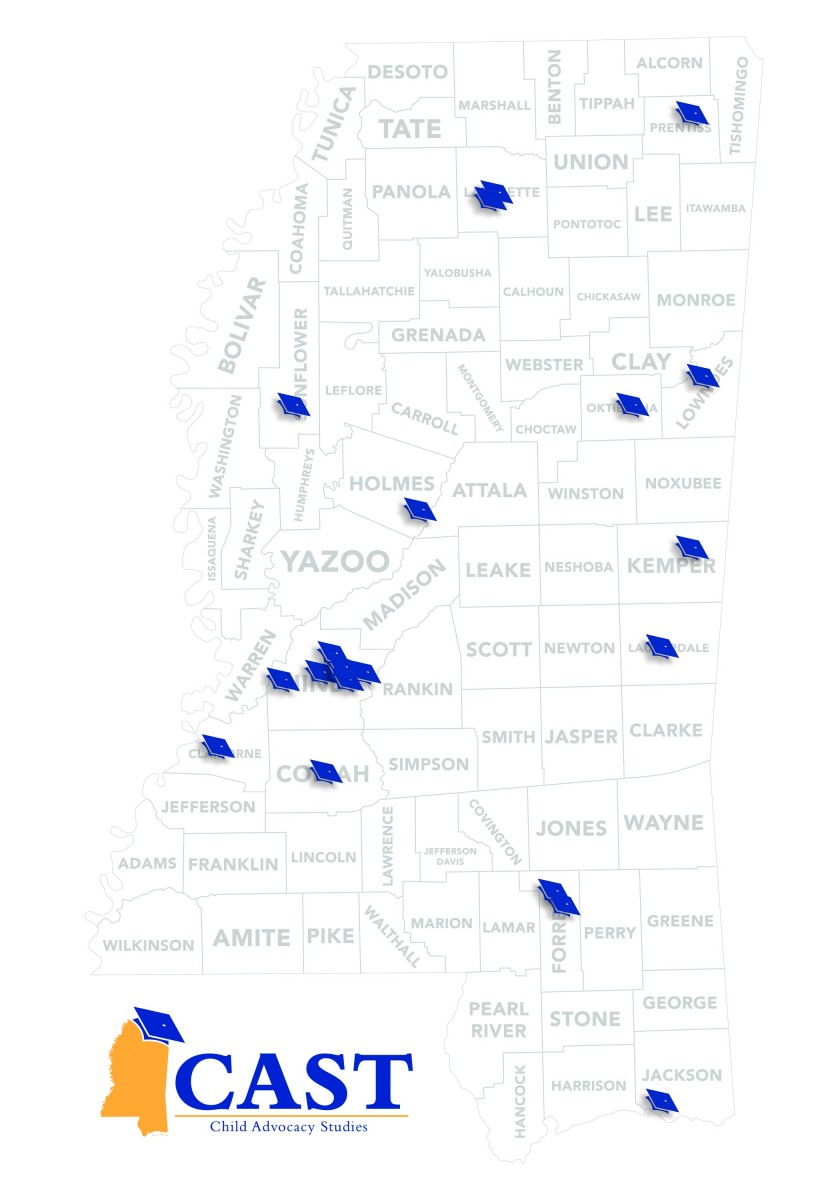
Although CAST has been targeted at institutions throughout the country, no state had attempted to make a systemic change by encouraging all institutions in a state to develop CAST simultaneously. The Children’s Advocacy Centers of Mississippi, Mississippi Attorney General’s Office, Mississippi Department of Human Services, the Gundersen National Training Center and Silent Tears collaborated to implement the project in August 2015.
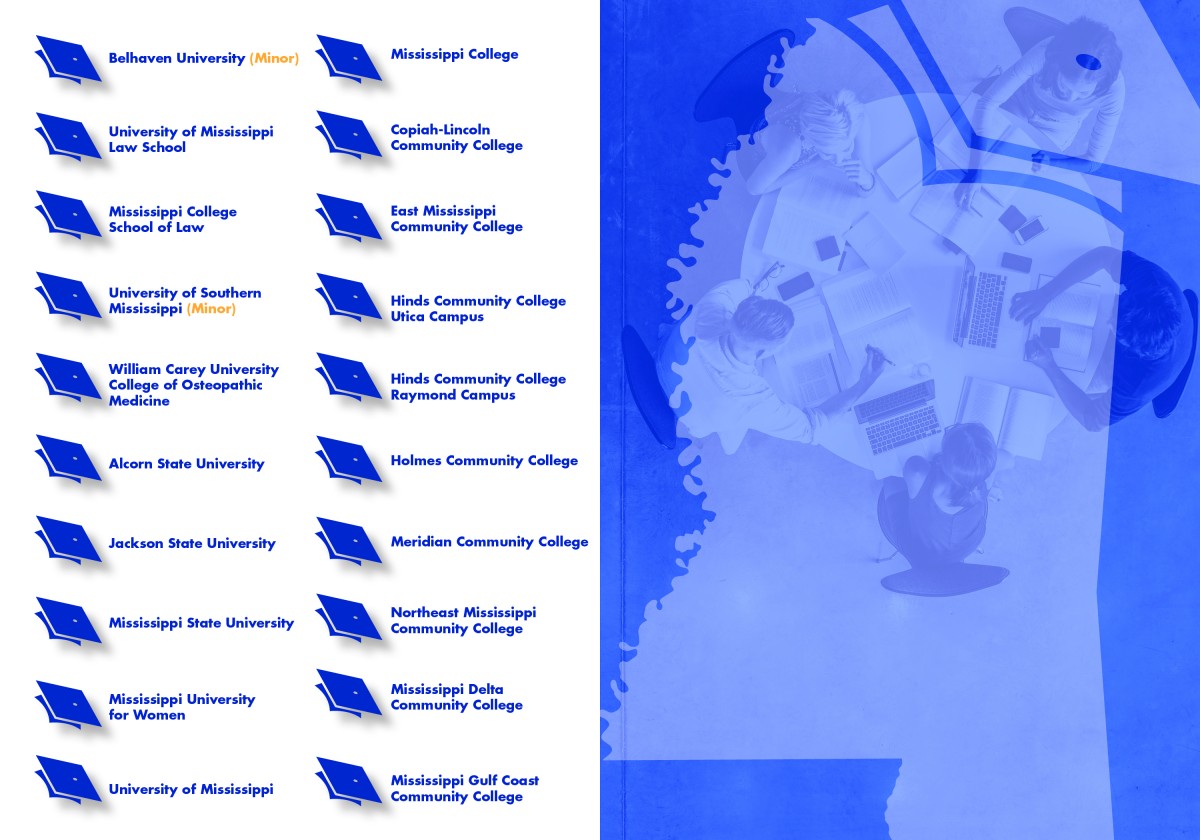
There are currently 19 actively participating community colleges, public colleges and private colleges in the state. Over 70 percent of Mississippi institutions of higher learning are actively working to implement CAST. The University of Southern Mississippi, Belhaven University, William Carey University College of Osteopathic Medicine (WCUCOM) and The University of Mississippi School of Law are the first four to successfully implement the entire program. WCUCOM is only the second medical school in the country to offer CAST.
To learn more about CACM’s CAST efforts and updates, you can visit childadvocacyms.org/cast.