
The Most Basic Equipment You Need for Music Engineering

Listening to and enjoying music can evolve to a passion that drives you to create your own sound. But you’ll soon realize the complexities involved in designing sound, especially if you’re still building your first home studio or buying important equipment. The good news is you can always start by taking it slow, gradually investing in one or two pieces at a time until you find yourself with a formidable home studio. To help you hit the ground running, we’ve collected a list of the most essential tools that you need to start your music engineering journey.
Computer
Many people may have a powerful enough computer that they can easily use in their music design endeavors. But for those who are stuck with an old laptop or a weak computer, it’s important to know that it’s one of the most essential equipment that you’ll need if you’re thinking about pursuing any form of music production.
If you’re buying a new laptop, it’s hard to go wrong with a Mac, especially with the unique selection of digital audio workstations (DAW) available. If your budget doesn’t allow you to purchase a Mac, you can either upgrade your old computer or opt for a budget-friendly Windows computer that can keep things running until it’s time for an upgrade.
Any high-quality DAW offers you different connection features for input and output, which is important for syncing your equipment together, as well as with a sound effects bundle so you can count with a huge library of options for your project.
Studio Monitors
High-quality production speakers are known as studio monitors because they reflect the sound generated by the computer or mixer exactly as it’s intended to be heard. They are more expensive than regular speakers because they use unique materials and designs to get as many details as possible from the sounds being played. The good news is that they still aren’t that expensive, and you can easily find a pair of good monitors for almost any budget.
If you’re on the move or like to have portable monitors with you, you can opt for headphone monitors that provide you with necessary isolation and sound quality in gigs or home studios. You should try to collect more info about the differences between the various types in the market to find something suitable. You can add a sound isolation pad to ensure that the surface the studio monitors are placed on doesn’t impact the quality of sound you’re hearing.
Audio Interface
The audio interface is a piece of hardware that allows your computer to convert signals from analog to digital. The audio interface is the middleman in the process of recording between a microphone and a computer. You will also get to connect the computer to your speaker to hear the sounds on a higher quality medium. The audio interface can go back and forth between analog and digital signals to aid your computer in the processing of data.
There are a lot of audio interfaces in the market, but you may not need to buy expensive ones if you’re not planning on recording anything through the microphone. It’s always easier to upgrade your sound card if you’ve started with a basic one.
Digital Audio Workstation
A DAW is a piece of software that has made it much easier for sound engineers and music producers to produce a versatile range of musical motions with only a few clicks. Even though DAWs can be complex at first due to its relatively challenging learning curve, there are a dozen kinds and there is no such thing as the best DAW objectively; you’ll find many professionals recommending that settling on a type shouldn’t be a problem because they’ll all do the same job at one point or another.
You can explore your preferences by reading reviews by others to try to find the most beginner-friendly DAW that can get you on the right track. There are also plenty of tutorials and tips for music production available online, so you can easily start on a project and if you’re stuck, some help is never too far away. With that being said, the best way to learn your DAW will be to experiment with different settings and sound design techniques. Any high-qualityDAW offers you different connection features for input and output, which is important for syncing your equipment together.
Midi Controller
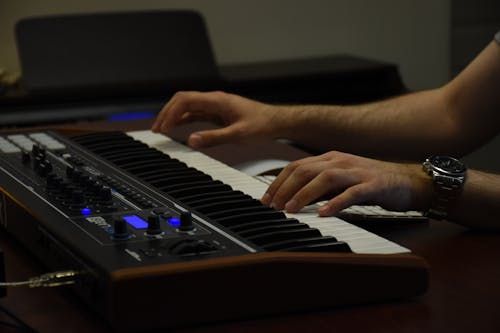
MIDI controllers are an important step in any music engineer’s career. While the scope or range of MIDI prices is huge, you don’t really have to spend a lot of money to get a MIDI controller that can do the exact job you want it to do.
These keyboards can come packed with features like tuning knobs and semi-weighted keys, while others can be quite minimal in their representation of a piano. Check out a lightweight keyboard controller to help you turn your talent into professional-sounding music. Try to listen to your gut more when you’re choosing a MIDI controller because you’ll want to be as comfortable as possible with it.
Fortunately, music production has gotten easier over the years thanks to the integration of technology into the whole process, making it simpler and less resource-intensive. But this doesn’t mean that you don’t need to invest in the initial equipment that will be used to create music, whether it is software or hardware.
See: The Ultimate Beginner’s Guide to Music Sampling
See: DJs Need These Things to Help Mix Music Seamlessly


