Contract awarded for sewage treatment plant improvements
By Randy Bell
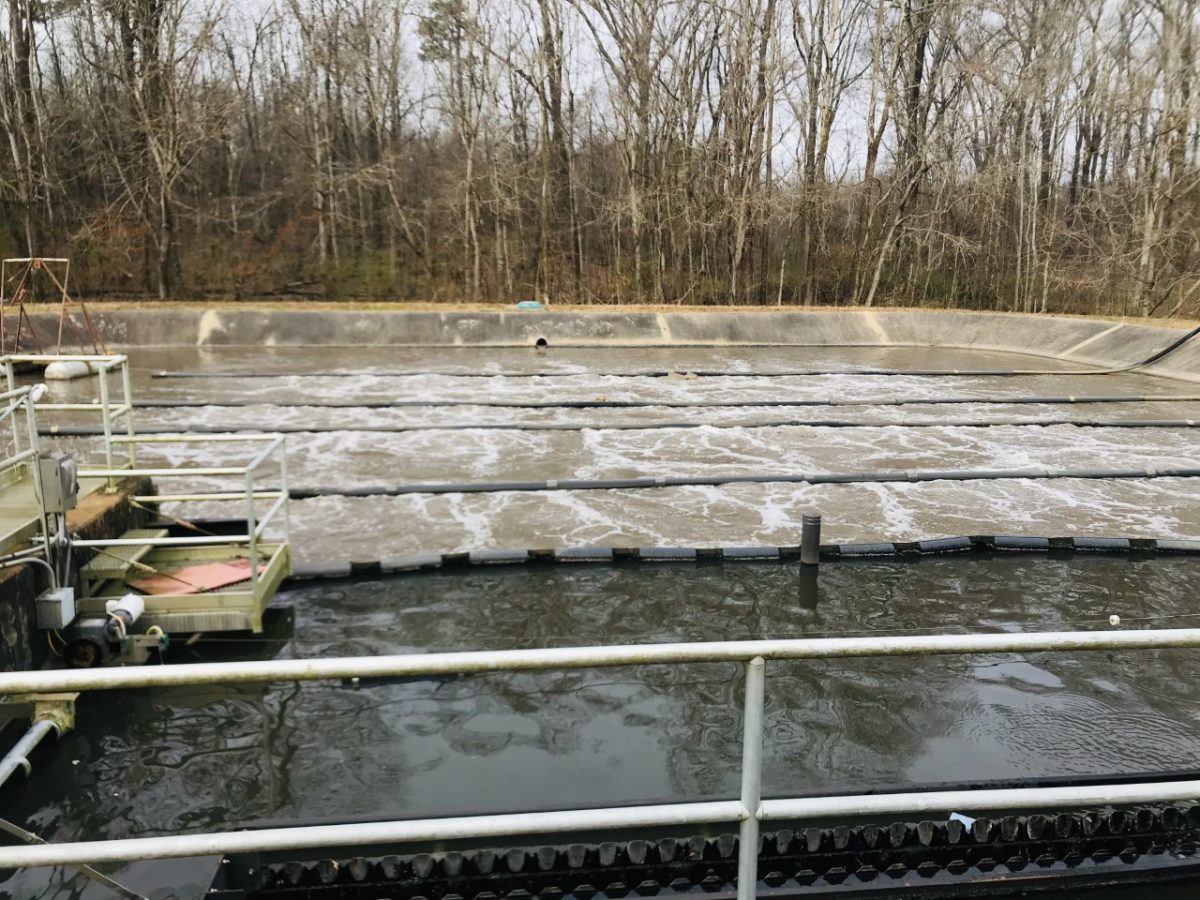
The City of Clinton has taken another step to increase its sewage treatment capabilities, awarding a contract for almost $5 million to Hemphill Construction Company for improvements at the Lovett Wastewater Treatment Facility—a piece of what City Consulting Engineer Greg Gearhart calls the “jigsaw puzzle” Clinton is trying to assemble to handle its future needs.
Gearhart told the Board of Aldermen at its January 17 meeting this was the “long-awaited” bid to upgrade and expand the treatment plant, allowing it to accommodate the anticipated demand at the Continental Tire plant while supporting continued residential development in north Clinton.
“It does two things,” Gearhart says. “It roughly doubles the capacity of [the treatment plant] to 500,000 gallons a day.” Additionally, he says technology which was last upgraded in 1992 will be replaced.
“That technology will not meet the requirements that [the Mississippi Department of Environmental Quality] has in the current permit.”
It could eventually mean sewer service for some in north Clinton who don’t have it. Gearhart says the treatment plant improvements will give the City the option of offering neighborhoods without sewer service the opportunity to pay to tie into the system.
The Lovett plant’s current capacity is 276,000 gallons a day, and the City is committed to eventually handling up to 225,000 gallons from Continental through that facility. A typical home produces 250 to 300 gallons of sewage on a daily basis.
Lovett is one of four wastewater treatment facilities in Clinton, serving areas west of Sumner Hill, including both industrial parks, along with neighborhoods north of the Natchez Trace.
Mayor Phil Fisher calls it “phase two” of the City’s efforts to work with Raymond and Bolton to build a pipeline to route wastewater to the Big Black River by the MDEQ’S 2030 deadline. The cost of the overall project has been estimated at $97 million.
Gearhart says Clinton is currently discharging treated sewage into streams “which basically dry up if it hasn’t rained in a week,” forcing the City to meet a high standard with those discharges.
“It’s not drinking water quality, but it’s getting closer and closer to that. And it gets exponentially more expensive to provide those levels of treatment. What we lack is a river that has enough flow going down it that can take our treated wastewater at the levels we’re treating it now and it doesn’t cause a hiccup. This whole project is basically bringing the Big Black River closer to us.”