Clinton Study Club looks at cultural changes
Special to The Clinton Courier

Aspects of the country’s ever-changing culture over the past one hundred years continue to be explored by the Clinton Study Club, an organization that dates back nearly eighty-five years itself. Changes in education, transportation, communication, music, entertainment, health and housing affect the lives of not only Americans, but also lives in other countries throughout the world.
The past two months featured communication through the decades as the December focus, and changes in fashion over the years in January.
With visuals depicting communication developments, Paula Wimbish covered ancient times to today, from cave paintings and smoke signals to telegraph, telephones and computers. The wide-ranging subject encompassed the Pony Express, the influence of the country’s first Postmaster General, Benjamin Franklin, and the transformation from less letter writing to the emails and text messages of today.
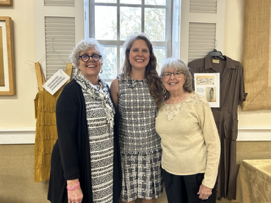 Details about clothing through the decades were enhanced with illustrations shown by Christina Burns, who traced the evolving of fashion. Wedding gowns, furs, hats, gloves, poodle skirts and flapper ensembles from members were among the clothes decorating the walls of Northside Baptist Church’s fellowship hall, as the speaker traced fashion history through clothing materials, designers, popular designs and skirt lengths.
As this year’s theme of one hundred years of cultural change discussions continue, members will hear about home furnishings, movies, music and traveling, all influenced by economics, political events and scientific progress and all affecting citizens in every aspect of their daily lives.
A look at the Clinton club shows a history dating back to its first meeting in the fall of 1939 with thirty-two members, according to facts shared by Rowland Roberts, a member who retrieved the club’s background from delving into yearbooks housed in the genealogy room of the Quisenberry Library. “Club dues were fifty cents, which in today’s figures would be $10.68,” said Roberts. Today’s dues remain a bargain – ten dollars a year. Members once convened twice a month on the second and fourth Tuesdays, which has evolved in more recent years to one meeting a month, on the second Tuesday.
Yearbooks revealed that an early program featured the staging of two plays using Hillman College facilities. The first was a one-act play by Thornton Wilder, The Happy Journey to Trenton and Camden, and the other, The Fatal Quest, billed as a three-act tragedy. Costs for presenting the plays were an expensive $12.79, or, as Rowland noted, today’s price would be $271.16.
The early years of the club in the 1940s often focused on home efforts as World War II progressed, with program titles of “The American Way” and “First in War, First in Peace.” A 1942 program detailed the importance of salvaging tin cans for the war effort and the need for more workers for the Red Cross. The May 1945 meeting featured the reading aloud of the proclamation announcing Victory in Europe (V E Day) and the official end of the war in Europe, and, in November 1945, a victory tea celebrated the war’s end.
After the war, topics were varied and interspersed with fashion shows and covered dish luncheons.
Today’s Study Club is led by Mary Ann Greene, president; Mary Ann Parke, vice president; Christina Burns, secretary; Robin McCormick, treasurer; and Lynda Williams, reporter. Emily Fokeladeh serves as program chair. Overall themes are chosen to explore topics in depth at the monthly meetings from September through May.