Dacus to be guest soloist for MS Symphony Orchestra
By Sherry Lucas

Clinton mezzo-soprano Viola Dacus is more than ready to fulfill a task postponed for three years — her guest solo spot with the Mississippi Symphony Orchestra (MSO).
Dacus will the guest vocalist with MSO’s final chamber concert of the season, 7:30 p.m. Saturday, April 15, at Tougaloo College’s Woodworth Chapel in Jackson. She’ll be singing “Trois Poèms by Stéphane Mellarmé” by Maurice Ravel — a work she was eagerly on the cusp of sharing in April 2020, when that scheduled performance fell victim to the pandemic.
“Oh, that was the most disappointing thing, probably, ever, career-wise,” Dacus says.
“I’m just now getting to do that, and I’m really excited.…I’m so ready to do these pieces!” A Mozart trio and a Beethoven string quartet are also on the program at Woodworth Chapel.
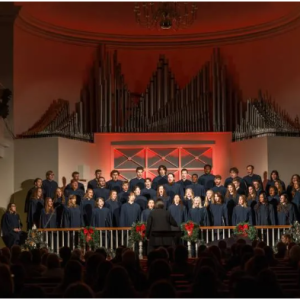
Dacus is an associate professor and the voice area coordinator for the department of music at Mississippi College. She also has a performance on April 16, singing Maurice Duruflé’s “Requiem” with the Mississippi College Singers as part of their Spring Concert, 3 p.m. at Provine Chapel on the Clinton campus.
Growing up in Yazoo City, Dacus took piano, did community theater and choir and loved singing in the car with her sister, but had no real thought of music as a profession. She took her first voice lesson as an undergrad at Ole Miss. After a start in music education, she realized she really wanted to perform. She completed her master’s and doctorate in vocal performance at Louisiana State University.
Dacus started as an adjunct professor at Mississippi College in 2001, progressed to part-time and, in 2014, started full-time tenure track. At home in Clinton since 2000, she and husband Ed (recently retired from MC music faculty) raised children Emily Katherine and Jonathan here.
She has done some opera, but that was never her goal, Dacus says.
“I like doing concert work and recitals.…I love the poetic aspect of it, almost as much as the music,” and sharing that is the real joy. Teaching brings a kindred satisfaction. “I’m not actually singing, but making the students aware of that dual aspect of singing, which is the poetry and the music.
“One of my greatest joys in life is discovering their voices — every unique instrument, and it’s just like something brand new.”
Discovering the poetry in performance is a key element in her preparation of the three French poems, set as art songs to Ravel’s “melodically gorgeous, lush” music for the MSO concert. While not fluent in French, she has sung enough of it to have the preparation process down pat. It begins with a word-for-word translation of the three poems by Mellarmé — “very ethereal and complex,” she says, “and beautiful to hear.”
“What I tell my students is, you have to go through and learn what the words are, learn what the words mean within the context of the poetry…and you have to then know it so well that you sing how the words make you feel.”
“If I sing the poetry, and I feel that, that communicates instantly with an audience.”