Despite budget setbacks, City expects to give raises, avoid tax hike
By Randy Bell
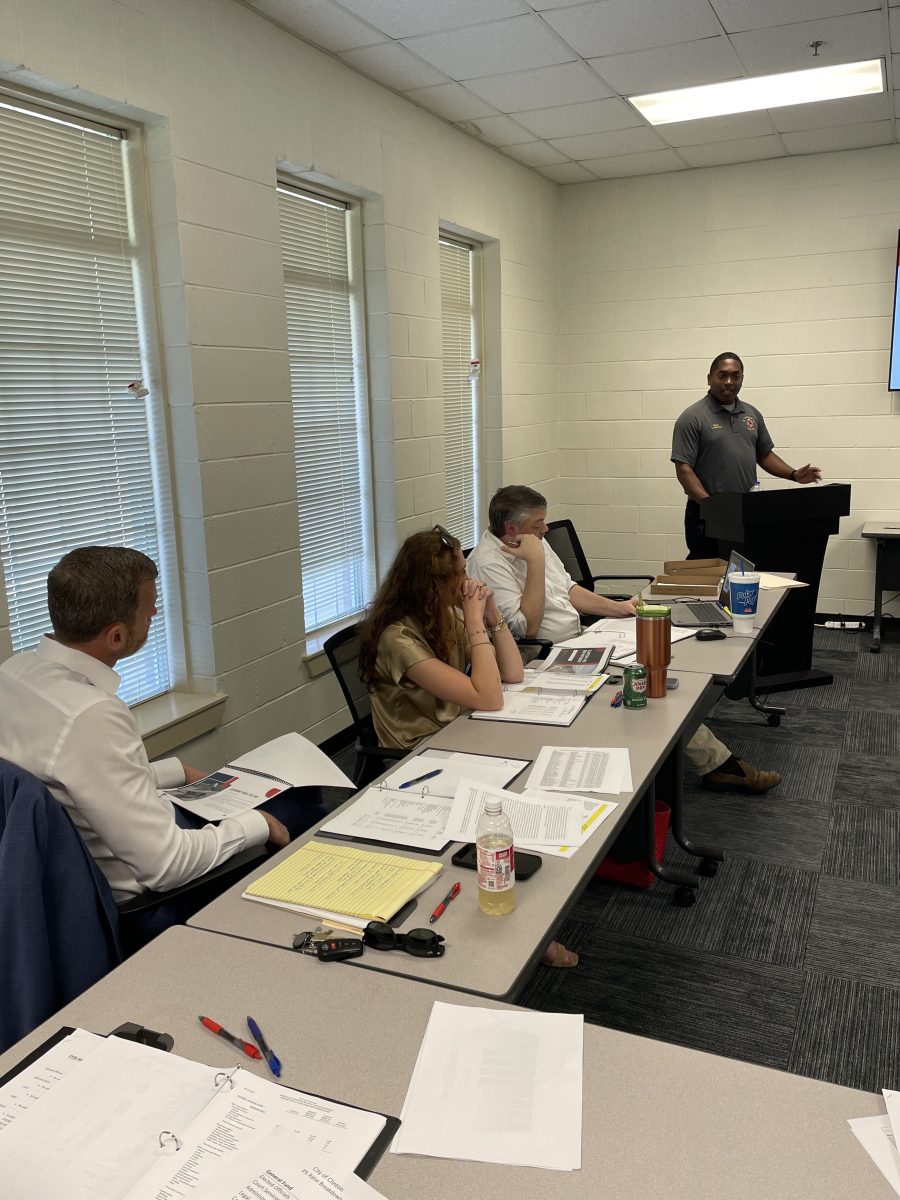
Mayor Will Purdie, Chief of Staff Breana Norton and City Clerk Jimmy Baldree listen as Fire Chief Levius Buckley explains his budget request at a hearing on August 11.
As Mayor Will Purdie and the Board of Aldermen worked to craft a budget for the fiscal year, which begins October 1, the hits just kept on coming. Two unpleasant surprises will force the City to tighten its spending plans for FY26.
“It does look like we’ll be facing some significant shortfalls revenue-wise and some cost overruns,” Purdie says. “Between the two, we’ll have a hole to make up, so I would expect it’ll be a relatively lean budget year.”
But City employees can expect a three per cent bump in their paychecks.
“That’s currently what we have in there,” the mayor says. “I’m happy that, with some of the issues we faced in this budget season, we will be able to do something for city employees. Certainly, we know that inflation and costs are probably far outstripping what we can do. But to be able to, hopefully, help offset some of that is good.”
And no tax increase will be needed.
“That was very much a goal of ours going into this and one I’m happy we were able to achieve,” Purdie says.
City Clerk Jimmy Baldree says because of inaccurate information provided by Hinds County, the City received about $400,000 less than it was expecting in ad valorem taxes from car tags this fiscal year.
“The assessed value [of vehicles registered in Clinton] is what was mis-stated,” Baldree says. “That is the base for the calculations of what we anticipate to collect through the year.”
The City has enough money left in its current budget to finish FY25 in the black, but the car tag issue means that there will be $400,000 less to carry over to the new fiscal year.
At a budget hearing August 6, the mayor said he was “not at all pleased with this.”
One night later, as Board members reconvened to hear more department head requests, another bombshell exploded when they learned that the fire department had exceeded this year’s overtime budget by some $357,000, as firefighters doubled up to cover vacant shifts.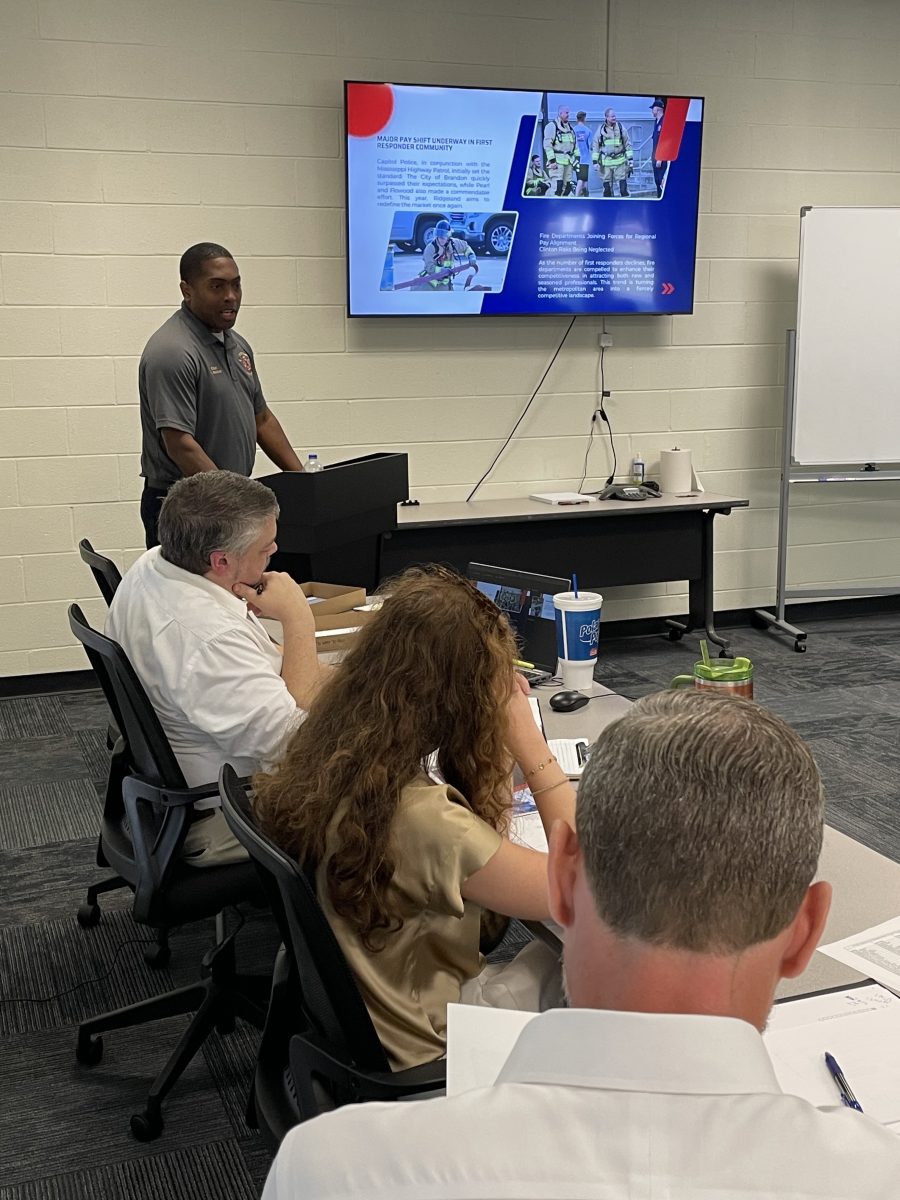
“This is going to significantly affect the rest of the budget talks,” Purdie told the aldermen on August 7.
Taken together, the tag revenue shortfall and the excessive overtime will have a budget impact of about three-quarters of a million dollars on a City spending plan which is expected to total just over $22 million. The current budget was in excess of $23 million.
“We’re going to have to tighten up on our spending for the rest of this [fiscal] year to try to have as much as we can to carry over and tackle the plans that we have for next year,” Baldree says. “We’ll have less to work with. So, unfortunately, the department heads and the various departments won’t be able to do everything that they’d like to do.”
But Purdie says it’s a message they’ve heard before.
“We have, fortunately, I think, the last couple of years started through the [budget] process naturally trying to trim things and be as efficient as we can. We’ve worked on this each year, and so we’re already kind of in that mode.”
Police Chief Ford Hayman recognizes the need for a tighter budget. He had planned to ask the Board for five new vehicles but, after hearing what the City is facing, he says the department can get by for another year with the cars it has.
“We understand that,” Hayman says. “We want to do our part to help keep the costs down. There’s other areas of the City that might be more important this year, and they need a little help. And we want to be there to help them.”
The fire department has already taken some steps to save money during the remainder of this fiscal year and in the new budget year. While some of the overtime which piled up was the result of firefighters who were dissatisfied with their pay leaving the department, some firefighters worked beyond their normal hours to cover for those who were out with injuries or in training. The department also had to tap into overtime to make sure a paramedic was available to staff the rescue truck.
With a shortage of paramedics within the CFD, the department hired contract paramedics. But when they weren’t available, firefighters trained as paramedics were paid overtime to be on the truck. Going forward, those contract paramedics will not be used, saving money on that part of the budget, and the rescue truck will be converted into a special operations unit with no paramedic required.
According to Purdie, the City doesn’t have much of a choice.
“We just simply have to make up that massive [overtime], overage and that’s, unfortunately, one of the primary ways to do so. Certainly, I would like to look toward getting [the rescue truck] back on the road if possible. I think it’s something that provides a valuable service.” But the mayor says, at this point, they don’t have the money to keep operating it.
However, the City is quick to point out that, even though a paramedic riding in a rescue truck won’t be part of the initial response to calls now, an effort is being made to ensure that the work schedules of the department’s seven paramedics are set up so that one of them is on duty at all times and able to respond anywhere in Clinton, even if it means sending an engine from a second fire station to the scene.
Purdie says: “We will do, certainly, everything we can to mitigate any sort of reduction in service.”
Fire Chief Levius Buckley says seven paramedics for a city the size of Clinton isn’t nearly enough.
“I would like to have at least twelve to fifteen,” he says. “If we have twelve, we can spread them four per shift, one on every engine we have in the city. We’ve got guys that are ready to go [for training], if the City is going to pay for it.”
Buckley considers it a good investment. “Absolutely. We need it.”
The chief says the local ambulance company, AMR, may be adjusting the way it responds to calls in Clinton to get one of its paramedics on the scene sooner.
“AMR is committed to collaborate, to the full limit of our resources, to adapt to these new circumstances,” the company said in a statement. “This challenge highlights the importance of discussing community needs and the resources required to address them.”
A public hearing on the proposed budget and tax levy will be held as part of the Board of Aldermen meeting on September 2 at 6 p.m. A vote on adopting the tax levy will be taken.
Adoption of the budget is scheduled for September 15 at 5:30 p.m. during a special meeting prior to the Board’s work session.