Beverage Technology: How Innovation Is Transforming Production
Beverage technology includes the processes, equipment, production systems, digital tools, and packaging technologies used to make beverages safely and efficiently. It covers everything from formulation and processing to filling, quality control, packaging, and distribution.
Modern beverage production increasingly combines traditional processing equipment with automation, sensors, artificial intelligence, and connected manufacturing systems. Together, these technologies help producers improve consistency, monitor operations, manage resources, and respond to changing production needs.
As the beverage industry evolves, processing technology, smart manufacturing, packaging systems, and data-driven operations are becoming increasingly connected.
What Is Beverage Technology?
Beverage technology refers to the methods and systems used throughout the beverage production lifecycle. It includes ingredient preparation, formulation, mixing, processing, production machinery, filling, packaging, monitoring, and quality control.
Digital systems and automation also play an important role in modern beverage manufacturing. The right combination of technologies depends on the beverage being produced, expected production volume, shelf-life requirements, packaging format, and quality standards.
A carbonated drink, juice, dairy beverage, functional drink, and fermented product may require very different beverage processing equipment and production methods.
Key Technologies Used in Modern Beverage Production
Modern beverage production combines mechanical processing equipment with automated and digital systems. Rather than operating independently, these technologies often work together across one beverage production line.
Processing equipment prepares the product, automation controls movement and production, digital systems monitor performance, and filling and packaging technologies prepare beverages for distribution.
Beverage Processing Technology
Beverage processing technology helps manufacturers turn ingredients into safe, consistent products at commercial scale. Depending on the beverage, processing may include mixing and blending, filtration, pasteurization, fermentation, homogenization, temperature control, or high-pressure processing.
Each method serves a different purpose, such as improving stability, managing microorganisms, creating the required texture, or protecting flavor and quality. Choosing the correct beverage processing equipment depends on the product formulation, desired shelf life, production capacity, and food safety requirements.
Automation, Robotics and Smart Production Lines
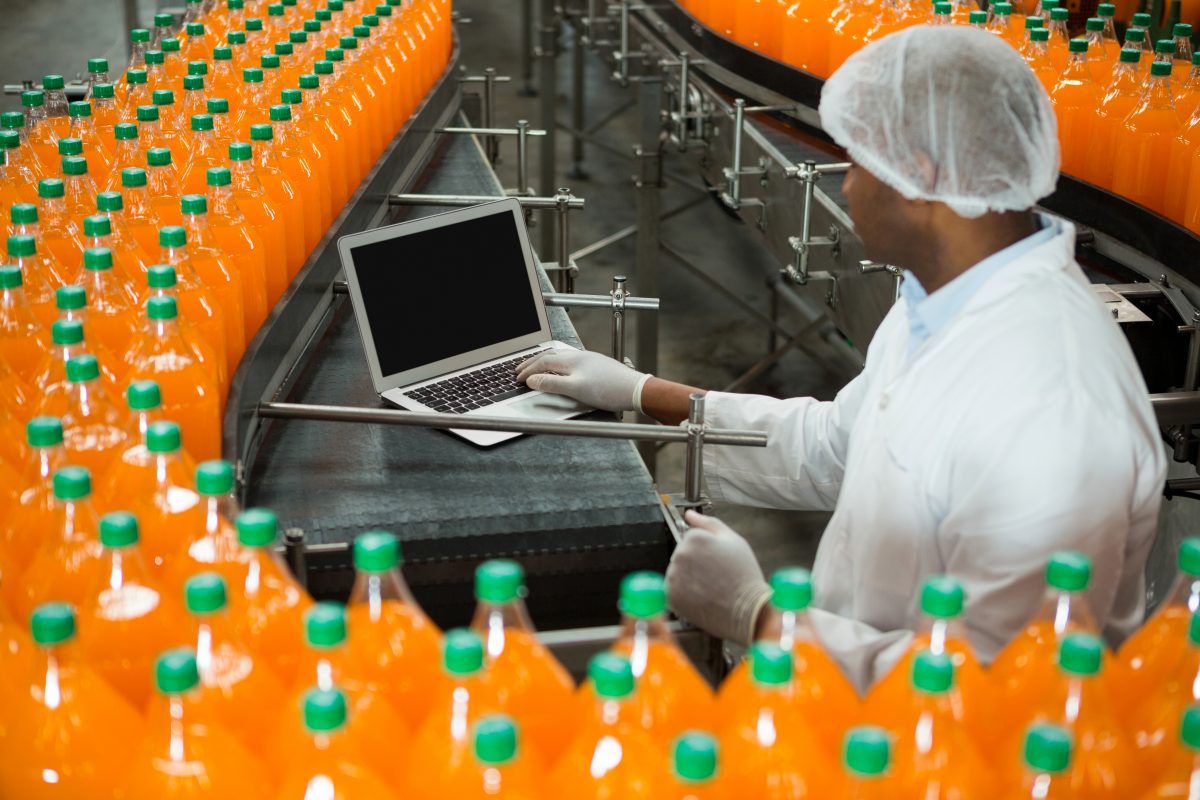
Beverage automation helps reduce repetitive manual tasks while improving production speed, consistency, and operational control. Automated beverage production can include conveyors, filling machines, robotic handling systems, inspection equipment, labeling systems, and packaging machinery.
Production-line controls can also coordinate equipment across different stages of manufacturing. However, automation does not require every facility to become fully robotic. Beverage manufacturers can automate individual processes where improved accuracy, speed, labor efficiency, or repeatability provides the greatest operational benefit.
AI, IoT and Data-Driven Beverage Manufacturing
Artificial intelligence, IoT devices, sensors, and data analytics are adding a digital layer to beverage manufacturing technology. Connected systems can provide real-time information about equipment condition, production performance, energy use, inventory, and quality indicators.
Manufacturers may use this information for predictive maintenance, production planning, process monitoring, and earlier detection of operational problems. AI can support analysis and decision-making, but it does not replace core beverage manufacturing equipment. Instead, it helps operators understand production data and use existing systems more effectively.
Filling, Packaging and Quality Control Technology
Beverage technology continues well beyond processing. Filling, bottling, canning, sealing, labeling, inspection, and packaging systems are essential parts of a modern production line. Different filling technologies are used depending on the beverage and container format, with piston filler machinery being one option for achieving accurate and consistent product volumes.
Beverage filling technology helps maintain accurate volumes and consistent container handling, while inspection systems can identify packaging or product issues before distribution.
Sensors and quality-control systems also support traceability and production monitoring. Effective beverage packaging technology must protect the product while supporting efficient handling, storage, transportation, and presentation throughout the supply chain.
How Beverage Technology Improves Efficiency, Quality and Sustainability
The right beverage technology can improve production efficiency, quality consistency, traceability, and resource management. Automation can reduce unnecessary manual handling, while digital monitoring can help teams identify downtime, process variation, or maintenance needs sooner.
Modern beverage quality control systems can also provide better visibility across processing, filling, and packaging operations. Sustainability is another important consideration. More precise production control can support better management of water, energy, raw materials, packaging, and production waste.
However, these benefits depend on selecting and implementing systems that match the facility, product, production goals, and operating requirements.
What Is the Future of Beverage Technology?
The future of beverage technology is likely to involve increasingly connected, flexible, and data-driven production environments. Smarter sensors, predictive maintenance, AI-assisted decision-making, advanced processing methods, and improved traceability can give manufacturers greater visibility across their operations.
Beverage technology trends also include more adaptable production lines and continued development in sustainable packaging and resource efficiency. Adoption will vary between manufacturers because new technology must still meet practical requirements around product type, production scale, regulations, investment priorities, and measurable operational value.
Choosing the Right Beverage Technology for Your Production Needs
Choosing beverage technology should begin with the requirements of the product and production environment. Manufacturers should consider beverage type, production volume, packaging format, required line speed, facility space, sanitation needs, quality standards, existing equipment, and future capacity.
The newest beverage production equipment is not automatically the right solution for every operation. A reliable system should integrate effectively with existing processes while supporting consistent production and future growth.
When evaluating beverage processing systems or manufacturing equipment, working with experienced technical specialists can help identify solutions that fit both current requirements and long-term production goals.
Read more: The Science Behind Hydrogen Water Bottles: Benefits and Mechanisms
Read more: Navigating the Bar Scene in Texas: How to Success