School Science Experiments for Kids
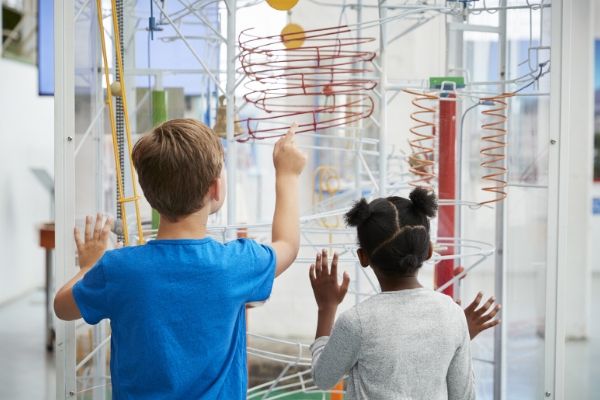
School science experiments provide an amazing opportunity for children to apply the knowledge they are taught in class and see scientific concepts in action. As a result, they often gain a greater understanding of such concepts and become more passionate about their education. Here are some safe, fun, and educational school science experiments for kids.
Disclaimer: While the following experiments don’t pose any significant safety hazards, it is important to enforce general safety rules to keep your students safe in the lab.
Erupting volcano experiment
Making a volcano is a classic school science experiment for kids. It teaches children about the reaction between acids and bases in a way that is both fun and exciting. Plus, this experiment is extremely easy to complete. All you need is a small volcano model, water, dish soap, white vinegar, baking soda, and optional food coloring to make it look more like lava.
Lava lamp experiment
Continuing with the theme of lava, consider putting on a lava lamp experiment. This experiment teaches children about density. To put on this experiment, simply add food coloring to vegetable oil and pour it into a clear bottle of water with an Alka-Seltzer tablet in it. Then let your students turn the DIY lava lamp over and watch how the two liquids naturally stay separated.
Water cycle in a jar
This experiment helps kids learn more about how the water cycle works by letting them see it in action right before their eyes. To perform this experiment, pour a couple inches of hot water into a jar and cover it with a ceramic plate facing upward. After three minutes, put ice cubes on the plate and watch as the cold plate causes the moisture in the warm air to condense and form water droplets.
Parachute experiment
This experiment will help students learn about air resistance by designing and testing out parachutes. To conduct this experiment, cut a large octagon out of a plastic bag and cut a small hole on the edge of each side. Then attach eight strings to each hole and tie the strings to a light weight. Then drop your parachute from a high location and watch as it floats to the ground.