Different Methods of Enteral Nutrition
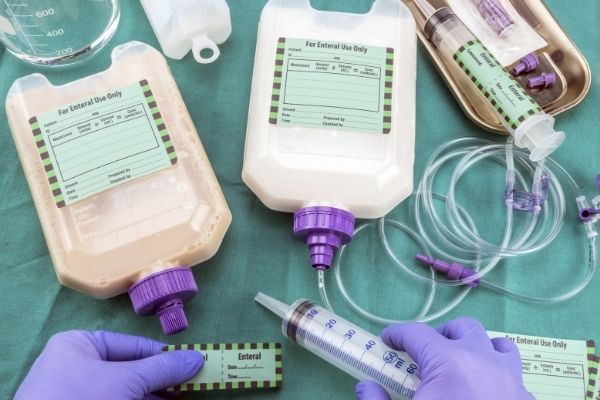
There is a wide range of reasons that a patient in a hospital might have trouble eating. Some reasons include anorexia, esophageal diseases, stroke, or infants failing to thrive, to name a few. Individuals in these scenarios still need food. If anything, they need food even more, but because of the complex nature of their ailments, healthcare providers may need to utilize different methods of enteral nutrition in order to get these patients the nutrients they need to overcome their illnesses.
What Is Enteral Nutrition?
Technically, the term enteral nutrition can be used to refer to any method of feeding that uses one’s gastrointestinal tract, including consuming food orally as normal. However, in the medical field, enteral nutrition is used interchangeably with the term “tube feeding.” It involves using feed pumps to transport food, fluids, or medication directly into the stomach or intestines. The different methods of enteral nutrition refer to the different ways the food is transported into the body.
Nasogastric Tubes
Nasogastric nutrition involves running a tube down the nose and into the stomach. Because this feeding method transports food directly into the stomach, it has the benefit of leaving patients feeling “full,” unlike methods that transport food directly into the intestines. The tube can also be removed when the patient is not feeding. The caveat with nasogastric feeding is the possibility of a tube being inserted incorrectly or being dislodged from the stomach due to a coughing spell. The tube may then go toward the lungs instead, causing vomiting, aspiration, and even esophageal perforation.
Nasojejunal Tubes
This method also runs the tube through the nose, but instead of bringing the food directly into the stomach, the food is transported into the jejunum, a part of the small intestine. Patients in this situation not only have trouble swallowing but also have conditions related to the stomach, such as the stomach not being able to empty fast enough. Because the stomach does not fill, patients receiving feedings through NJ tubes are less likely to experience vomiting.
Gastrostomy Tube
When patients need long-term feeding solutions, a gastrostomy tube may be necessary. This tube is surgically inserted in a patient’s abdomen, allowing food to be directly placed into the stomach. The G-tube allows regular feeding with less hassle than NG or NJ tubes. Gastronomy tubes are designed for easy use at home, though some potential risks, such as dislodgement and leaking, may need to be addressed by a doctor. Although G-tubes are intended for use in more extended terms, they can be removed when a patient no longer needs them.
Jejunostomy Tube
A Jejunostomy tube is to a gastronomy tube as a nasojejunal tube is to a nasogastric tube. Jejunostomy tubes are also surgically inserted through the skin, but they take food directly into the small intestine. It provides a long-term solution for those who cannot have food in their stomachs, but like gastrostomy tubes, they can be removed eventually, if deemed appropriate.