Ways To Reduce Tooling Costs
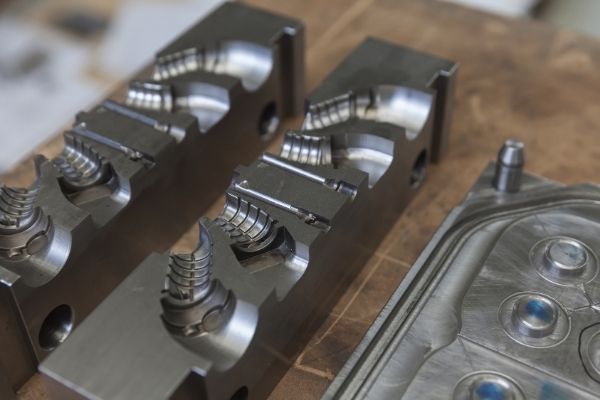
When manufacturing a molded part, tooling can be one of the largest expenses. Depending on the size of the part, a tool can cost hundreds of thousands of dollars. To help cut that price down and increase your bottom line, consider implementing these effective ways to reduce tooling costs.
Use Lower-Cost Materials
One of the most effective ways to reduce tooling costs is to create the tool from a lower-cost material. In order to do so, you will need to choose your molding process carefully. Many popular part production processes require the use of a durable and highly expensive mold made out of steel that can withstand the extremely high temperatures and pressures involved during the process. Low-temperature and low-pressure processes, such as reaction injection molding (RIM), however, do not require such an expensive mold. Instead, RIM parts can be produced using a low-cost aluminum mold, which greatly reduces tooling costs.
Avoid Steep Parting Line Angles
If you are designing a part that has a parting line which cannot be flat, try to make the angles as gradual as possible. The steeper the step in a parting line angle is, the harder the part is to tool, as it will be more difficult to fit the two molded halves together. To account for the difficulty, the tooling cost will rise. To minimize costs, try to keep parting line angles around 10° or greater off the line of draw.
Eliminate Any Unnecessary Features
Designing parts with various cosmetic enhancements, such as textured surfaces or high mold polishes, can help make your part look more aesthetically pleasing. Unfortunately, such features can also rack up a high tooling bill. If your top priority is lowering your part’s tooling costs, it is best to get rid of any non-mission critical features.
Re-Machine Molds When Possible
Another way to reduce high tooling costs is by re-machining and reusing molds when possible. While doing so isn’t always an option, modifying molds rather than purchasing an entirely new tool can greatly decrease tooling development costs. The cost savings of re-machining existing molds are especially significant when designing molded parts that must go through several revisions before the final design is solidified.