Chief discusses north Clinton house fire
By Randy Bell
Randy Bell
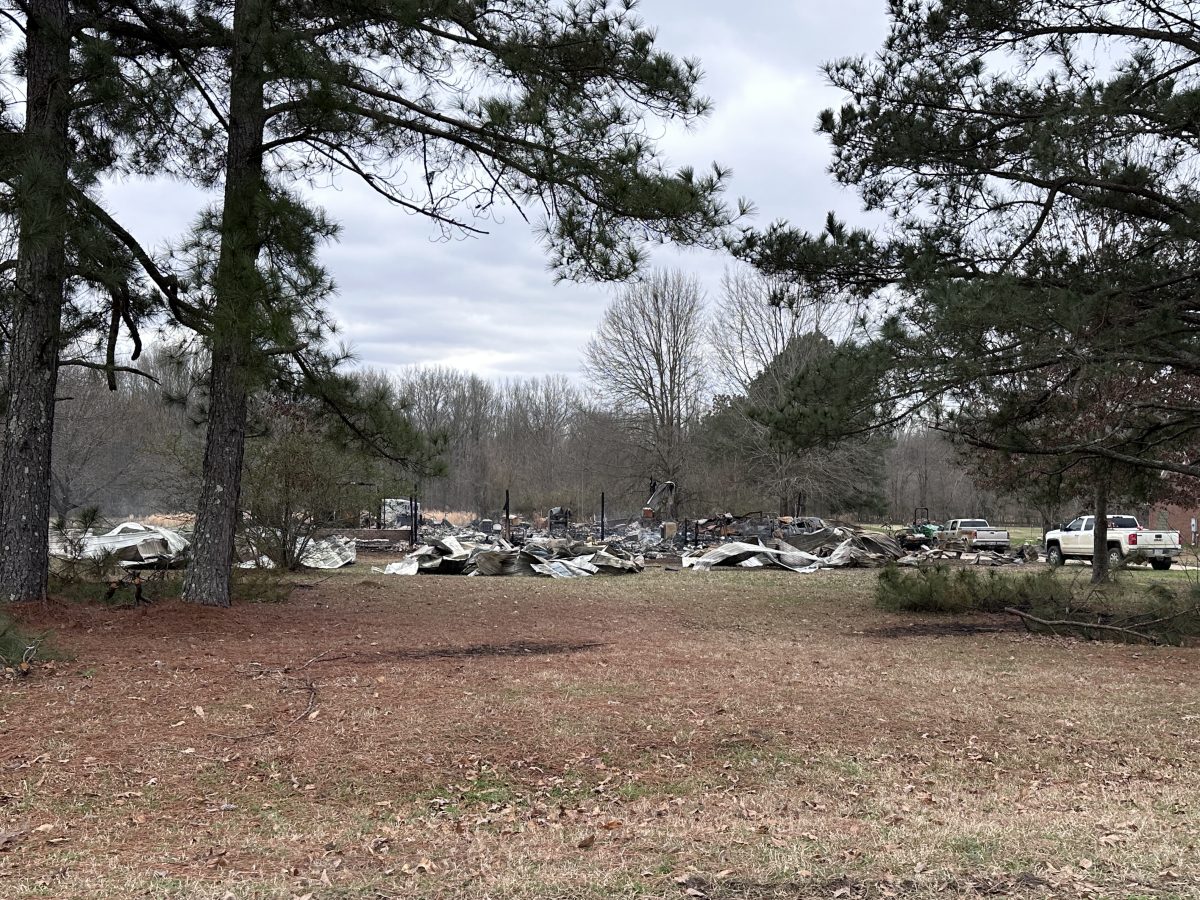
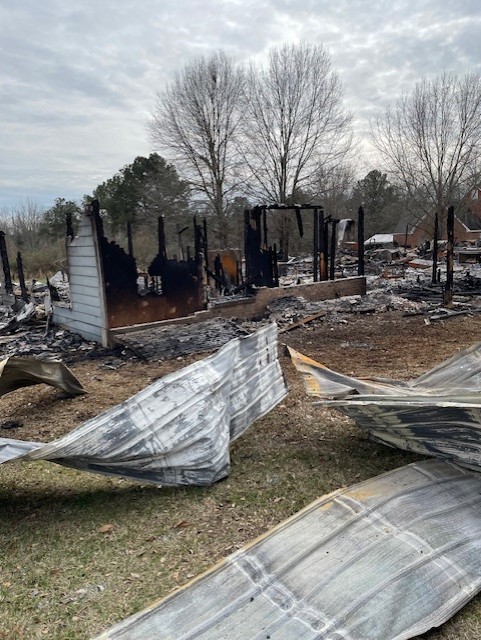
The Stephens’ home has been declared a total loss after the fire, but the family plans to rebuild.
Clinton’s fire chief says a lack of nearby hydrants wasn’t the reason a home in the northern part of the city burned to the ground February 15. Jeff Blackledge says the head start the blaze had gotten before firefighters arrived and the gusty winds which fanned the flames into a raging inferno made it impossible to save the house on Chestnut Drive.
“Water was not a problem for us,” Blackledge told reporters at a City Hall news conference three days after the fire. “We had 6,000 gallons of water on Clinton’s [fire] trucks and another 15,000 gallons of water with the county [trucks] that came in to help us.”
The chief said the house was in flames when the first units arrived within ten minutes of the 911 call.
“There wasn’t anything left that wasn’t burning. The roof had already caved in on the second floor,” Blackledge said.
After learning that everyone in the house had gotten out okay, he said the focus was on keeping the fire from spreading to other homes.
“Wind was our biggest nemesis. We had embers blowing over into the neighbors’ yards. We attacked [the fire] from the outside, putting as much water on it as we could.”
Firefighters had to shuttle water from a distant hydrant on Williamson Drive to refill the pumper trucks. But, according to Blackledge, that didn’t affect the outcome.
“You could have had a thousand fire hydrants in the front yard out there, wouldn’t have done any good.”
The chief expressed appreciation for the assistance Hinds County volunteer fire departments provided, including units from Pocahontas, Maclean and Brownsville.
“We called them and asked them for help, and they showed up,” Blackledge said. “They came in and helped us man lines and brought tons of water for us.”
“We had one group set up at the hydrant that was filling up the trucks. As we would run out of water, they’d send a truck down there to get filled up and circle back around to fill the truck that we were pumping off of. So, we’re very thankful for our partnership with them.”
Following an investigation, the cause of the fire has been listed as “undetermined.” Blackledge said, “The insurance company has ruled it as accidental but no definitive cause.”
According to one of their sons, Bruce and Kathy Stephens plan to rebuild their home.
“My parents built this house in 1998,” said Raymond Stephens as he stood at the edge of the street looking at the rubble. “This is the house I grew up in. Between my parents, my brother and my sister, that is a lifetime of stuff in there. But it’s just stuff. Stuff can be replaced. Lives can’t.”
Since the fire, people have stepped up to help.
“My family really wants everybody in the community to know how grateful that they are for the outreach and the support,” Stephens said. He emphasized that the donations they’ve received are appreciated – but said it’s more than that. “The love and the prayers are really, really felt.”
The house which burned is in an area served by North Hinds Water Association, and Mayor Phil Fisher said that’s the reason that there aren’t more fire hydrants in that part of Clinton.
“It’s more of an issue of water pressure. And North Hinds doesn’t have the water pressure to push the fire hydrants.”
The mayor said there are no plans at this time for the City to install larger water lines, which could provide the necessary pressure for hydrants. In his words: “There’s a huge cost involved.”
Meanwhile, Chief Blackledge is reassuring Clintonians that the fire department has the necessary resources to successfully battle a typical house fire, even if a hydrant hookup isn’t available.
“I feel confident in that,” he said. “Usually, 2,000 to 4,000 gallons of water can snuff that fire out, and sometimes less than that.”
Pumper trucks carry 1,000 gallons, and CFD’s tanker truck carries 2,000.
Blackledge realizes that some people, especially those in rural sections of the city, may be hesitant to call 911 when they smell smoke, because outdoor burning is more common in those areas. His advice: let the fire department sort it out.
“If you think you have a house fire, go ahead and make that phone call. Get us enroute. We would much rather come out there and it be nothing, or somebody burning trash in the yard that you’re smelling the smoke from, than to roll up on [a house] that’s fully involved.”