What Homeowners Now Mean by a Low-Maintenance Poolside Backyard
For a long time, the phrase “low-maintenance backyard” pointed to something fairly predictable: fewer plants to trim, fewer surfaces to clean, fewer features to manage, and fewer weekend chores waiting in the background. In that older definition, a low-maintenance outdoor space was usually imagined as a simpler one — less layered, less demanding, and less likely to create visible work.
That definition no longer holds up very well. What wears homeowners down now is not always the amount of work a backyard creates, but the way it keeps reopening small loops of attention. A space may look mostly fine and still ask to be checked, reset, wiped down, cleared off, or brought back into usable condition before it truly feels ready. That is why many homeowners no longer define a low-maintenance backyard by how little it asks of the property. They define it by how little it asks of them.
In other words, low-maintenance no longer means minimal. It means stable. It means a space that does not keep slipping out of usable condition and pulling the owner back in.
The Old Low-Maintenance Ideal No Longer Matches Real Backyard Life
The older version of low-maintenance focused on visible workload. If a backyard had fewer elements to clean, fewer decorative features to maintain, and fewer things that could visibly go wrong, it was assumed to be easier to own. That logic is not exactly wrong. It is just too narrow for the way homeowners now experience outdoor upkeep.
The deeper problem is that visible work is not always the same thing as ownership burden. A task can be small and still feel draining if it keeps coming back in slightly different forms. A backyard can avoid major labor and still feel high-maintenance because it repeatedly asks for checking, noticing, deciding, and restoring. That is the part older definitions fail to capture.
What many homeowners want now is not necessarily a stripped-down yard with less character. They want a yard that does not keep reopening the same categories of attention. The old definition treated maintenance as a matter of workload. The newer reality is that maintenance is often felt as interruption.
A Backyard Feels High-Maintenance When It Keeps Pulling You Back In
What makes outdoor upkeep feel heavy is often not task size. It is reset frequency.
That distinction matters. Homeowners are usually less exhausted by one large seasonal job than by a series of small recurring ones that keep bringing the space back onto their mental to-do list. A backyard starts to feel high-maintenance when the same forms of attention repeatedly reactivate.
One source of that feeling is repeated checking. People do not just maintain a backyard by doing chores. They maintain it by scanning. Is everything presentable enough? Is the setup ready enough? Is the water in a usable state? Do the surfaces feel clean enough for actual use? These micro-checks rarely look dramatic, but they create constant low-level involvement.
Another source is the repeated reset. Many spaces appear acceptable until the moment someone wants to use them. Then the hidden maintenance gap shows up. Something needs wiping. Something needs clearing. Something needs restoring before the space feels inviting again. The issue is not that each task is huge. It is that usability keeps expiring and has to be reestablished.
A third source is that outdoor experience is highly interconnected. One weak point can change how the whole backyard feels. If one area seems off, the space often stops feeling ready as a whole. That is why a backyard can become tiring to own even when no single responsibility seems overwhelming. The burden comes from how often the baseline has to be rebuilt.
Today’s Goal Is Not Less Backyard, but a More Stable Everyday Baseline
This is where homeowner expectations have shifted. Most people are not looking to give up on outdoor living. They still want a welcoming space, a comfortable place to spend time, room for family use, and the option to host without feeling like every gathering requires a preparation cycle.
What they are less willing to accept is the old ownership pattern that came with those benefits. They still want the experience. They just do not want the space to keep falling out of ready-to-use condition between one use and the next.
That is a more useful way to think about low-maintenance today. It is not a question of whether the backyard has fewer features. It is a question of whether the backyard can preserve a usable baseline with less owner intervention. Homeowners are no longer judging outdoor ease only by how much labor exists on paper. They are judging it by how often the space forces them back into upkeep mode.
The shift, then, is not from ambitious backyards to simpler backyards. It is from feature thinking to baseline-preservation thinking. A backyard feels low-maintenance when its normal state stays close to usable, instead of repeatedly drifting into “almost ready.”
The Best Low-Maintenance Setups Stay Usable Without Constant Rechecking
A backyard is genuinely low-maintenance when it does three things well.
First, it stays usable between uses. Not perfect, not untouched, but sufficiently stable that people do not have to keep restoring it before enjoying it. The key question is whether usability holds, not whether every element remains pristine.
Second, it reduces recurring decisions. Many outdoor spaces do not feel demanding because each task is difficult. They feel demanding because they keep reopening the same judgment calls: handle this now or later, ignore it or fix it, hope it holds or reset it before the next use. A truly low-maintenance setup lowers the frequency of those decisions.
Third, it protects the overall experience instead of improving only one isolated function. A homeowner does not experience a backyard in fragments. The space is felt as a whole. That means the most valuable improvements are often the ones that prevent one recurring weak point from dragging down the broader sense of readiness.
So the real standard is not visible neatness alone. A backyard can look relatively tidy and still be high-maintenance if it repeatedly asks to be restored before it feels usable. The better test is whether the space can preserve its baseline without constantly reopening the same tasks.
Recurring Pool Care Reveals Where Backyard Maintenance Still Breaks Down
Pool care is one of the clearest places where this newer definition of low-maintenance becomes visible. Not because a pool is automatically the most important feature in a backyard, but because pool upkeep exposes exactly how modern ownership burden works.
It is recurring. It is highly visible. It is easy to postpone for a day or two. And once it slips, it affects the usability of the space immediately. That combination makes it more than just another routine responsibility. It makes pool care a near-perfect example of how reset frequency shapes whether a backyard feels easy to own.
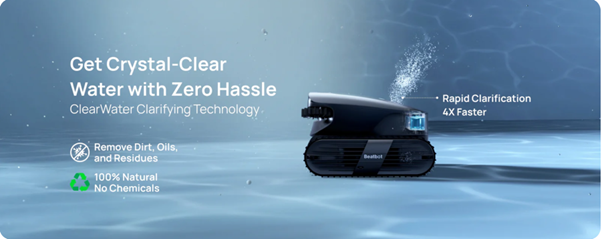
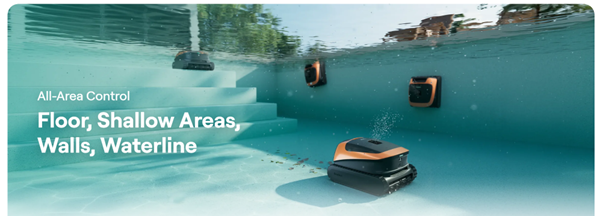
That is one reason more homeowners are rethinking recurring tasks like pool care, and why tools such as a swimming pool cleaning robot are being viewed less as optional add-ons and more as part of a backyard setup designed to reduce repeated intervention. The significance is not just that a task gets automated. It is that one of the most visible and recurring reset points in the yard is less likely to keep reopening.
The same logic explains why homeowners are paying closer attention to tools associated with easier recurring upkeep. In that broader ownership shift, the Beatbot sora 30 cordless pool vacuum fits less as a gadget moment and more as part of a wider preference for backyard tools that help preserve usable condition without turning maintenance into a constant loop. What matters is not the presence of another product. It is the appeal of reducing one of the tasks most likely to break the backyard’s baseline.
The future of low-maintenance living is not emptier spaces, but fewer reopens
The future of low-maintenance outdoor living will not be defined by how little exists in the space. It will be defined by how rarely the same forms of maintenance pressure have to be reopened.
That is the real shift in homeowner expectations. In the past, low-maintenance often meant dialing back design, complexity, or ambition. Today, it increasingly means preserving quality without preserving the old level of owner involvement. People still want outdoor spaces that feel complete, inviting, and worth having. They just no longer accept constant reentry into the same upkeep cycle as the price of ownership.
For today’s homeowners, a low-maintenance backyard is not simply the one with the fewest chores. It is the one that holds its usable baseline with the fewest resets. And in the end, that is what makes a space feel easier to own: not that it asks less of the backyard, but that it asks less of the person behind it.