Electrical Updates Homeowners Should Think About Before Remodeling an Older Home
Home remodeling usually starts with visible changes. People think about flooring, paint colors, cabinets, countertops, tile, fixtures, and layout. Electrical planning often comes later, even though it affects how well the finished space works every day. A room can look updated and still be frustrating if there are not enough outlets, the lighting is poorly placed, or the panel cannot comfortably support the changes made during the remodel.
Older homes can be especially tricky. A house may have been built for a completely different way of living. Decades ago, a bedroom might have needed one ceiling light and two outlets. A kitchen may have been designed before countertop appliances, coffee bars, larger refrigerators, microwaves, dishwashers, and multiple charging devices became normal. Living rooms now often support televisions, routers, gaming systems, lamps, chargers, and smart-home equipment. The electrical system may still work, but that does not always mean it fits the way the home is being used now.
One of the most practical things to consider before a remodel is outlet placement. During a kitchen remodel, outlets should be planned around how the space will actually function. Where will small appliances sit? Will there be an island? Will there be under-cabinet lighting? Will a pantry need power? Will a charging area be added? These are easier questions to answer before walls are closed and cabinets are installed. Waiting until the room is finished can turn a simple adjustment into a more expensive repair.
Lighting deserves the same kind of planning. A single overhead light may not be enough for a kitchen, bathroom, laundry room, or workspace. Good lighting usually comes from layers. General lighting helps brighten the whole room. Task lighting helps with work areas such as counters, sinks, desks, and mirrors. Accent lighting can make the room feel more finished. Recessed lighting, ceiling fixtures, vanity lighting, under-cabinet lighting, and exterior lights all serve different purposes. Choosing fixtures is only one part of the process. The location, wiring, switches, and dimmers matter just as much.
Bathrooms are another area where electrical planning matters. Moisture, ventilation, lighting, outlets, and safety all come together in a small space. A bathroom remodel may involve moving a vanity, adding better mirror lighting, replacing an exhaust fan, or updating outlets. These changes should be handled carefully because bathrooms have stricter safety concerns than many other rooms.
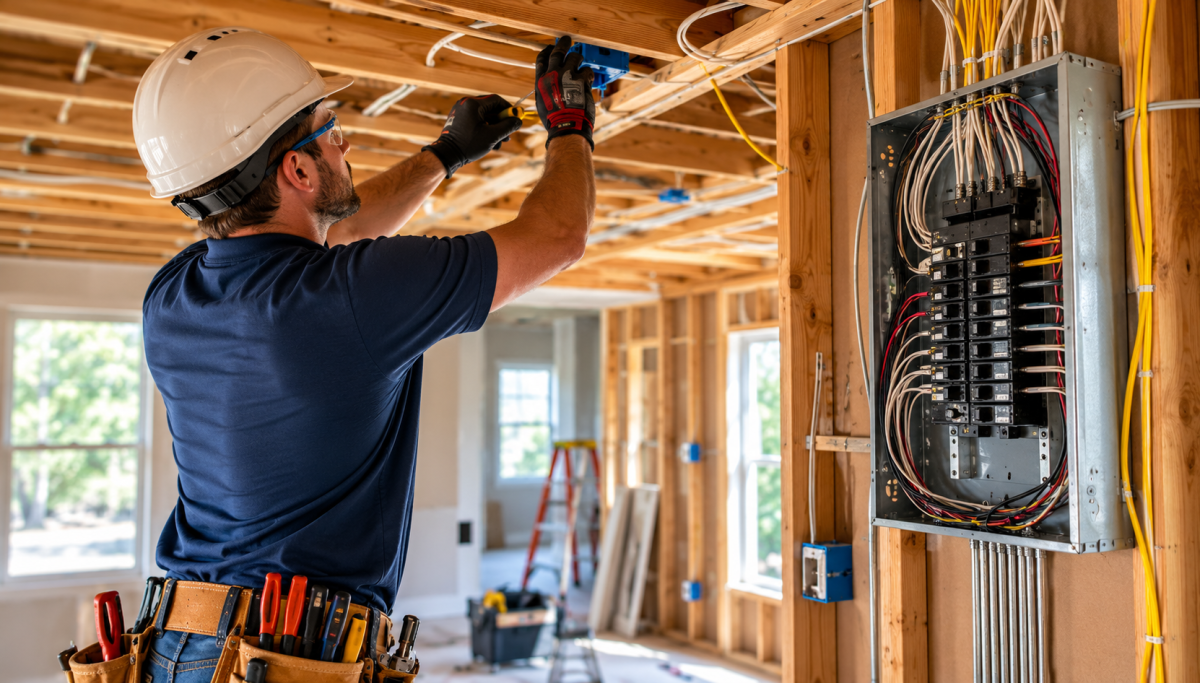
The electrical panel should also be considered before adding major appliances, new rooms, workshops, outdoor living areas, or large lighting plans. Some older panels are crowded or limited. A breaker that trips repeatedly is not just an annoyance. It can be a sign that the circuit is overloaded or that something else needs attention. A remodel is a good time to ask whether the home’s electrical capacity still fits the household’s needs.
Home additions and garage conversions can create even more electrical demands. A new bedroom, office, workshop, or bonus room may require outlets, lighting, smoke detectors, heating and cooling connections, and dedicated circuits. Outdoor improvements can also require planning. Patios, sheds, security lights, flood lights, soffit lights, and exterior outlets all need safe power sources. Temporary fixes, extension cords, or overloaded outlets are not good long-term solutions.
Ceiling fans and fixtures may seem simple, but they can reveal hidden issues. A fan needs proper support, not just wiring. Heavy fixtures need boxes rated for the weight. Switches need to be placed where they are convenient. If a room has an awkward switch layout, a remodel may be the right time to correct it.
Another common issue in older homes is inconsistent work from past repairs. A house may have had several owners, and not every repair may have been done by a professional. During remodeling, it is not unusual to find abandoned wires, overloaded boxes, loose connections, outdated materials, or odd shortcuts hidden behind walls. This is one reason electrical work should not be treated as an afterthought.
Planning ahead can save money. It is usually less expensive to run wiring, add outlets, move switches, or improve lighting while the room is already under construction. Once drywall, tile, cabinets, or trim are complete, electrical changes become more disruptive. A short planning conversation before the project begins can prevent problems after the remodel is finished.
Safety is the most important reason to take electrical work seriously. Poor electrical work can damage devices, create shock risks, or increase the chance of fire. Even small jobs should be done with care. Replacing a switch, adding a fixture, or moving an outlet may seem simple, but the wiring behind it still needs to be correct.
Before starting a remodel, homeowners should walk through each room and think about how the space will be used. Where will lamps go? Where will devices charge? What appliances will run at the same time? Is the lighting bright enough? Are switches convenient? Is the panel already crowded? These questions are not as exciting as choosing finishes, but they often have more impact on daily comfort.
For larger projects, it is worth speaking with a licensed electrician before the work begins. A finished remodel should not only look better. It should function better, support modern needs, and remain safe for the people living in the home.