What Prevents Businesses From Achieving Consistent Output Quality?
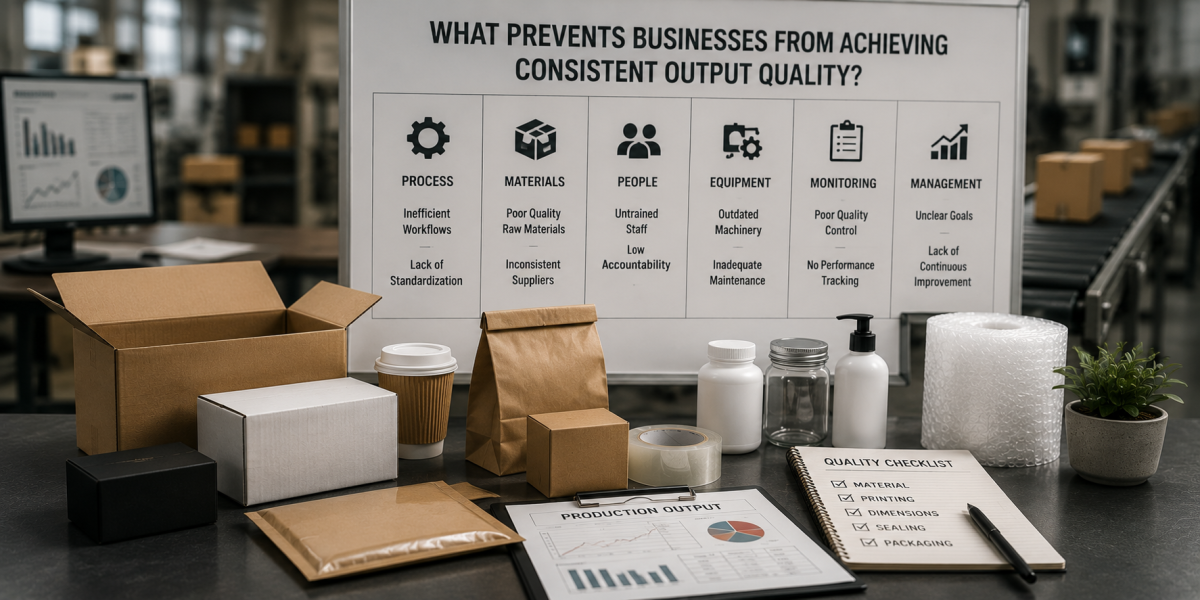
Offering high-quality products is something that can easily build customer trust. Many companies have a hard time making sure their products look good every time someone buys them. To figure out how this thing happens, you need to look at the consistent quality issues. This means everything from the products you offer and how customers react to them to the systems you are using. Let’s dive deeper to oversee consistent quality issues related to products.
Quality Control Problems: The First Line of Defense
If your systems are not good enough, you will have quality control problems.
Why does it happen?
There are a reasons why your business may have consistent quality issues.
- Limited Testing Procedures: If you don’t inspect your goods attentively, you won’t see the flaws.
- Human Error: You are more likely to make mistakes if you perform quality control tests by hand instead of with machines.
- Reactive Approach: If you only fix problems after they happen instead of trying to stop them from happening, you will have the problems over and over.
When your quality control is not good, your business has to spend more budget and get complaints from customers. These two won’t be good for your reputation.
Inconsistent Output Causes: Why Uniformity Breaks Down
Your products should be consistent in quality.
What are the key drivers that cause inconsistent output?
-
Process Inconsistency
When you have process inconsistency, it means that you do not have the steps to follow every time. This is a problem because if you do not do things the way you will get different results.
-
Workflow Inconsistency
It is when your teams are all doing things differently. And if your teams are not doing things the same way your products will not be the same.
-
Unclear Guidelines
If your employees do not really understand what they are supposed to do they will just make variations.
All these inconsistencies mean that you need to make the entire process the same, ensuring every product is of the same level of quality.
Production Quality Variation: The Manufacturing Challenge
Production quality variation is a big problem in manufacturing systems.
What are the root causes?
Manufacturing Defects: If your machines are not working properly or if you use different materials every time, your products will not be consistent.
-
Operator Skill Gaps
Your workers won’t do their jobs right if they don’t have the knowledge and skills for what they’re doing.
-
Environmental Factors
The temperature and humidity can degrade your products’ quality.
-
Product Packaging
Poor-quality packaging can really slow down your production. It also makes customers think about buying from you. To get product packaging that’s always high-quality, you should work with a reliable packaging manufacturer, like Instant Custom Boxes.
Setting the Standard for Business Quality
To help with production and delivery, every business needs to set quality standards.
Without strict quality standards, you will run into problems, such as:
- Quality Assurance Failure: If you do not check every detail, then you cannot be sure you are meeting your standards.
- Metrics: You need to know what you want to achieve to measure how well you are doing.
- Unclear enforcement: If you don’t use our standards on all teams, it will be hard to understand.
In essence, make sure that your business quality standards are not only written down, but also put into practice.
Unexpected Factors That Cause Quality Problems
If you think that your business doesn’t get consistent output quality, there must be some unexpected factors that drive this.
For example:
- Inconsistent Processes: Your team members don’t produce all products the same way,
- Manufacturing Defects: Mistakes that happen while you are creating products.
- Failure of Quality Assurance: If you don’t pay attention to the quality, your products won’t be what you expect.
- Workflow problems: When your team members don’t collaborate, there will be workflow problems
All these unexpected factors can build up over time and cause big problems with the quality of your products.
How Can Businesses Deal With Consistent Quality Issues?
To tackle down the consistent quality issues, you need to improve your systems.
Here’s how to do so.
- Invest in Automation: Use automatic machinery to monitor any small defects on your products.
- Standardize Processes: Ensure all your team members do the entire process with the same standard.
- Train Your Employees: Give your staff the information they need to create products of consistent quality.
- Keep an Eye On Performance: Track how your team is doing and make some modifications if necessary.
Why Quality Always Matters
Being consistent doesn’t mean being perfect; it means getting customers to believe in your products and business.
Every time a customer uses your product, they expect it to be of high quality. Customers will stop being loyal to your brand if your product is not consistent. As a result, your competitors will look better.
Here are the reasons why ensuring the consistent quality of your products is important for getting good output quality.
Building Customer Trust
Customers will trust your brand when all of your products are of the same quality since they know what to expect.
Shaping Your Brand Reputation
Customers regard your brand as credible and trustworthy when you are consistent.
Delivering Operational Efficiency
You can cut down on waste by ensuring all your processes are consistent—more budget to save.
Following Regulatory Compliance
If you follow the rules, your business won’t run into trouble or have to pay fines.
What Technology Does for Quality Management?
Yes, you can take advantage of technology to solve quality problems that your business faces.
Here’s the list of innovations that help you manage consistent product quality.
- AI Monitoring: This tool helps you find problems as they happen.
- IoT sensors: It monitors the conditions in your factories.
- Data Analytics: This tool provides a forecast for your product demand
- Automation Tools: The best option to automate tasks and prevent your team from making fewer mistakes.
Creating a Quality Business Culture
Just having technology isn’t enough. Culture has an effect on quality management, too. Therefore, you need to encourage a way of thinking where everyone is responsible for quality.
How to build a quality business culture?
- Commitment to Leadership: Be a leader who encourages your staff.
- Employee Engagement: Let your staff voice their concerns and help them address these concerns.
- Exhibit Training Programs: Teach and train employees to improve their talents and skills.
- Rewards: Give rewards or prizes to team members who meet the business quality standards.
Strategies for Long-Term Success
To keep up the work and have consistent output quality, your business needs to think about what it wants to do in the future.
The business needs to plan to make sure everything goes smoothly.
Here is the list of things to do to make this happen.
-
Manage Your Suppliers
Your business needs to make sure you have all the materials when you need them. This means you need to manage your suppliers to keep working.
-
Perform Risk Assessment
A business needs to think about what could go wrong and what problems might come up before they get worse.
-
Do an Audit
You need to check that everything meets the business quality standards. This means doing a general audit on all the processes and systems to make sure you align and meet the business quality standards.
In Summary
For consistent output quality, you need strong quality control, strict quality assurance, and process standardization.
By fixing recurring quality issues like variations in manufacturing quality, quality-control problems, and inconsistent workflows, your business can create systems that help you achieve consistent output quality.