The Overlooked Infrastructure Behind Successful Outdoor Events
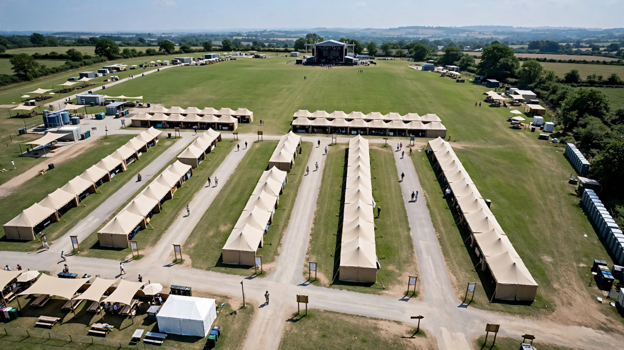
When families, food enthusiasts, and community members gather for a marquee outdoor festival, community event, or holiday fair, their memories are shaped by featured activities, artisanal food vendors, and vibrant visual atmosphere. However, behind every seamless, enjoyable gathering operates an invisible network of temporary civil infrastructure that keeps thousands of people safe, hydrated, comfortable, and moving efficiently across a venue.
Bottom Line Up Front: The true differentiator between a celebrated public gathering and an operational disaster is site logistics. Balancing power distribution grids, pedestrian flow channels, emergency egress paths, solid waste receptacles, and calculated portable sanitation capacity prevents dangerous bottlenecks, protects municipal watersheds, and ensures high attendee satisfaction from opening gate to event close.
1. The Science of Crowd Circulation and Ingress/Egress
Managing large crowds in outdoor spaces requires understanding human movement dynamics. According to the International Association of Venue Managers (IAVM) Crowd Safety Guidelines, poor spatial layout and concentrated amenity placement create severe friction points that trigger crowd frustration and safety hazards.
Key site engineering principles include:
- Main Arterial Corridors: Maintain minimum 20-foot-wide pedestrian thoroughfares between stages and vendor rows to allow unhindered two-way crowd circulation.
- Distributed Amenity Banks: Rather than grouping all restrooms, water stations, and food trucks in one central zone, distribute multiple smaller amenity hubs around the perimeter of the venue to disperse foot traffic evenly.
- Clear Sightlines and Signage: Position high-contrast directional signage at least 8 feet above ground level so guests can locate first aid, exits, and restrooms from anywhere within the crowd.
2. Life Safety and Emergency Medical Access
Under the National Fire Protection Association (NFPA) 101 Life Safety Code, outdoor venues must maintain continuous, unobstructed emergency access corridors for paramedics and firefighting equipment.
Temporary infrastructure, including heavy-duty cable ramps, perimeter barricades, and temporary sanitation banks, must be laid out to allow emergency vehicles to reach any point on the property within three minutes, without crossing primary pedestrian queuing zones.
3. Sanitation Logistics and Disease Prevention Standards
Sanitation is the single most critical hygiene requirement for public events. Public health guidelines established by the CDC Mass Gathering Health and Hygiene Protocols mandate adequate toilet and handwashing facilities to prevent waterborne and contact-transmissible illnesses.
A standard planning rule requires 1 portable toilet per 75 to 100 attendees for events lasting 4 hours or less, with a 20% to 25% increase if food is served. Furthermore, placing dual-sink handwash stations equipped with fresh water, soap dispensers, and paper towels directly outside every restroom bank reduces bacterial cross-contamination in dining zones by over 35%.
Justine Fisher, principal of Sierra Sanitation, a leading provider of portable bathroom rentals and sanitation services in Visalia, explains invisible logistics define event reputation:
“When an outdoor event or community festival runs smoothly, attendees barely notice the infrastructure because it works effortlessly in the background. But if sanitation banks are placed in dead-end corners, or if lines stretch across vendor pathways, crowd frustration escalates rapidly. Strategic site design and calculated unit spacing are what make an event memorable for the right reasons.”
4. Environmental Containment and Venue Protection
Leaving an outdoor park, rural meadow, or private estate in pristine condition after thousands of visitors depart requires proactive environmental barriers:
- Turf Protection: Place interlocking ground protection mats beneath heavy generator trailers and vacuum service access routes to prevent soil compaction and lawn tearing.
- Greywater Isolation: Provide dedicated sealed holding tanks for beverage and food vendors to ensure cooking grease and wash water never enter storm drains.
- Continuous Trash Sweeps: Deploy dedicated rolling sanitation crews to empty trash and recycling bins continuously throughout the event before overflow occurs.
5. Frequently Asked Questions (Outdoor Event Infrastructure)
How far away should temporary restrooms be placed from food vendor booths?
Health department regulations generally require that portable restrooms be positioned at least 50 to 100 feet away from active food preparation and dining areas, with clear handwashing access in between.
What is the best way to handle nighttime event lighting?
Deploy low-glare, high-lumen mobile LED light towers along all primary exit routes, parking zones, and restroom corridors to ensure guest safety and deter security incidents after dark.