How Smart Technology Is Helping Small Retailers Make Better Business Decisions
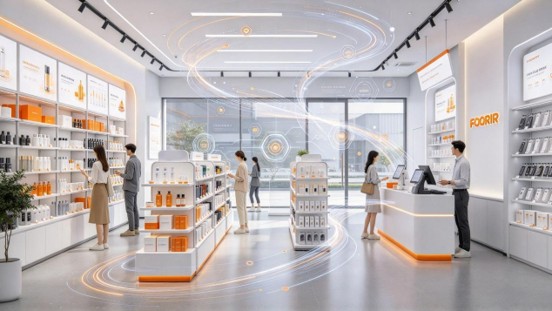
For small retailers, understanding customer demand has traditionally depended on sales reports, staff observations, and experience on the shop floor. These methods remain valuable, but they do not always explain what happens before a purchase is made.
A store may experience heavy foot traffic without seeing a corresponding increase in sales. Another may receive fewer visitors but convert a larger share of them into customers. Understanding this difference can help business owners make more informed decisions about staffing, promotions, and store operations.
As digital tools become more accessible, customer traffic analytics is emerging as one way for independent retailers to gain a clearer picture of activity inside physical stores.
Looking Beyond Sales Figures
Sales reports tell retailers what customers purchased, but they offer a limited view of people who entered a store and left without buying anything.
Customer traffic data adds another perspective. By measuring store entries and identifying patterns across different days and hours, retailers can compare visitor activity with sales performance.
For example, a store owner might discover that Saturday afternoons consistently attract more visitors than weekday mornings. That information could inform staff scheduling, although managers would still need to consider transaction volume, service requirements, and labor costs before changing shifts.
The same principle applies to slower periods. Rather than reducing staffing based on assumptions, retailers can compare traffic patterns with actual workload and customer service needs.
The objective is not to replace business judgment with technology. It is to give decision-makers better information to support it.
Measuring Whether Marketing Brings People Through the Door
Local retailers often rely on seasonal promotions, community events, social media campaigns, and special offers to attract customers.
Evaluating these activities can be difficult when the only available measurement is total sales. Revenue may change because of product prices, purchasing behavior, weather, or other factors unrelated to a campaign.
Customer traffic analytics provides an additional measurement. Retailers can compare visitor counts before, during, and after a promotion to see whether store activity changed.
For a more meaningful evaluation, businesses should consider the same weekdays, comparable operating hours, transaction data, and other relevant conditions. A rise in traffic does not automatically mean a campaign generated additional sales or profit.
Combining visitor data with sales and transaction records offers a more complete view of campaign performance.
Using Store Traffic to Improve Customer Experience
Traffic patterns can also help retailers identify operational issues that are difficult to spot through sales reports alone.
Repeated periods of high activity may indicate a need for additional checkout support or better staff coverage. Differences in movement between store areas may prompt managers to review product placement, signage, or the layout of promotional displays.
These observations should be treated as starting points for investigation rather than automatic proof of a problem.
A crowded area, for instance, may reflect strong product interest, limited space, or a temporary service bottleneck. Additional observation and operational data can help determine the appropriate response.
For small businesses with limited resources, this approach offers a practical way to test changes, compare results, and refine store operations over time.
How AI Is Changing Retail Traffic Analysis
Traditional people counters generally focus on the number of entries and exits. Newer systems can provide additional information about movement patterns and visitor activity, depending on their sensing technology and analytical capabilities.
Several technologies are contributing to this development:
- AI-based detection: Helps identify people within a defined counting area and distinguish relevant movement from certain environmental distractions.
- 3D sensing: Uses depth information to support people detection and movement analysis in suitable installation environments.
- Edge computing: Processes data locally on a device, potentially reducing dependence on continuous cloud processing.
- Data analytics platforms: Organize measurements into reports that help businesses compare activity across time periods and locations.
Some systems also offer repeat-visitor filtering or staff exclusion. These capabilities depend on the specific product, configuration, and identification method; they should not be assumed to be available in every people-counting solution.
Companies working in this field, including FOORIR, develop people-counting and traffic measurement technologies for physical environments. The broader shift is toward turning basic visitor counts into operational information that retailers can interpret alongside sales and other business indicators.
Why Data Quality Matters
Collecting more information does not necessarily lead to better decisions. The usefulness of traffic analytics depends on how reliably the system measures visitors and how appropriately the results are interpreted.
Installation height, entrance layout, overlapping movement, and environmental conditions can affect counting performance. Retailers should therefore assess accuracy under their actual operating conditions rather than relying exclusively on headline specifications.
They should also establish what each metric represents. Total entries, unique visitors, repeat visits, and estimated customer traffic are not interchangeable measurements.
Where a system supports visitor deduplication or staff exclusion, its reporting rules should be clearly understood. Otherwise, comparisons between stores or reporting periods may be misleading.
Privacy is another consideration. Businesses should evaluate what data a system collects, how it is processed, whether images or identifiable information are retained, and what security controls are available. Anonymous counting approaches may reduce privacy risks, but the actual data practices of each solution should be verified.
Choosing Technology That Fits a Small Business
Small retailers rarely have unlimited budgets or dedicated IT teams. A practical technology investment should address a clearly defined business problem without creating unnecessary operational complexity.
Before choosing a solution, business owners should consider four questions.
Does it solve a specific problem?
A store struggling with peak-hour staffing may need reliable hourly traffic reports. A multi-location retailer may place greater value on standardized reporting across branches.
Can it be deployed without major disruption?
Installation requirements, network connectivity, maintenance, and compatibility with existing systems all affect the total cost of ownership.
Can the data support meaningful comparisons?
Consistent measurement methods and clear reporting definitions are important when comparing weekdays, campaigns, seasons, or different locations.
Are privacy and security requirements addressed?
Retailers should understand the system’s data collection, storage, access controls, and retention practices before deployment.
Starting with a limited trial can help a business evaluate whether the information is useful before committing to a wider rollout.
From Visitor Counts to Better Business Decisions
Digital transformation does not always begin with a major software project or a complete replacement of existing systems. For some small retailers, it begins with improving visibility into an everyday business question: how do people use the physical space, and what can that information tell us about operations?
Customer traffic analytics can help retailers identify patterns that sales figures alone may not reveal. When interpreted alongside transaction data, staffing requirements, and local market conditions, those patterns can support more informed decisions.
Technology cannot guarantee higher sales or lower operating costs. Its value lies in helping businesses replace some assumptions with measurable evidence, test operational changes, and learn from the results.
As retail technology becomes more accessible, smaller businesses have additional ways to understand activity in their stores. The competitive advantage will not come simply from collecting more data, but from asking better questions and using reliable information to make practical decisions.
For retailers exploring these capabilities, customer traffic analytics offers one example of how physical-store measurement is evolving beyond basic entry counts.