New Treatment May Prevent Severe Allergic Reactions to Peanuts
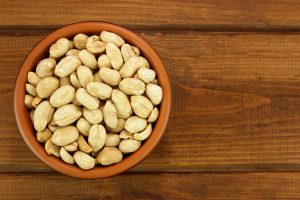 With Americans consuming about 120 million pounds of peanut butter each year between 2008 and 2014, there’s no doubt about Americans’ love of peanut products. However, there are millions of people around the world who have peanut allergies. Peanut allergy reactions can vary in severity, ranging from a mild rash to anaphylaxis. But thanks to a California-based company, there may be a treatment to help prevent severe allergic reactions to peanuts and peanut products.
Aimmune Therapeutics, based in Brisbane, California, has announced that during a study, its daily capsules of peanut flour helped children build a tolerance to peanuts. This study consisted of testing daily doses of peanut flour, contained in a capsule and sprinkled over food, as a possible method to get those with peanut allergies used to the nuts.
The study involved 500 children between the ages of four and 17 with extremely severe peanut allergies. Throughout the study, they were given either peanut flour or a placebo powder in gradually increasing amounts for six months. The final amount was then consumed for an additional six months. Neither the doctors nor the participants were aware of who was getting the peanut flour and who was getting the placebo capsule.
The results of the study found that 67% of children who had the peanut flour treatment were able to tolerate the equivalent of about two peanuts at the end of the year. Only 4% of those with the placebo powder was able to do the same.
About 20% of the participants receiving the peanut powder dropped out of the study, with 12% dropping out because of reactions or other problems.
Despite the overall safety of the experiment, the researchers warn against trying this at home.
“It’s potentially dangerous,” said Dr. Stacie Jones, a University of Arkansas allergy specialist. “This is investigational. It has to be done in a very safe setting” to make sure kids can be treated quickly for any bad reactions that occur.”
Dr. Andrew Bird, an allergy specialist at the University of Texas’ Southwestern Medical Center in Dallas, explained that the treatment doesn’t enable children to eat peanuts if they had no allergy. Rather, the study suggests that being able to tolerate at least once peanut could reduce the risk of an allergic reaction by 95%.
Peanut products are becoming more and more popular in today’s food market. This may have to do with the fact that farmers are able to produce 262% more food with 2% fewer inputs with today’s farming methods. This increase in farming has lead to more than 350,000 metric tons of peanuts being exported as of 2013.
With the rising use and popularity of peanut products, a treatment to prevent severe allergic reactions would bring peace of mind to those who suffer from peanut allergies.
Aimmune plans to propose for U.S. Food and Drug Administration approval for the treatment this year and to seek approval in Europe next year.