New Survey Looks at Participants’ Willingness to Have Robots Perform Dental Procedures
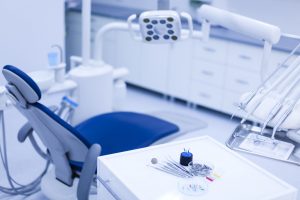 Going to the dentist is not everyone’s favorite activity. It can be uncomfortable, painful, and overall, not enjoyable. But would you feel more comfortable if a robot was performing your dental cleaning?
A recent survey found that people aren’t quite ready to accept the idea of robots performing dental procedures on them. The Embry-Riddle patient-perceptions survey, completed by Stephen Rice, associate professor of human factors at Embry-Riddle Aeronautical University, and five students asked participants about their opinions on robotic dentistry. With today’s technology innovations, you would think people would be excited about the idea of robots in the dentist office. But the survey results say different.
The online survey was taken by 502 participants who were all informed of the current robotic dentistry technology that’s in the works. The survey asked participants their willingness to have a robot perform 10 common dental procedures: teeth cleaning, teeth whitening, applying sealant, tooth extraction, root canal, applying a cap, gum surgery, bonding, putting in a filling, and applying braces.
After answering these initial questions, the participants were then asked, “Imagine that the dentist offers you a 50% (half-price) discount on all dental work done by a robot in his or her office. The robot will work autonomously (without human intervention).”
Overall, about 51% of the participants were moderately or strongly opposed to robotic dentistry. When it came to willingness for more invasive procedures, like root canals and extractions, 66% of respondents were moderate to severely opposed to robots filling in. However, with minimal procedures like teeth cleaning or whitening, only 32% were opposed. And when the price was cut in half, 83% of participants said they’d be willing to allow a robot to perform the procedure.
With the number of dentists dwindling down, and the number of dental implants growing by 500,000 each year, researchers are turning to new technology, like robotics, to make dental procedures easier. According to Rice, robotic dentists have the ability to improve the accuracy of dental procedures and could make dental care more accessible.
Robots, virtual reality, and artificial intelligence are being implemented into a variety of industries aside from dentistry as well. Unfortunately, not everyone is in favor of this new technology. In fact, 51% of exhibitors say they still value meeting with customers in person. In some industries, people find face-to-face contact more valuable than computerized communication. And when it comes to invasive procedures, it seems like people are still wary of the thought of robots taking over.
Rice explained that public perception surveys of new technology gather important information because “consumers help drive what is acceptable with automation, and healthcare is no exception.”
The survey results were presented at the HFEH event, “Factors Affecting Consumers’ Acceptance of Robotic Dentists.”