The Greatest Helicopter Rescues in History
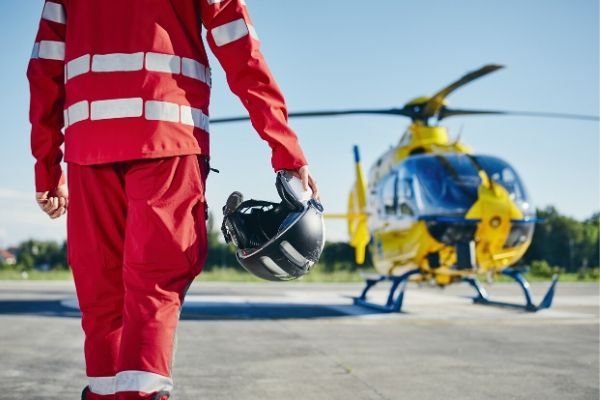
Because of their superior mobility over airplanes, helicopters are used to rescue people from circumstances where no other method of transport will do. Their pilots often brave the extremes of Mother Nature to save people in need. Here are a few of the greatest helicopter rescues in history.
Prinsendam Fire
On October 4, 1980, a Dutch liner known as the MS Prisendam caught fire when one of its fuel lines burst near an engine. The ship was a luxury vessel that carried affluent elderly people on cruises. As the fires spread, the passengers were forced onto lifeboats in dangerous weather. At the time of the incident, the Prisendam was in the Gulf of Alaska, where the ocean waters were highly hostile. This did not deter the U.S. Coast Guard from organizing a rescue team comprised of itself, the U.S. Air Force, and the Royal Canadian Air Force. The supertanker Williamsburgh was directed to the site of the disaster, and CH-113 helicopters were used to carry the people from the lifeboats onto the supertanker. All this occurred while furious winds blew on them and the waves rose as high as 25 feet. In the end, all 320 passengers and 200 crew members of the Prisendam were saved.
Pushing Limits
The record for the highest helicopter rescue was made relatively recently on May 19, 2013. At that time, a Nepalese-Canadian climber named Sudarshan Gautam ascended to the peak of Mt. Everest. This feat was incredibly impressive given the fact that Gautam is an amputee who lost both his arms in his teenage years. Problems arose, however, as he descended back down. At about 23,000 feet, he reached a state of exhaustion that prevented him from going onward. A helicopter was sent to rescue him, even though that elevation was around the limits of where it could safely operate. In normal situations, small helicopters rarely venture beyond 10,000 feet. Pilot Maurizio Folini, along with Simone Moro and Armin Senoner, nevertheless took up the task and successfully brought Gautam back down. The precise record they set that day is 23,590 feet.
The First
With the complexity involved with achieving vertical flight, it took a long time for engineers to get from idea to working reality when it came to helicopters. While da Vinci dreamed of flying machines centuries earlier, it was not until WWII that the first helicopters were used, and they still had to prove their worth. When Technical Sergeant Ed Hladovack and three British soldiers became stranded deep behind Japanese enemy lines in April of 1944, this new machine finally worked its way into the limelight. The jungle area the four men landed in was devoid of flat ground on which to land, so an L-5 Sentinel plane could not save them, though it could find where they were.
2nd Lieutenant Carter Harman—the only helicopter pilot available—was called in to pick up the soldiers and transport them to waiting airplanes at a nearby sandbar. It was still an early model, however, and Harman’s YR-4B helicopter could only carry one man at a time. Despite this limitation and an unexpected engine failure, Harman got all four soldiers to safety over the course of two days. His actions forever cemented the validity of using helicopters for future rescue missions.