Christmas Cactus Care
Decorative indoor plants can increase a space’s aesthetic appeal and make the atmosphere healthy by purifying the air and raising humidity. They can have vibrant flowers or lush green leaves, giving the room a natural look. They can be placed in stylish pots, hanging baskets, or terrariums.
The Christmas cactus is an ornamental plant known for its bright and joyful blooms during the holiday season. Unlike other desert cacti, this tropical species originates from Brazil’s coastal mountains. It produces beautiful tubular flowers in red, white, pink, and purple shades and grows well in humid conditions.
Growcycle is the top-rated marketplace for getting all the tools required for Christmas Cactus Care. These help grow lush, healthy, and stunning christmas cactus plants indoors. It encourages the bloom of its beautiful flowers.
History and Origins
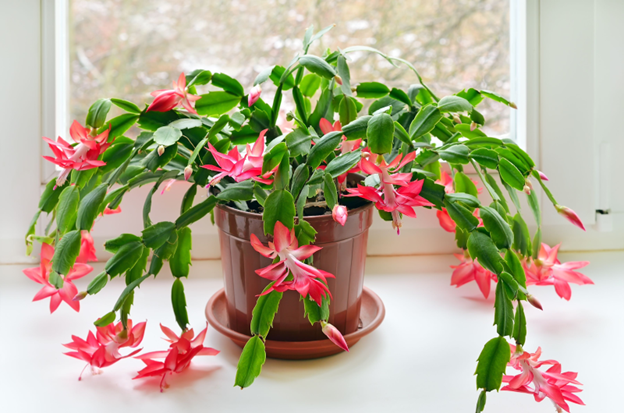
The Christmas cactus belongs to the Schlumbergera genus, named after Frederic Schlumberger, a French cactus collector. It is a member of the Cactaceae family but grows in Brazil’s humid, shaded forests, unlike desert cacti. As an epiphyte, it sticks to rocks or trees. Early in the 19th century, the plant was brought to Europe, where it immediately became popular for its unique look and blooms during the holidays.
Due to crossbreeding, the plant has developed into several varieties over time, such as the Easter cactus and the Thanksgiving cactus, which are named after the holidays they usually bloom. Its most prominent features are the silky decorated stem segments and slightly lowered flowers.
Physical Characteristics
The Christmas cactus has a distinctive appearance, making it different from other cacti. Some of its key features include:
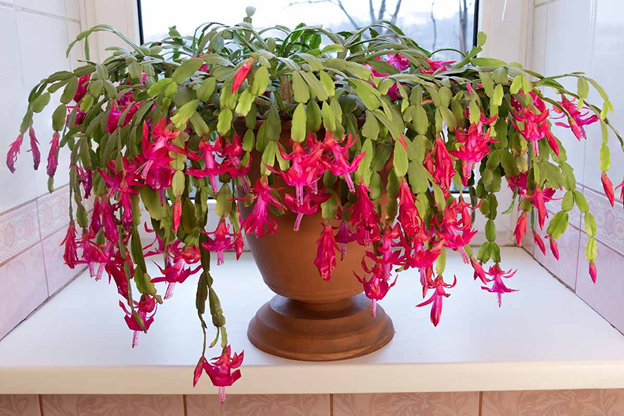
- Flattened, segmented Stems: The plant has smooth, leaf-like segments connected end to end, forming trailing branches.
- Tubular Flowers: These flowers emerge at the tips of the segments and have a beautiful, layered shape with multiple petals.
- Color Variety: Red, pink, white, orange, and purple are the colors of Christmas cactus flowers, but some hybrid types display multiple colors.
- Non-spiny Nature: Unlike desert cacti, this plant does not have sharp spines, making it safe to handle.
- Long Lifespan: A Christmas cactus can live for several decades with proper care.
How to Care for a Christmas Cactus
Caring for a Christmas cactus is simple but has different requirements from desert cacti. Here are essential care tips:
1. Light Requirements
Christmas cacti prefer indirect sunlight. Intense sunlight, particularly during the summer, can burn their leaves, and they may not bloom without light. A north—or east-facing window is ideal, but if placed in a south—or west-facing window, use cloth curtains to diffuse the light.
2. Temperature and Humidity
Unlike desert cacti, the Christmas cactus thrives in moderate temperatures and high humidity. The ideal daytime temperature is 65°F to 75°F, and at night, it is 55°F to 65°F. Humidity should be moderate to high. Placing the plant with stones and water on a tray can help maintain humidity levels.
3. Watering
Christmas cacti require regular irrigation but should not be over-irrigated. The soil should be kept slightly moist but never saturated. Water when the upper layer of soil is dried. Reduce watering after the blooming period to encourage dormancy. Use room-temperature water to prevent shocking the roots.
4. Soil and Potting
An adequately drained soil mix is necessary to avoid root rot. Using a mixture of sand, potting soil, and perlite or orchid bark is effective. Drainage holes are required to remove extra water from the pot.
5. Fertilization
Fertilize the Christmas cactus with a balanced, diluted fertilizer every month during the growing seasons. Stop nutrition in late summer to encourage flower bud formation.
Essential Tips to Encourage Blooms
A Christmas cactus can be encouraged to bloom with specific care, particularly in the weeks leading up to its blooming season. Here are the key steps to ensure beautiful flowers during the holiday season:
-
Provide Darkness
Christmas cacti require long nights and short days to start bud formation. About six to eight weeks before the desired bloom time, place the plant in total darkness for 12 to 14 hours each night in a closet or under a box. During the day, keep it in bright, indirect light. Continue this process for at least six weeks or until flower buds appear.
-
Adjust Temperature
Temperature plays a crucial role in bud development. To encourage blooms, keep the plant at a cooler temperature, between 55°F and 60°F at night. Avoid placing it near heat sources, vents, or drafts, as sudden temperature changes can cause bud drop.
-
Reduce Watering
To promote blooming, irrigation should be slightly reduced during the bud-setting period. If the soil becomes too dry, the plant may become stressed. After buds form, water them frequently again to keep them from dropping.
-
Stop Fertilizing
Stop fertilizing the plant a month or so before the desired bloom. Fertilization during this time may prevent blooming.
-
Avoid Disturbing the Plant
Do not move or rotate the plant too much once the buds form. Due to quick changes in light, temperature, exposure, or location, buds can break off before blooming.
FAQs
Why is it called a Christmas cactus?
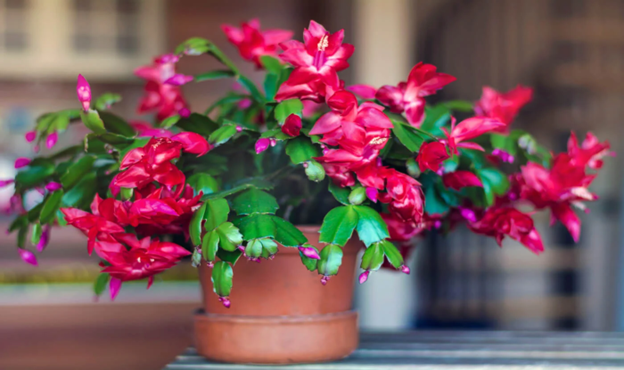
The plant is called a Christmas cactus because it usually blooms around Christmas, producing vibrant flowers in winter.
How long do the flowers last?
The blooms usually last one to two weeks, but with ideal conditions, they can remain vibrant for up to four to six weeks.
Does a Christmas cactus need to be pruned?
Pruning is not necessary but can help promote bushier growth. Trim the plant after blooming by removing a few segments.
The Bottom Line
The Christmas cactus is a stunning and joyful houseplant that brings beauty and warmth to any home, especially during the holiday season. With proper care, it can bloom for many years, adding a festive touch to winter celebrations. Visit Growcycle to learn more about its care tips to enjoy beautiful blooms during the winter holidays.