6 Ways a Polygraph Test Can Detect Deception

Trust is the glue that holds relationships together, whether in love or business. But let’s be honest: trust is fragile, and once doubts set in, it can be hard to resort to rock-solid. What follows is suspicion or pointing out accusations that shake the foundation of relationships.
If there are doubts, and you need a way to establish the truth, talking it out might help resolve some concerns, but what happens when words alone aren’t enough?
That’s where a polygraph test can step in.
Contrary to what most people might think, a polygraph test isn’t just about catching liars. It’s a powerful tool for restoring credibility, saving reputation, or finding closure. It measures the body’s involuntary reactions, making it a reliable way to reveal truths hidden and covered under even the calmest demeanor.
So, how exactly does it do this? Here are the six key ways a polygraph test detects deception.
Control Questions: Setting the Scene
Usually, the test starts with the examiner asking the subjects questions. The goal is to establish what’s called a “truth baseline.” It’s basically figuring out how the body reacts when answering easy questions with straightforward answers.
For instance, one can be asked what day of the week it is or how many days there are in a week. The body tends to react differently when one lies when asked relevant questions like “Did you cheat.”
So, with the baseline established, the examiner can analyze the changes in the polygraph to spot anomalies. For more accuracy in the results, it’s best to work with a seasoned polygraph test examiner who knows the ins and outs of a test.
1. Change in Heart Rate
In lie detection, heart rate often reveals more than words can.
Scientifically, change in heart rate is your body’s natural response to stress. When triggered, your body releases stress hormones cortisol and adrenaline that change the heart rate and heighten nervousness. The heart rate change when tensed or not answering questions honestly makes it a key indicator in polygraphs.
How notable the fluctuation in heart rate depends on the stress level the question exposes one to. If it’s a tough one and the response is a big lie, the body perceives such a stressful situation as dangerous and prepares for flight or fight, increasing the heart rate.
But if it’s a little lie, the heart rate won’t have much effect.
2. Rise in Blood Pressure
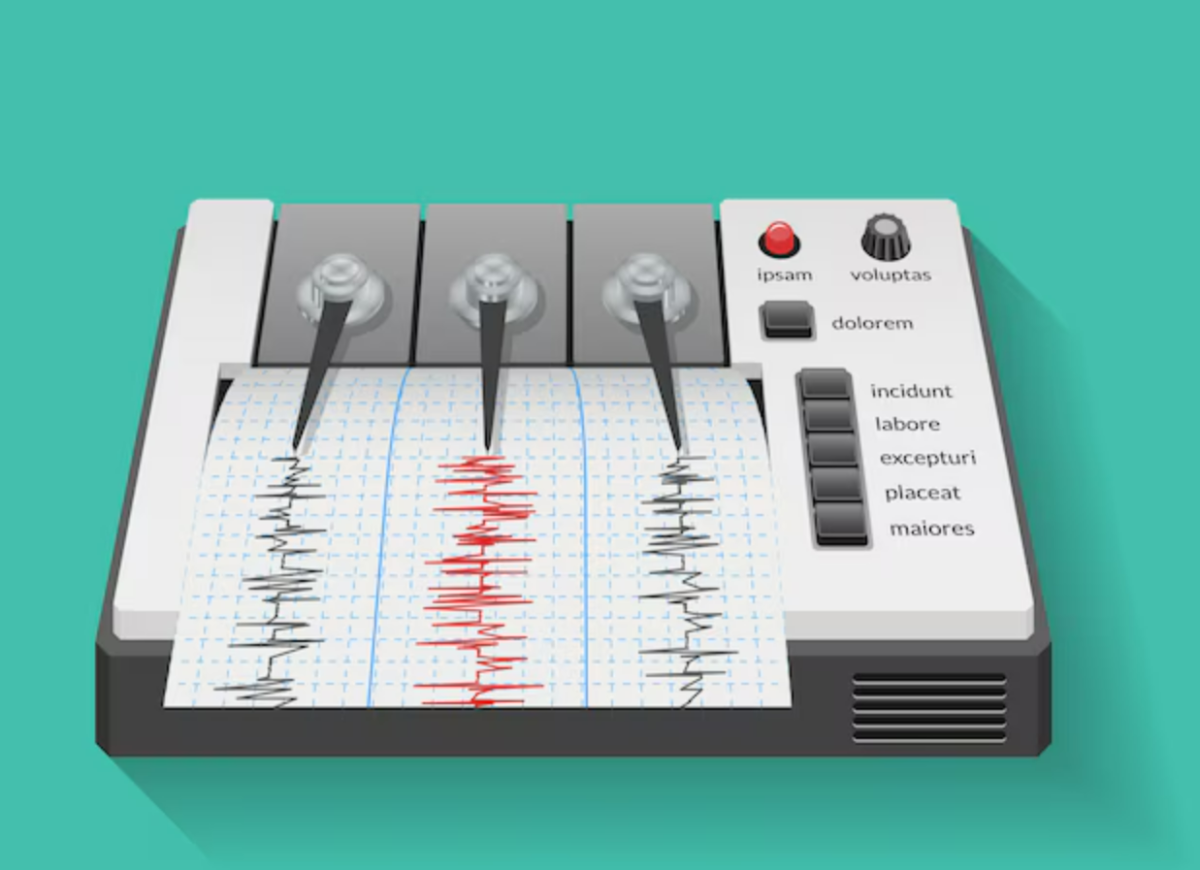
You’ve probably had your blood pressure measured at the clinic. Usually, the doctor wraps a cuff around your arm; the same is done in a polygraph. If someone lies during screening, blood pressure will rise temporarily because the stress response kicks in.
The spike in blood pressure can be noticed in many other scenarios, like after coffee or just nervousness when one is scared for the test. This reinforces why working with a skilled examiner can help isolate or minimize the effects of these factors to avoid false positives.
3. Variation in Breathing Patterns
Just like blood pressure and heart rate, breathing holds crucial information.
Polygraph tests measure respiratory patterns when you breathe shallowly, deeply, fast, or slowly. These changes can be interpreted as different emotional states. So, during screening, pneumograph tubes are wrapped around the abdomen and chest to monitor breathing, helping spot anomalies when sensitive questions are asked.
When someone lies, their breathing rises as the body prepares for fight or flight. Since some people naturally breathe slowly or faster during stress, an experienced examiner can help control the breath and avoid mixed signals.
4. Skin Conductivity
If you’ve been in a stressful moment, there’s a good chance you felt a cold sweat trickling down your armpits or your hands and feet get sweaty. Nervous sweating is nothing new; it’s a natural response to anxiety or pressure — something we’ve all experienced at some point. The body reacts to heightened emotions this way when one feels tense or uneasy.
Whenever someone is confronted with a tough question during the lie detection texts, anxiety triggers the nervous system. The response prepares the body to either fight or flee, and these changes are noticeable by raising body temperature.
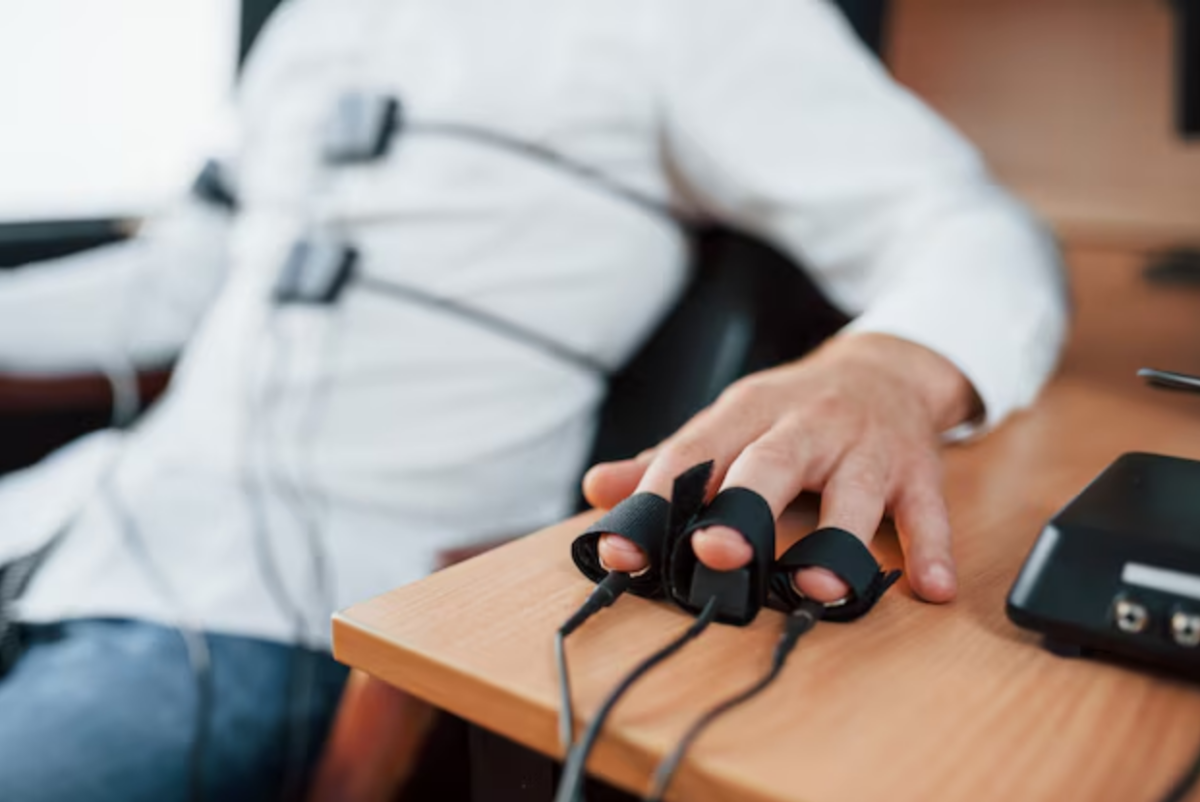
The polygraph measures sweat skin conductivity to reveal the level of honesty or deception. The electrodes are placed under the fingerprints to detect changes in conductivity. As the sweat increases, conductivity increases, which usually portrays a high-stress level.
5. Muscle Tension
Even slight body movement can speak volumes. It’s common for someone to stiffen their shoulders or clench their jaws when things are not going right.
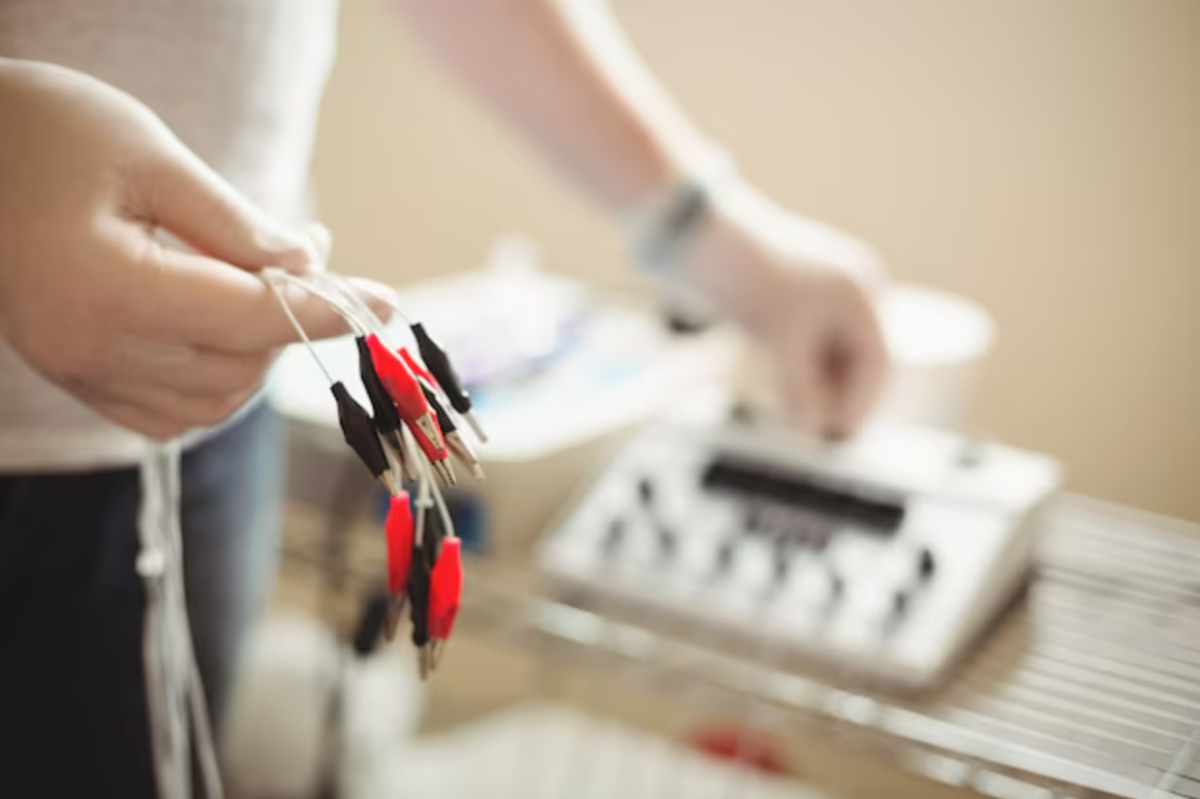
Polygraph tests capitalize on these involuntary muscle tension shifts to uncover some lies. Thanks to research and technological innovations, newer devices can analyze micro-movements, especially on the facial muscles, increasing the accuracy of lie detection. Although it’s not typical in normal polygraphs, it shows the capability of lie detection in a few years to come.
6. Body movements
Involuntary body movements can be a good indicator of when someone is being deceptive. So, in addition to monitoring these key variables, a polygraph uses a motion pad to track small physical movements that are often ignored. That could be changing posture, playing with fingers, or making subtle leg adjustments.
Such shifts are a sign of underlying internal conflict or anxiety, which are common when someone is not telling the truth. But again, not all body movements mean that the subject is being deceptive. The nervousness can make someone slightly move, so you need a trained examiner to distinguish various scenarios.
Conclusion
From government contracting and employment to relationship testing, polygraph tests come in handy in many scenarios. They help you gauge someone’s level of truth, which can be a game-changer when making critical decisions. As seen, there are many ways how polygraph tests work.
Overall, they track anomalies in the subject’s psychological processes against how they behave in normal situations when answering questions, helping uncover something they could be hiding.
But always work with a seasoned examiner for more accurate results. The last thing you want is to spend your time and money only to get inconclusive results from the test. Expert interpretation provided by a seasoned examiner makes identifying unusual results from normal bodily reactions easy -guaranteeing higher accuracy.