The Cedars historic home being brought back to life by local couple
By Carole Kelly
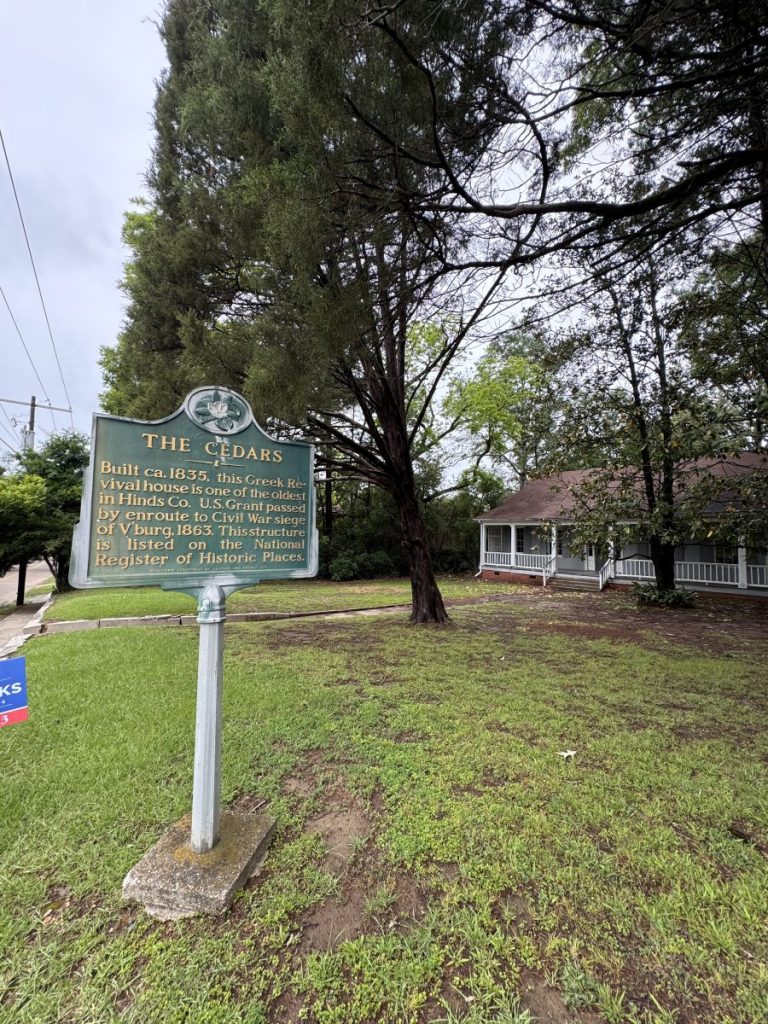
The Cedars is listed on the National Register of Historic Places.
The historic home known as The Cedars, one of only two residences in Clinton on the National Register of Historic Places, was hidden from view, appropriately enough, by many cedar trees on the property on College Street. Alicia and Chip Wilbanks, who currently live in the house next door, bought the home last year, and tree removal was one of the first tasks on their list of renovation and restoration for the historic structure and its grounds.
Now once again visible to those traveling along College Street, the one-story frame house – which is notably the oldest house in Hinds County – is being brought back to life.
Named for a grove of more than fifty cedar trees once located on its grounds, sources state that the original property was owned by pioneer settlers Minerva Fitz Morgan and Jacob B. Morgan. Exact dates are elusive, but records indicate that by 1839 there was a structure on the site.
The Greek Revival architectural structure changed hands at least five times during its first twenty years of existence. In 1859, records show that Emile Menger, a professor of music at Mississippi College, arrived from Germany with his family and lived at the house.
It is believed that General Ulysses S. Grant visited the home at some point during the nineteenth century, though the date and owners at the time of his supposed visit are unknown.
The Mengers sold the house and five-acre property in 1903 to Patrick Henry Eager, a professor of English and acting president of Mississippi College, who added an addition to the home that same year. The name of the house was changed by Mrs. Eager from “Cedar Grove” to “The Cedars,” to avoid confusion with her family home “Cedar Grove” in Aberdeen, Mississippi.
The Eager family owned the home for 72 years; and, during that time, the property was divided into smaller lots.
The Cedars was sold in 1975 to James T. Currie and Patricia Sumners Currie, who restored the house and welcomed presidential candidate Jimmy Carter in 1976. The Curries were responsible for obtaining the National Register of Historic Places designation for the home.
Ann Hoover bought the house in the 1980s.
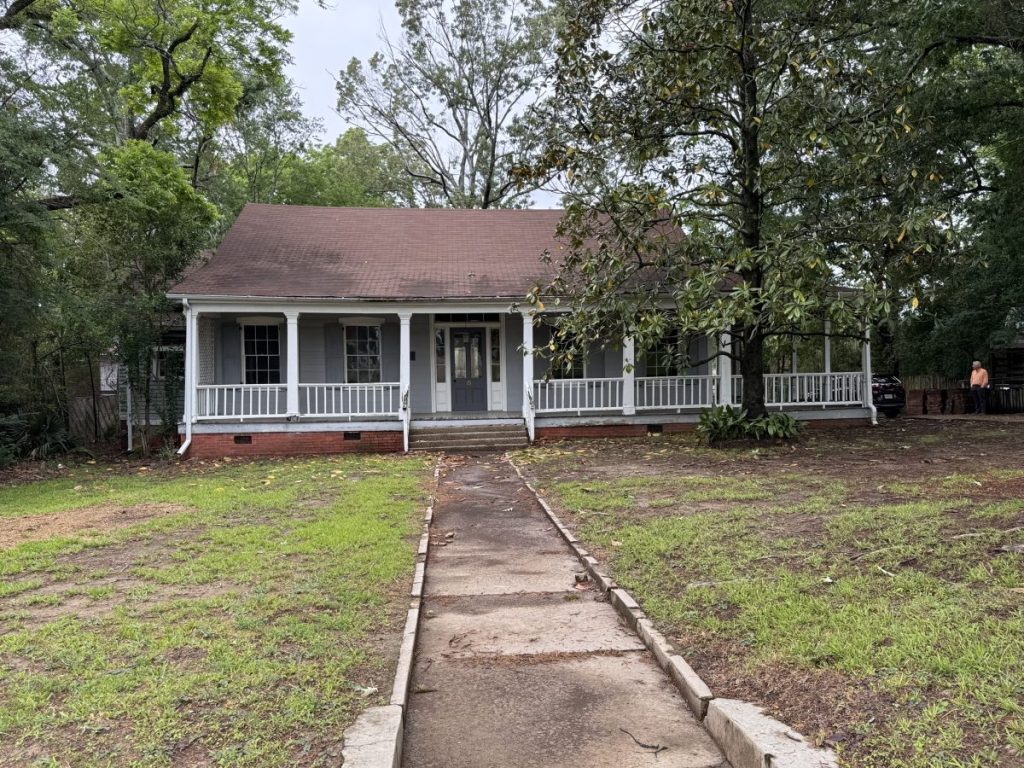
The Cedars, pictured in a photo from May 2025, dates back to at least 1839. It is being restored by Clintonians Chip and Alicia Wilbanks.
When Hoover passes away, her son, Jay Hoover, approached the Wilbanks at their neighboring home and told them that his mother had designated them as her preferred purchasers of The Cedars. After lengthy discussions of whether to buy or not to buy – knowing “to buy” meant they were in for plenty more decision-making discussions and also plenty of work – the Wilbanks purchased the property in October of last year. Living next door to the home, they are in a prime spot for their undertaking of restoring The Cedars.
“The oldest house still standing in Hinds County—it’s unbelievable,” says Alicia. “Apparently the house was very well built, and we were shocked to find the house’s foundation is only three inches off from one side to the other side.”
The talents of the couple lend themselves to the renovation. Chip, who is quick to point out that Alicia is the decorator, is more involved with the outside of the project, while Alicia is in charge of the inside. Chip himself says he loves the yard work and had the necessary tree removal promptly completed.
Architectural preservation and renovation for registered historic homes involves maintaining a building’s original features and retaining its historic character while making necessary repairs and updates, most of which have to be approved in advance. The Wilbanks submitted plans and received approval from the Mississippi Department of Archives and History for changes such as paint colors, wallpaper selection, and door removal, so space can be repurposed.
One of the first challenges was clearing the house of some pieces left from the antique shop that the previous owner had operated on the site. An estate sale earlier this year cleared some items; others were donated.
The spacious house – with a study, three bedrooms, including a master bedroom suite, and three baths – is undergoing detailed transformations and will ultimately emerge larger, with the Wilbanks increasing the square footage from 2,400 to 3,600 square feet.
For Alicia, a needed update includes a carport. The house has required a new roof. Porch rails are to be removed from the side porch entry, since they were added and are not part of the historical package. A building in the back of the property, perhaps once a barn, offers storage space.
As Chip gives a tour of the house, the empty and spacious rooms, with high ceilings and beautiful hardwood floors, bear witness to the quality and love that has been put into the home through the years. Chip’s descriptions of some of the history and findings they have uncovered during their preservation and restoration work, coupled with an overlay of how they are reimagining the spaces for use by their family (which includes grown children and young grandchildren), makes it clear that the home’s almost 200 years of memories are set to continue for many years to come.
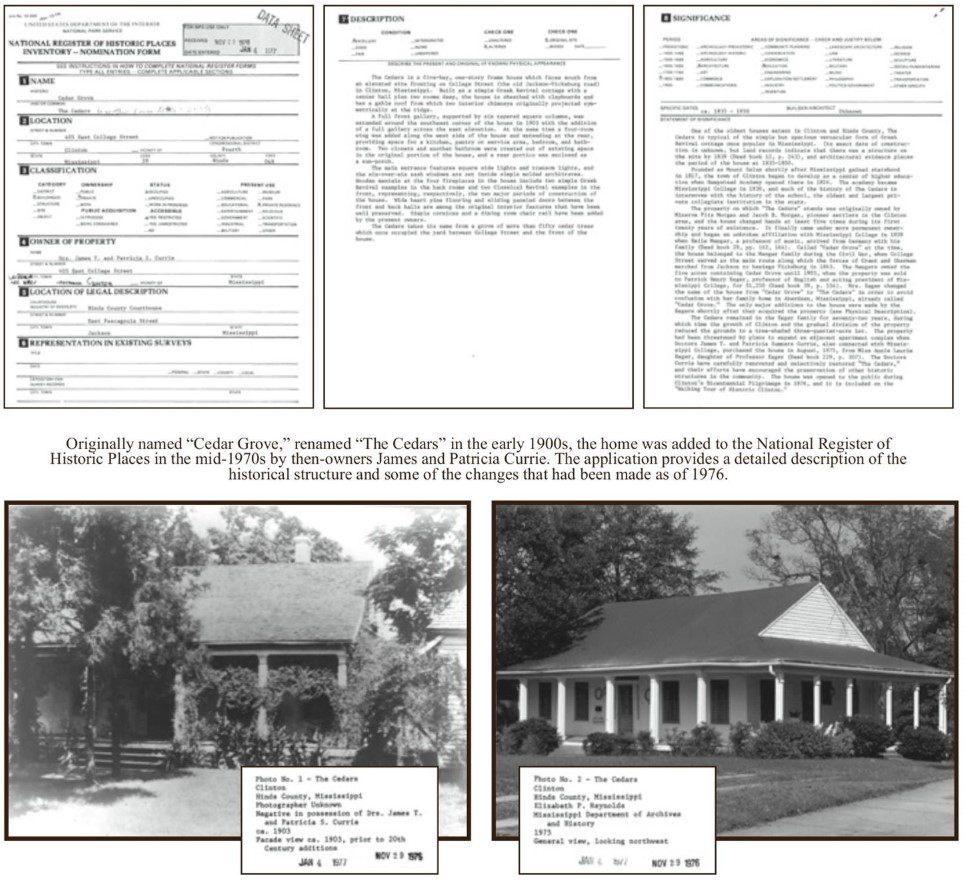
National Register application photos