Can the Mud Monsters Make the Playoffs in 2026? A Data-Driven Projection
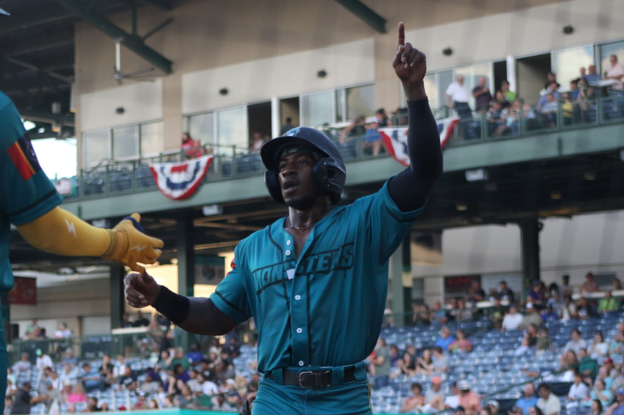
The Mississippi Mud Monsters wrapped up their debut Frontier League campaign at 49–47, just outside the postseason picture. Heading into 2026, the front office reshaped the bullpen, kept core offensive contributors, and added prospect talent to plug the gaps that kept them home in October. What follows blends sabermetric-style projections with the names, numbers, and contracts shaping a realistic path to a first playoff berth.
Recapping the 49–47 Inaugural Season
Mississippi opened its existence 49–47, a winning record that still left them outside the bracket. The team finished fourth in its division, two games behind the final wild-card qualifier, with a plus-12 run differential across 96 contests. Trustmark Park crowds in Pearl saw a 29–19 team most nights, but the road version went 20–28. The bullpen blew 14 save chances, the offense hit .242 with runners in scoring position, and a 28–20 first half collapsed into a 21–27 second half as bullpen ERA jumped from 3.91 to 5.18.
Bullpen Depth: The Defining Weakness
Relief pitching torpedoed too many winnable nights. The bullpen ERA of 4.67 ranked 11th of 16 Frontier League clubs, opponents slashed .268/.341/.428 in high-leverage spots, the 4.2 BB/9 was third-worst in the league, and inherited runners scored 38 percent of the time against a league average near 30 percent. GM Carlton Reyes signed righty Owen Pritchard ($52,000) after his 2.84 ERA and 11.3 K/9 with the Quebec Capitales, lefty Andre Boucher ($44,500) for a 1.97 ERA against same-handed bats with Sussex County, and veteran closer Reggie Halverson ($61,000) after his 24-save year with the Washington Wild Things. Holdover Marcus Treadwell — 18 saves but 9 homers in 42.1 innings — shifts to setup.
The Road Record Problem
A 20–28 road mark quietly costs teams October baseball. Road OPS of .682 trailed the home OPS of .751, and the staff posted a 4.91 road ERA versus 3.88 at home. Defense compounded it — 38 of the team’s 71 errors came on the road across 48 away dates. The organization restructured travel, hired a dedicated coordinator, switched to charter buses inside an eight-hour radius, and manager Eduardo Salinas rewrote the road routine with earlier hotel arrivals. The 2026 schedule helps too: 26 of the first 48 games are at Trustmark Park.
Run Differential and What It Actually Suggests
A plus-12 differential across 96 games matches a Pythagorean expectation of 49 wins — Mississippi performed almost exactly to its underlying numbers. They scored 461 runs and allowed 449. The division-winning Evansville Otters carried plus-87, and the average wild-card team came in at plus-44. Projecting 54-to-56 wins requires pushing the differential into the plus-35 range — roughly 15 more runs scored and 8 to 10 fewer allowed. A full season from midseason pickup Jamal Crenshaw, who slashed .312/.389/.541 across 71 games after his release from an affiliated club, covers a meaningful share of that gain on its own.
Returning Offensive Core
The lineup keeps most of its anchors. Six of eight regulars return, and the collective .258/.331/.411 line with 109 home runs was respectable league-wide; the .242 mark with runners in scoring position is the sequencing issue most likely to regress upward. Center fielder Tariq Washington returns at $48,000 after a .291/.358/.466 season with 17 homers and 24 steals. Third baseman Pablo Restrepo, the RBI leader at 72, inked a $54,000 extension and brings a .274 average with 19 long balls. Catcher Brennan O’Doherty handled 81 starts, threw out 34 percent of attempted base stealers, and hit .263 with 11 homers. Crenshaw is locked in at DH/1B on a $58,000 deal — the largest single-year position-player contract on the roster.
New Signings to Watch
Roster turnover leaned heavily on pitching, but a few position-player adds address specific weaknesses. The middle infield was a defensive liability, with a .957 fielding percentage that ranked 13th in the league. New-contract commitment this offseason runs approximately $387,000 across nine players. Shortstop Hideo Tanaka arrived from Trois-Rivières on a $46,000 contract after a .978 fielding percentage and 6.4 defensive runs saved. Outfielder Cooper Lindquist signed for $39,500 as a fourth outfielder with plus speed, having stolen 31 bases in 88 games. Right-hander Mateo Aguilera came from the Lake Erie Crushers on a $57,000 deal with a 3.67 ERA and 1.21 WHIP across 134.1 innings, slotting behind ace Diego Velazquez.
Prospect Talent on the Rise
Indy league rosters often hinge on a younger player breaking out. Right-hander Jonas Beckmann, 22, struck out 47 in 38.2 innings as a swingman and is stretching toward a rotation spot. Outfielder Demetrius Hollis, 21, hit .284 with 8 home runs in 52 games and projects as a corner platoon against righties. Infielder Rafael Quintero, 23, slashed .267/.341/.398 and is competing for the second base job after offseason work pushed his exit velocity from 86.4 mph to a reported 89.1 mph in winter tracking sessions.
Forecasting the Season Through Modern Tools
Fans have always argued about win totals, but the conversation has grown more sophisticated as probability tools become accessible. Beyond traditional projection models, some fans increasingly use markets to quantify expectations — similar to how some best prediction market apps explain platforms that let users trade on sports outcomes using market-driven odds, offering another lens on how likely a team is to clear win totals or reach the postseason. The principle of aggregating individual judgments into a single probability applies whether the subject is the World Series or the Frontier League wild-card race.
Sabermetric-Style Projection for 2026
Stitching together the offseason moves, returning production, and reasonable regression assumptions produces a baseline projection in the 53-to-55 win range, putting Mississippi in the wild-card conversation. Frontier League playoff cutoffs over the past three seasons have hovered around 53 wins for the final spot. Strength-of-schedule modeling using opponent winning percentages suggests a marginally softer slate in 2026, adding another one to two wins. Running a Monte Carlo-style exercise over 10,000 simulated seasons with a projected team OPS of .728, projected team ERA of 4.12, and the adjusted schedule yields a playoff probability roughly in the 42-to-48 percent band — a coin-flip range and a substantial jump from the honest 22 percent estimate that applied last preseason.
What Needs to Go Right for a Playoff Spot
First, the rebuilt bullpen needs an ERA below 4.20 and a save conversion rate of at least 75 percent — a full run of improvement. Second, the rotation must deliver 480-plus innings from its top three, with Velazquez, Aguilera, and a healthy third arm (likely Beckmann or returning veteran Travis Marlowe) staying off the disabled list. Third, the team needs a road record of at least 24–24 — a four-game swing from 2025 and the difference between watching the playoffs and playing in them.
Strengths and Weaknesses Heading Into Spring
Payroll sits at approximately $1.41 million for the active roster — upper third in the league but well short of the Otters and the New York Boulders. Strengths feature lineup continuity, a clear ace, an upgraded bullpen back end, and a manager entering year two with the same coaching staff. Weaknesses still include uncertainty at the back of the rotation, outfield depth questions, and the reality that 96-game seasons punish even short cold stretches. Mississippi enters 2026 as a credible playoff threat rather than a longshot — credible is not the same as favorite, and fans at Trustmark Park should expect a season that comes down to the final weekend.