Beyond the treatment chair: Cornelius Kimple’s full-circle journey with kidney disease
By Cara Pridemore
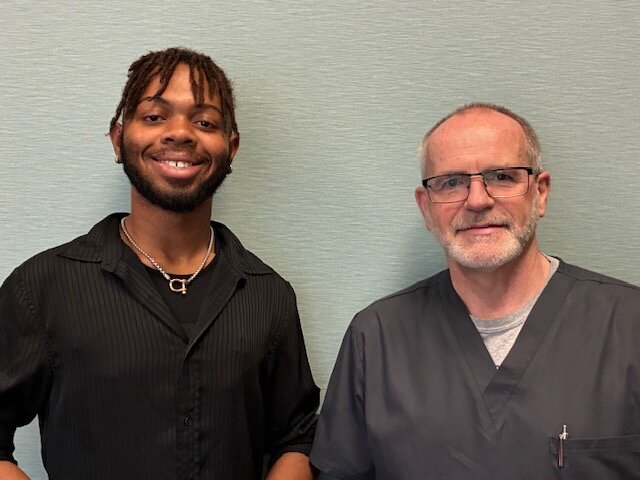
Cornelius Kimple and Mark Roth
Few one-year-olds have to undergo surgery, especially one as life-changing as the procedure that saved Cornelius Kimple’s life. At just eighteen months old, Kimple received a kidney donated by his mother.
“We went from hospital to hospital for those first few months of my birth,” Cornelius Kimple, a 23-year-old Clinton native, said. “We found out that I had a blockage even before birth, which was the main cause of me losing my kidney originally. So, she [my mother] just said, ‘Hey, it’s my child; I want to do this for him,’ and I’m here now.”
More than two decades later, Kimple awaits his second transplant. While undergoing dialysis, Kimple has learned to strive for a sense of normalcy, building his own character within the process.
“It was very different, to say the least, because you have to think about being so intentional with your time,” Kimple said. “You’re taking twelve hours out of your week to do dialysis, so for me, that was a struggle at first.”
Through it all, Kimple says his family and his community have kept him grounded.
In his younger years, that community included Camp Bridges, a support camp for children who have received organ transplants.
“For me, going to Camp Bridges is the one thing I can remember since forever, because it taught me a lot about not feeling like I was such an outsider to the world,” he said. “It made a family for life for me, and I still talk to them to this day.”
Kimple has since returned to Camp Bridges as a counselor, seeking to support and mentor children whose experiences he deeply understands.
“It really is a full-circle moment for me, because I never assumed that I would now be in the place where I could actually help somebody in the same position that I was in,” he said. “So, it’s really fulfilling.”
As an adult, Kimple’s support comes from Fresenius Kidney Care in Clinton, a nationwide dialysis service provider that supports patients with chronic kidney disease. With the help of the caregivers at Fresenius, Kimple has been able to live a normal life, traveling for work and even spending as long as three months away from home.
“For us to figure that out really took a lot of communication on my end and a lot of help from their end because, honestly, I don’t think I could have done it without them,” he said.
Much of that support comes from the medical team coordinating Kimple’s treatment. Mark Roth, Kimple’s primary caregiver and social worker, said his goal is to help patients like Kimple continue pursuing and accomplishing all they are capable of achieving.
“We don’t want them to give up doing the things that they enjoy,” Roth said.
In Kimple’s case, Roth said a Fresenius secretary finds clinics close to wherever Kimple is staying for work and sends in his required documents and paperwork. They work around Kimple’s schedule, scheduling optimal times for him to dialyze. This flexibility has given Kimple a sense of independence and a new mindset.
“I keep a ‘no limits’ mindset,” Kimple said. “Do not let your dialysis or kidney disease define you. You define it by how you live your life, and there are many people who are functioning that you would never know are on dialysis.”
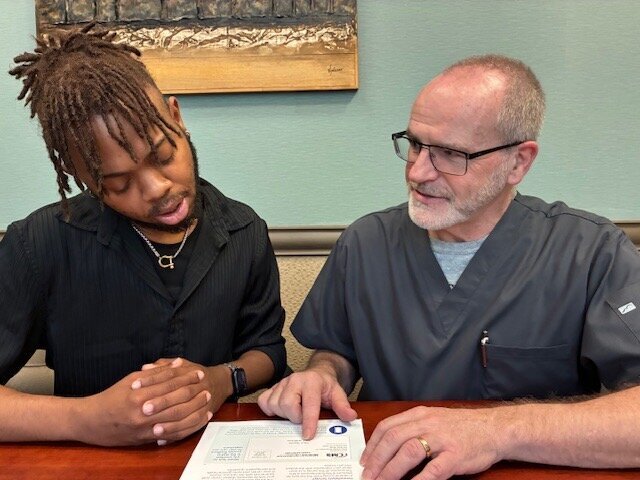
Roth seeks to empower and support individuals like Kimple by reminding them that their lives are far from over.
“It’s a grieving process,” Roth said. “Our patients do grieve when they find out they have kidney disease and that they’re going to have to be on dialysis. It’s a death of dreams, but they have someone helping them work through that to realize that they can move on, and they can function and have normalcy.”
Roth also said that the Fresenius team serves as a resource bank, helping patients through the emotional, financial, logistical and physical aspects of the journey.
“We have people who can walk the patient through whatever challenges they are facing,” he said.
Roth has enjoyed seeing Kimple fulfill his dreams by maintaining a busy schedule – working multiple jobs, volunteering at Camp Bridges, traveling as an ambassador and going back to school full time.
“I don’t want to be negative, but I sometimes have to tell him, ‘You might want to slow down a little bit and take one thing at a time,’” Roth said.
Like Roth, Kimple wants to motivate his fellow patients to see “beyond the treatment chair,” by emphasizing all their abilities above their one disability. This journey requires hope and a strong support system.
“There have been moments where I thought I was going to lose hope, but you have friends, family, people like Mr. Mark, the team here at Kidney Care, that are going to life you up in those times of need,” Kimple said.
Kimple’s ultimate goal is to receive his kidney transplant within the year.
“He’s far enough along in the process that it’s very likely it could be this year, and that’s what we’re working toward,” Roth said.
As Kimple prepares for this procedure, both he and Roth hope his story encourages people to consider organ donation, describing the procedure as giving a person a new lease on life.
“The waitlist for organ donation is long, and the donors are few,” Roth said. “Get that little heart placed on your driver’s license, or just sign up for organ donation; so you can know when your life ends, you can give a gift to somebody else, so that they can continue to live.”