What Causes Cargo to Fall from Commercial Trucks on the Road
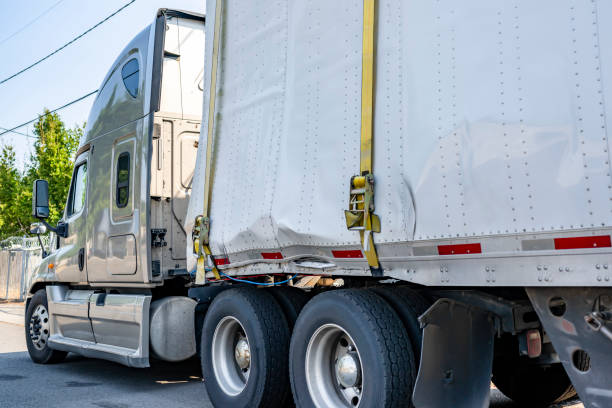
Cargo rarely falls from a commercial truck without a reason. In most cases, it happens because the load was improperly secured, poorly balanced, insufficiently inspected, or transported with damaged securement equipment. Since federal safety regulations are designed to prevent cargo from falling onto the roadway, these incidents often point to preventable mistakes.
While investigating lost load accidents, authorities want to understand why these crashes happen and who may be responsible. These investigations often focus on whether the driver, trucking company, or cargo loader followed the required safety procedures before and during the trip.
Improper Cargo Securement
The most common reason cargo falls from a truck is improper securement.
Loads must be restrained so they cannot shift, tip, or fall while the vehicle is moving. If there are too few straps or chains, the wrong type of securement equipment is used, or the load is tied down incorrectly, cargo can break free during normal driving.
Even small mistakes during loading can create serious hazards once the truck reaches highway speeds.
Failure to Inspect the Load
Properly securing cargo is only the first step. Drivers must also inspect the load before leaving and periodically throughout the trip.
Problems that develop on the road can include:
- Loose straps or chains
- Torn tarps
- Shifting cargo
- Damaged securement devices
If these issues are not identified and corrected promptly, the load may eventually fall into traffic.
Federal regulations recognize the importance of these inspections. 49 C.F.R. § 392.9 requires commercial drivers to inspect cargo and securement devices before beginning a trip and at specified intervals during transport.
Overloaded or Poorly Balanced Cargo
A truck carrying too much weight, or carrying it unevenly, is much harder to control safely.
Improper weight distribution places additional stress on the securement system, increasing the chance that cargo will move during braking, acceleration, or cornering.
Items commonly involved in these incidents include:
- Lumber
- Steel beams
- Machinery
- Construction materials
- Palletized freight
Even properly secured cargo may become unstable if the load itself is poorly balanced.
Worn or Damaged Securement Equipment
Securement equipment wears out over time and must be maintained regularly.
Common problems include:
- Frayed straps
- Rusted chains
- Broken ratchets
- Damaged binders
- Worn tarps
When these components fail, cargo can come loose even if it was loaded correctly at the beginning of the trip.
Cargo Can Shift During Normal Driving
Hard braking, sharp turns, uneven pavement, and emergency maneuvers all place significant force on the cargo.
Without adequate restraints, the load may slide forward, shift sideways, or tip over. Once cargo leaves the trailer, it can strike nearby vehicles, block traffic lanes, or trigger multi-vehicle collisions.
To reduce these risks, 49 C.F.R. § 393.100 requires commercial vehicles to be loaded and equipped so cargo does not leak, spill, blow, or fall from the vehicle during transportation.
Who Can Be Held Responsible for Falling Cargo?
When cargo falls into traffic, the result is often more than a property-damage incident. Debris can strike vehicles, force drivers to swerve, block lanes, or cause pileups.
In a civil claim, the reason the cargo fell can be central to proving negligence against the driver, trucking company, cargo loader, or another responsible party.
Final Takeaways
- Most falling cargo incidents result from preventable securement failures.
- Improper tie-downs are one of the leading causes of cargo spills.
- Drivers are required to inspect loads before and during transportation.
- Overloaded or poorly balanced cargo increases the risk of shifting.
- Damaged straps, chains, and other equipment should be replaced promptly.
- Falling cargo can cause serious crashes involving multiple vehicles.
- Investigations often focus on whether federal cargo securement rules were followed.