5 Best POS Systems for Restaurant Chains
Running a restaurant chain means every second at the register counts. The best POS systems don’t just process payments; they hold your entire operation together across locations, peak hours, and staff changes. Managing inventory accuracy, syncing with accounting tools, and handling high transaction volumes without a system slowdown are real, daily pressures. After reviewing dozens of platforms across the restaurant space, this guide narrows it down to five options that actually deliver for multi-location hospitality businesses.
The vetting process for this list
Each option was assessed using publicly available information pulled from user reviews, software directories, case study records, and official product pages. Only platforms with a proven track record in restaurant or hospitality settings made the cut.
→ See the full research breakdown
- Orders.co – Best POS for Multi-Channel Order Management Across Restaurant Chains
- Shift 4 – Best for restaurant POS and payment processing
- Soft Touch – Best for restaurants, bars, hotels, and specialty retail POS
- Loyverse – Best for small to medium-sized retail and hospitality businesses
- Toast – Best for restaurant point of sale and operations management
The Difference the Right POS Systems Makes
Choosing the wrong POS system for a restaurant chain isn’t just an inconvenience. It affects every shift, every table turn, and every end-of-day report. Inventory counts go off when systems don’t sync across locations. Accounting teams spend hours chasing discrepancies that a well-connected platform would catch automatically.
The right system closes those gaps before they become expensive problems.
Platforms built for hospitality tend to handle the edge cases that general tools miss, like split checks during a dinner rush or kitchen display routing for complex orders. That kind of attention to detail matters when you’re running five locations instead of one.
Better transaction processing speed at checkout reduces line buildup during peak hours. Strong system reliability means staff isn’t rebooting terminals mid-service. And when average ticket size is tracked accurately through the POS, operators can actually see what’s selling and adjust in real time.
The 5 Best POS Systems: Quick Comparison
Note: All data in this table is sourced from review platforms and the official websites of the listed companies.
| Company Name | Years Operating | Headquartered In |
| Orders.co | Est. 2020 | Los Angeles, CA |
| Shift 4 | 25+ | – |
| Soft Touch | 25+ (est. 1998) | – |
| Loyverse | Est. 2014 | – |
| Toast | Est. 2011 | Boston, Massachusetts |
1. Orders.co – Best POS System for Restaurant Chains
Multi-location restaurants need consistency more than they need extra features. Menus have to match across sites and platforms, and reports have to be comparable location to location. Orders.co is a cloud-based POS built exclusively for restaurants, giving every site in a chain the same order dashboard, the same menu sync, and the same reporting format.
Menu Control Across Locations and Platforms
Real-time menu sync is the feature that scales hardest. Change a price or mark an item sold out and it updates across every connected platform — ezCater, UberEats, DoorDash, Grubhub, your own website — at the same time, instead of someone logging into each portal by hand. Because Orders.co was built exclusively for restaurants rather than adapted from a retail tool, complex menu modifiers work from day one, which matters when locations run regional variations on the same base menu.
One Queue Per Location, One Standard Everywhere
Each site consolidates all its order channels into a single dashboard:
- Order consolidation across delivery apps, web, phone, and dine-in
- Built-in KDS so tickets reach the kitchen without a runner
- QR code dine-in ordering for table-side orders without tying up staff
- Flexible delivery dispatch to in-house drivers or a third-party fleet, order by order
New locations get the same setup as existing ones, so training doesn’t have to be rebuilt each time you open.
Reporting You Can Compare Site to Site
Consistent reporting is what turns a group of restaurants into a chain you can actually manage. X and Z shift reports close out each shift the same way everywhere, top seller insights show what’s moving, and provider performance tracking shows which delivery platforms are earning their commission at which locations. Chains running catering get a dedicated module with its own ordering flows and dispatch.
Fewer Vendors to Manage at Scale
Consolidating tools matters more the more locations you have — every separate subscription is a separate contract, bill, and support process. Orders.co replaces delivery tablets, menu software, and loyalty systems in one platform, and includes rather than upsells:
- A commission-free ordering website, so direct orders across the group keep their full margin
- A built-in loyalty program that works across locations
- Automated marketing
- Dispute management for incorrect or refunded delivery orders
Support is 24/7 live phone every day, not a ticket queue — and with locations open across different hours and time zones, someone is always mid-service when something breaks.
2. Shift 4 – Best for Restaurant POS and Payment Processing
Which Markets Does Shift 4 Serve?
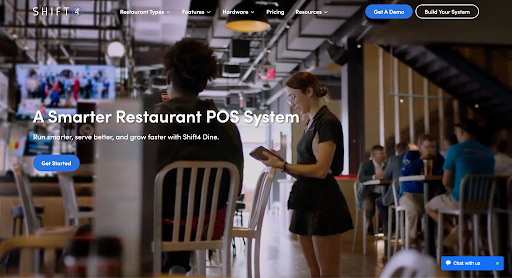
Shift 4 Dine targets the full-service restaurant market with an all-in-one system covering POS software, hardware, and payment processing under one roof. They back it with 24/7 in-house support and a nationwide network of certified technicians, which is a serious operational advantage for any chain with locations spread across multiple markets. The kitchen display systems and tableside ordering tablets are purpose-built for restaurant workflows.
Why Is Shift 4 a Contender for POS Systems?
Shift 4 Dine solves the fragmentation problem that plagues many restaurant chains, where software, hardware, and payments come from three different vendors with three different support lines. With $260 billion processed annually and 200,000+ customers behind them, their infrastructure is built to handle volume without flinching.
From the User Reviews:
Customer testimonials describe the system as genuinely transforming multi-location operations, not just marginally improving them. Pricing structures get called out often, with operators reporting they save thousands compared to previous setups. The lifetime hardware warranty is a recurring favorite in the reviews because it removes one of the biggest unpredictable costs in restaurant tech.
3. Soft Touch – Best for Restaurants, Bars, Hotels, and Specialty Retail POS
Which Markets Does Soft Touch Serve?
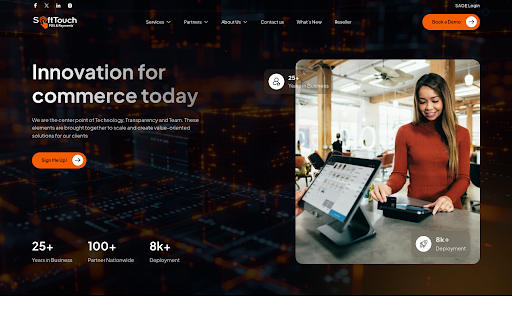
Soft Touch covers a wide band of hospitality and retail verticals, including restaurants, bars, hotels, and more than 20 specialty retail segments. With over 8,000 deployments and 100+ business partners across the country, they’ve built enough real-world depth to handle industry-specific edge cases. Their transparent pricing model with no hidden fees stands out for cost-conscious operators who’ve been burned by surprise charges before (and plenty have).
Why Is Soft Touch a Contender for POS Systems?
Soft Touch serves diverse business types without defaulting to a one-size-fits-all product, which is harder to pull off than it sounds. Their exclusive SAGE reseller network means clients get a customized setup with dedicated expert support rather than a generic install and a customer service queue.
From the User Reviews:
CEOs and business owners across multiple industries consistently praise Soft Touch for competitive processing rates and measurable operational improvements. The International Casual Furniture Association recommending their platform to members says something about how the industry community views them. The service quality is what keeps clients around long-term, not just the features.
4. Loyverse – Best for Small to Medium-Sized Retail and Hospitality Businesses
Which Markets Does Loyverse Serve?
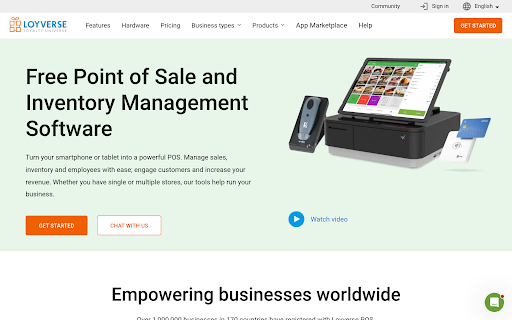
Loyverse serves over 1 million businesses across 170 countries, covering restaurants, cafes, retail shops, bars, groceries, and salons through a mobile-first POS platform. Their free app is a real differentiator for small operators watching every dollar (think bootstrapped cafe owners, not enterprise chains). The platform integrates with 30+ payment processors and supports 25+ languages, making it genuinely accessible at scale.
Why Is Loyverse a Contender for POS Systems?
Loyverse removes the financial barrier that keeps smaller hospitality businesses stuck on outdated systems by offering a fully functional free POS that doesn’t require an immediate subscription commitment. Their built-in loyalty program and offline functionality make them practical for real restaurant and retail environments where Wi-Fi isn’t always reliable.
From the User Reviews:
Loyverse has picked up awards from GetApp, Crozdesk, and Capterra, which reflects how consistently users rate the experience. Reviewers highlight the intuitive mobile interface and the fact that the free tier actually does what it promises. The multi-store management capability surprises operators who expected a free tool to fall apart at scale.
5. Toast – Best for Restaurant Point of Sale and Operations Management
Which Markets Does Toast Serve?
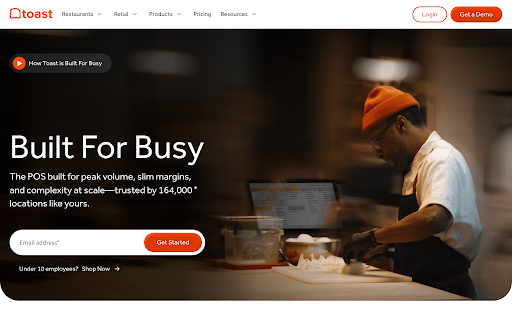
Toast focuses exclusively on restaurants, which shapes every feature they build. With 120,000+ restaurant clients across the US and more than 200 third-party integrations, they’ve built the kind of ecosystem that covers everything from payroll and scheduling to online ordering and reservations. Their Toast Router, which provides built-in cellular backup for payment processing during internet outages, reflects genuine hospitality-specific thinking.
Why Is Toast a Contender for POS Systems?
Toast solves the problem of running a restaurant on a system that wasn’t designed for one, where workarounds become part of the daily routine. Powering more of America’s top 100 highest-grossing independent restaurant concepts than any other POS system is a proof point that’s hard to argue with.
From the User Reviews:
Reviewers credit Toast with giving multi-location operators real-time visibility into what’s happening across every restaurant, not just one at a time. The Android-based system gets noted for being easier to train new staff on, which matters a lot given hospitality turnover rates. The 21%+ adoption among US restaurants tells you this platform earns repeat trust from operators who’ve had choices.
The Process Behind This Ranking
Building this list started with a broad sourcing phase and got progressively tighter as each round applied stricter criteria.
Foundation Data Requirements
The initial pool of candidates was assembled from software directories, hospitality industry publications, and review aggregators like Capterra, G2, and Crozdesk. Each platform had to show documented use in restaurant or hospitality environments, not just a general retail claim. Options that appeared repeatedly across multiple trusted directories were prioritized for deeper review in the next phase.
Pre-Verification Phase
Platforms with thin or inconsistent review histories were removed early. Review patterns were analyzed for authenticity, including how feedback was distributed across time, how specific the comments were, and whether positive signals appeared across more than one review source. Any platform that showed clustering of generic reviews without substantive detail was set aside at this stage.
The Verification Phase
Claims made on official company websites were cross-checked against what actual users reported in reviews. If a company stated a specific capability, such as multi-location inventory management or offline payment processing, that claim needed to show up in real-world feedback before it counted toward the final assessment. Discrepancies between marketing language and user experience were flagged and weighed.
Tracking Authority Markers
Recognition from third-party sources was tracked as an additional signal of credibility. This included software awards from recognized review platforms, mentions in trade publications, and any original research or published data that companies made publicly available. The goal was to find external validation that existed independently of what each company said about itself. Companies like Loyverse, with awards from GetApp and Crozdesk, and Toast, with documented sales figures, provided clear and verifiable authority signals.
POS Systems Proof Points
Each company was evaluated for dedicated, substantive coverage of their POS capabilities on their own platforms. General product pages weren’t enough. The research looked for specific feature documentation, verified customer case studies, and review content that tied the platform to real restaurant or hospitality outcomes. Companies that could point to measurable results in their documented customer stories, like operational improvements at multi-location businesses or processing cost reductions, scored higher in the final selection.
How to Pick Your Best Match
Picking a POS system for a restaurant chain is less about features and more about fit. The right choice depends on what your operation actually looks like day to day, not what looks impressive in a demo.
- Industry/Domain Experience: Look for platforms built with restaurant operations in mind. A system designed around hospitality workflows will handle things like kitchen routing, split checks, and table management without requiring workarounds.
- Features and Service Options: Match the feature set to your real needs. A small cafe has different priorities than a 20-location chain. Make sure the platform covers your actual daily operations, whether that’s online ordering, loyalty programs, or payroll.
- Pricing Structure: Understand the total cost of ownership, not just the monthly subscription. Hardware costs, payment processing fees, and support plans all add up fast (especially across multiple locations).
- Results Measurement: Choose a system that gives you clear reporting on transaction processing speed, inventory shrinkage, and average ticket size so you can make real decisions with real data.
- Industry Knowledge and Compliance: Confirm that the platform handles PCI DSS, EMV, and local tax compliance standards relevant to your market. Industry-specific limitations around age-restricted sales or regulated goods should be clearly documented before you commit.
Closing Thoughts
The best POS system for a restaurant chain isn’t the one with the longest feature list. It’s the one your staff can actually use under pressure, at volume, across every location. The five platforms here each bring something distinct, from Toast’s restaurant-only focus to Loyverse’s accessible entry point. As restaurant technology keeps advancing, operators who pick a platform built for hospitality will spend less time managing tools and more time running great restaurants.
Read more: Why So Many Restaurants Close Before They Find Success
Read more: How Understanding Restaurant Types Can Shape Your Menu, Staff, and Success
Read more: Take Charge of Your Finances by Owning a Fast Food Franchise