Heavy Equipment Transport in Worcester: What Industrial Operators Need to Know Before Moving Oversized Loads
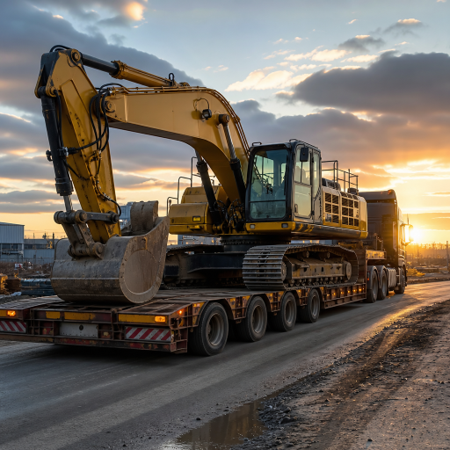
Moving heavy machinery across Massachusetts is not a task that tolerates improvisation. Whether you are relocating a crane, a bulldozer, a generator, or industrial fabrication equipment, the logistics involved demand precision, regulatory knowledge, and a carrier with the right equipment and experience. Worcester, sitting at the geographic heart of the Commonwealth, serves as a critical hub for construction, manufacturing, and infrastructure development — and with that comes a consistent, high-volume demand for specialized freight solutions. Understanding what separates a reliable heavy haul operation from a costly mistake starts with knowing the landscape.
Why Worcester Is a Focal Point for Heavy Haul Logistics
Worcester is not simply a waypoint between Boston and Springfield. It is a city with its own industrial identity — home to manufacturing facilities, active construction corridors, and a growing infrastructure investment pipeline. The region’s road network, including I-290, I-190, and Route 9, creates both opportunity and complexity for oversized load movements. Navigating these routes with wide or tall loads requires advance route surveys, coordination with the Massachusetts Department of Transportation, and in many cases, escort vehicles to ensure public safety and compliance.
The city’s proximity to major construction zones and its role as a regional distribution anchor means that equipment moves in and out of Worcester with regularity. Contractors working on commercial builds, utility projects, and highway expansions all depend on timely, damage-free delivery of their machinery. A delay in equipment arrival can cascade into project schedule failures, subcontractor conflicts, and significant financial penalties. This is why the choice of a transport partner is never a minor procurement decision.
The Regulatory Framework Behind Every Heavy Haul Move
Massachusetts enforces strict permitting requirements for any load that exceeds standard legal dimensions or weight thresholds. Oversize loads — those wider than 8.5 feet, taller than 13.5 feet, or heavier than 80,000 pounds gross vehicle weight — require special permits issued by MassDOT. These permits are not rubber stamps. They involve route analysis, bridge weight assessments, and sometimes coordination with local municipalities if the haul passes through restricted zones or school areas.
Beyond permitting, carriers must maintain appropriate insurance coverage, operate compliant trailers — including lowboys, step decks, and RGN configurations — and employ drivers with the endorsements and experience to handle non-standard freight. Attempting to cut corners on any of these requirements does not just risk fines; it risks equipment damage, accidents, and liability exposure that can far exceed the cost of doing things correctly from the start.
Seasonal and Environmental Considerations in Massachusetts
New England’s climate adds another layer of complexity to heavy equipment transport. Spring thaw restrictions in Massachusetts, commonly known as frost law season, limit the weight that can be legally carried on certain roads during the period when freeze-thaw cycles weaken road surfaces. These restrictions typically run from late February through mid-April and can significantly affect routing options and scheduling. Experienced carriers plan around these windows proactively, not reactively. Similarly, winter weather events require contingency planning, flexible scheduling, and equipment that is properly maintained for cold-weather operation.
Choosing the Right Transport Partner for Your Equipment
Not every freight carrier is equipped — literally or operationally — to handle heavy haul work. The distinction between a general freight company and a specialized heavy equipment transporter is significant. Specialized carriers maintain a fleet of trailers designed for low-clearance, high-weight, and wide-load configurations. They have established relationships with permitting agencies, know which routes are viable for specific load profiles, and understand how to properly block, brace, and secure machinery to prevent shifting during transit.
When evaluating a carrier, operators should ask about their experience with specific equipment types, their permitting process, their insurance limits, and their track record on similar hauls in the region. References from contractors or project managers who have used the carrier for comparable moves are invaluable. A company that can articulate its process clearly — from initial quote to final delivery — is one that has refined that process through real-world experience.
Bear Down Logistics: A Regional Specialist Built for This Work
For contractors and industrial operators working in central Massachusetts, Bear Down Logistics has established itself as a dependable resource for complex equipment moves. Specializing in heavy equipment transport in Worcester, the company brings regional expertise, a properly equipped fleet, and a permitting process that is handled in-house rather than outsourced. Their team understands the specific demands of the Worcester market — from navigating urban delivery zones to coordinating with general contractors on active job sites — and approaches each move with the operational discipline that high-value freight requires.
How Technology Is Reshaping Heavy Haul Logistics
The logistics industry broadly is undergoing a technology-driven transformation, and heavy haul is not exempt from that shift. Real-time tracking, digital permitting platforms, and route optimization software are becoming standard tools for carriers who want to deliver consistent, transparent service. For clients moving expensive machinery, visibility into load status is not a luxury — it is a baseline expectation. Knowing where your equipment is, whether it is on schedule, and whether any route deviations have occurred gives project managers the information they need to coordinate downstream activities.
Understanding how logistics tracking works, its types, and its benefits is increasingly relevant for anyone managing equipment-intensive projects. From GPS-based real-time location data to electronic logging devices that confirm driver hours and compliance, the tools available today make it possible to manage a heavy haul move with far greater confidence than was possible even a decade ago. Carriers who invest in these systems signal a commitment to accountability and client communication that should factor into any vendor selection process.
Lessons from Other Markets: Ground Logistics Innovation
It is worth noting that the operational challenges facing Worcester-area heavy haul operators are not unique to New England. Across the country, industrial and commercial sectors are rethinking how they approach ground logistics to reduce cost, improve reliability, and adapt to changing infrastructure demands. A closer look at how Arizona enterprises are re-engineering ground logistics reveals a broader trend: companies are moving away from reactive, transactional freight relationships toward strategic partnerships with carriers who understand their operational rhythms and can plan accordingly. That model translates directly to the heavy equipment sector, where consistency and communication are as important as raw hauling capacity.
Conclusion: Precision Matters When the Load Is Heavy
Heavy equipment transport in Worcester demands more than a flatbed and a willing driver. It requires regulatory fluency, route expertise, proper equipment, and a carrier culture that treats every load as a high-stakes responsibility. For operators in central Massachusetts, the cost of getting this wrong — in damaged machinery, missed project milestones, or regulatory penalties — far outweighs any short-term savings from choosing an underqualified vendor. Investing in a specialist who knows the terrain, the rules, and the region is not just a logistical decision. It is a risk management decision that protects your project, your equipment, and your bottom line.