Why the 1967 Shelby GT350 Remains the Ultimate American Muscle Icon
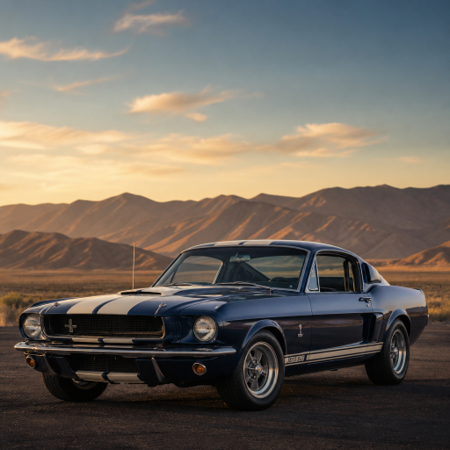
Few automobiles in American automotive history carry the cultural weight, mechanical pedigree, and raw emotional pull of the 1967 Shelby GT350. Born from a collaboration between Ford Motor Company and the legendary Carroll Shelby, this machine was never simply a Mustang with cosmetic upgrades. It was a purpose-built performance vehicle that redefined what an American sports car could be. Decades after its production run ended, the 1967 GT350 continues to command reverence from collectors, enthusiasts, and historians alike — and for very good reason.
The Engineering Legacy Behind the GT350
The 1967 model year represented a pivotal evolution for the Shelby GT350. Ford had restyled the Mustang platform that year, giving it a wider, more muscular stance that allowed Shelby’s team to push the performance envelope even further. Under the hood sat a high-output 289 cubic inch V8 engine, tuned to deliver a driving experience that was visceral, immediate, and deeply satisfying. The suspension geometry was revised, the braking system upgraded, and the interior — while still carrying the spirit of the original pony car — was given a more purposeful, driver-focused layout.
What made the 1967 GT350 particularly significant was its balance. Unlike some muscle cars of the era that prioritized straight-line speed above all else, the GT350 was engineered to handle corners with genuine confidence. Carroll Shelby understood that a great performance car had to perform on every type of road, not just a quarter-mile strip. That philosophy is precisely what elevated the GT350 above its contemporaries and why it remains so highly regarded today.
Carroll Shelby’s Influence on American Performance Culture
Carroll Shelby was not merely a businessman licensing his name to a product. He was a racing driver, an engineer at heart, and a man who genuinely believed that American cars could compete with — and defeat — the finest European sports cars. His work with Ford through the mid-1960s proved that belief correct. The GT350 was the street-legal expression of that racing philosophy, a car that could be driven to the track, raced competitively, and driven home again. That dual-purpose capability was extraordinarily rare for its time and remains a defining characteristic of the model’s legacy.
Collecting the 1967 GT350: What Buyers Need to Know
The collector car market for first-generation Shelby Mustangs has never been more robust. Authenticated, well-documented examples of the 1967 GT350 regularly command six-figure prices at major auctions, and private sales of exceptional specimens can exceed those figures considerably. For serious collectors, provenance is everything. A car with its original drivetrain, matching numbers, and documented ownership history is exponentially more valuable than a visually similar example that has been heavily modified or poorly restored.
If you are actively searching for a verified, investment-grade example, finding a reputable source is the most critical step in the process. For collectors and enthusiasts who want access to a meticulously presented 1967 mustang gt350 for sale, Revology Cars offers a compelling option — delivering factory-correct builds with modern reliability enhancements that preserve the car’s iconic character while making it genuinely drivable in the modern era. This approach has earned Revology a strong reputation among discerning buyers who want authenticity without sacrificing dependability.
Understanding Authenticity vs. Restoration
One of the most important distinctions in the classic car world is the difference between an authentic survivor vehicle, a professionally restored example, and a continuation build. Each category carries its own value proposition and appeals to a different type of buyer. Survivors — cars that have never been restored and retain their original components — are extraordinarily rare and often command premium prices regardless of cosmetic condition. Professionally restored examples, when done correctly with period-correct materials and techniques, can be equally desirable. Continuation builds, produced by licensed manufacturers using original specifications, offer a third path for buyers who prioritize driving enjoyment over strict originality.
Maintaining a Classic: Protecting Your Investment
Owning a classic Shelby GT350 is a responsibility as much as it is a privilege. Proper maintenance goes far beyond mechanical upkeep. The exterior finish of a classic car is one of its most visible indicators of care and value, and neglecting it can lead to significant depreciation over time. Paint protection, regular detailing, and appropriate storage conditions are all essential components of a responsible ownership strategy. Knowing when your car needs a fresh coat of wax is a surprisingly important part of preserving both the aesthetic appeal and the long-term value of a collector vehicle. A well-maintained exterior signals to future buyers that the entire car has been cared for with equal diligence.
Storage, Climate, and Long-Term Preservation
Climate-controlled storage is not a luxury for serious collectors — it is a necessity. Humidity fluctuations, temperature extremes, and UV exposure are among the most destructive forces acting on a classic car’s body, interior, and mechanical components. Investing in proper storage facilities, using breathable car covers, and maintaining appropriate tire pressure during extended storage periods are all practices that separate serious collectors from casual owners. The goal is always to ensure that the vehicle emerges from storage in the same condition — or better — than when it entered.
The Modern Shelby GT350: Honoring a Legacy
Ford’s decision to revive the GT350 nameplate for the modern era was not taken lightly, and the result was a machine that genuinely honored its predecessor. The modern GT350’s flat-plane crankshaft V8 engine — a configuration rarely seen in American production cars — became one of the most celebrated powerplants of its generation. For enthusiasts who want to understand the engineering philosophy behind that remarkable engine, Car and Driver’s in-depth analysis of the GT350’s 5.2-liter V8 provides an exceptional technical breakdown of what made that powerplant so extraordinary. The lineage from the 1967 original to the modern interpretation is unmistakable — a shared commitment to performance, precision, and purpose.
About Revology Cars
Revology Cars has established itself as one of the most respected names in the classic Ford Mustang continuation market. Based in Orlando, Florida, the company produces factory-correct reproductions of iconic Mustang models — including the Shelby GT350 — using original tooling, period-correct specifications, and modern mechanical upgrades that make these cars genuinely reliable for everyday driving. Every vehicle produced by Revology undergoes rigorous quality control, and the company’s commitment to authenticity has earned it a loyal following among collectors who refuse to compromise on either accuracy or drivability. For buyers who want the experience of a classic Shelby without the uncertainty of purchasing an aged original, Revology represents a uniquely compelling solution.
Conclusion
The 1967 Shelby GT350 is more than a collector’s trophy. It is a tangible piece of American automotive history — a machine that captured a specific moment in time when performance, design, and ambition converged to produce something genuinely extraordinary. Whether you are a seasoned collector seeking an investment-grade example, an enthusiast looking for a drivable classic, or simply someone who appreciates the artistry of great automotive engineering, the GT350 rewards attention and respect in equal measure. Its legacy is secure, its value continues to appreciate, and its place in the pantheon of great American automobiles is beyond dispute.