Where Can You Ride an Electric Dirt Bike
Buying an electric dirt bike is easier than answering the question that follows: where can it be ridden legally and responsibly? The word “electric” can make a machine sound similar to a conventional e-bike, while its power, speed, throttle, and off-road design may place it in a very different category. Rules are shaped by location and vehicle classification, not by marketing language alone.
Riders should investigate access before arriving at a trailhead. A place that allows pedal-assist bicycles may prohibit throttle-powered vehicles. A public road may require equipment and registration that an off-road model does not have. Private land may offer more flexibility, but only with the owner’s permission. Understanding these distinctions protects the rider and helps preserve access for others.
Vehicle labels do not decide local law
Terms such as e-bike, electric dirt bike, pit bike, and electric motorcycle are used inconsistently. Local rules may instead consider maximum assisted speed, continuous motor rating, throttle operation, pedals, lighting, identification numbers, or intended use. A high-output off-road bike should not be assumed to qualify under ordinary bicycle rules simply because it uses a battery.
Manufacturers can describe a product’s equipment and intended environment, but riders are responsible for checking state, county, municipal, and land-manager requirements. Regulations can change, and a rule that applies on one property may not apply on another nearby property.
Public roads have separate requirements
Street use often depends on registration, insurance, licensing, and required equipment such as mirrors, lights, turn signals, a horn, or approved tires. Some off-road machines cannot be registered for public roads even after accessories are added. Others may qualify only through a specific local process.
Crossing a road can also be regulated even when the main ride takes place off-road. Riders should not assume that a short connection between trails is automatically permitted. Transporting the bike by truck or trailer may be the correct solution when no legal riding connection exists.
Trails are managed for specific users
Trail signs and online maps may distinguish hiking, mountain biking, equestrian use, off-highway vehicles, and motorcycles. Electric dirt bikes may fall under motorized use even when they are quieter than gas machines. Contacting the land manager is the most reliable approach when the published rule is unclear.
Designated off-highway vehicle areas, private tracks, and properties that explicitly allow electric off-road vehicles are usually better options than testing an ambiguous rule. Riders should also check seasonal closures, fire restrictions, required permits, protective-equipment rules, and age or supervision requirements.
Private property still requires structure
Permission is the first requirement on private land. The owner should understand what vehicle will be used, where, at what times, and by whom. Clear boundaries help prevent riding near neighbors, livestock, crops, drainage areas, or unsafe terrain. Liability and insurance questions may also need attention, especially for organized group rides.
A small practice area benefits from planned direction of travel, controlled entry points, and regular surface inspection. Quiet electric power can reduce noise, but tire wear, dust, and repeated passes still affect the property. Responsible use keeps the arrangement workable over time.
Organized events may add another layer
A venue that allows individual riding may apply different requirements to races, demonstrations, or large group meetups. Organizers can require waivers, designated parking, emergency access, age restrictions, or proof of protective equipment. Vendors and spectators may change insurance or permit needs even when the riding surface stays the same.
Before joining an event, riders should confirm which vehicle classes are accepted and whether charging is available. Bringing an extension cord does not guarantee permission to use an outlet. Clear event rules help participants arrive with compatible equipment and prevent last-minute disputes at check-in.
Product capability and legal access are different questions
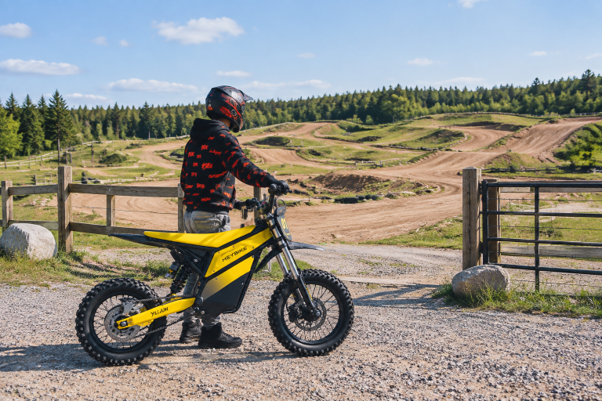
A powerful machine can be well suited to trails while remaining unsuitable for public streets. For example, the V1 displayed by heybike sports is presented as a 14/12-inch electric dirt bike with a listed top speed of 45 mph. That performance information helps riders understand the machine, but it does not grant road access. The correct riding location still depends on local classification and property rules.
Retail collections of electric trail motorcycles may include different configurations and accessories. Buyers should review each product rather than assuming every model has the same status. Lights, tires, or a brake lamp can improve equipment, but they do not automatically convert an off-road vehicle into a street-legal one.
Access depends on trust
Even in a permitted area, behavior influences whether riders remain welcome. Stay on designated routes, reduce speed near others, avoid wet trails that are easily damaged, and pack out everything brought in. Do not bypass gates or ride around closures. If a rule is uncertain, stop and ask rather than treating the absence of a sign as approval.
Electric dirt bikes create new recreational possibilities, but quiet operation does not erase legal categories or land-use concerns. The best place to ride is one where the vehicle is allowed, the terrain matches the rider’s ability, and use does not create unnecessary conflict. A few minutes spent checking the rules can protect an entire day of riding and the future of the riding area itself.