A Textile Maker’s Checklist for Mimosa Root Bark Powder Collections
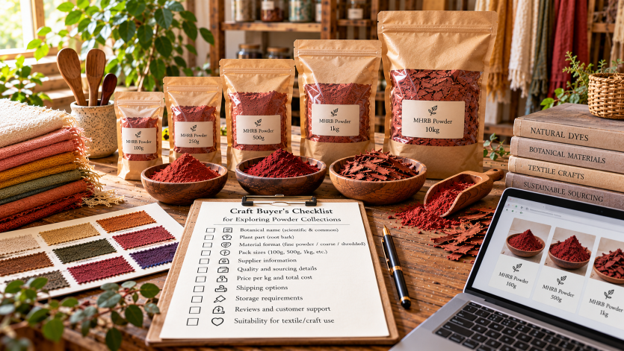
A checklist helps textile makers compare Mimosa root bark powder collections without relying on a category name or promotional description alone. Whether you create handmade scarves, experiment with natural fabric dyes, or manage a small artisan workshop, understanding product specifications can help you make informed purchasing decisions.
Online botanical powder collections often feature several plant-based materials, processing formats, and package sizes. Although these options provide flexibility, they can also make comparisons more complicated.
A product described as finely milled powder may have different handling characteristics from shredded bark or coarse botanical particles. Similarly, two suppliers offering materials under the same common plant name may provide different packaging, documentation, or purchasing conditions.
For craft buyers, the goal is not simply to find the lowest price. It is to identify suitable materials, understand supplier information, and purchase quantities that match actual project requirements.
This guide provides a practical checklist for exploring botanical powder collections, comparing material formats, evaluating suppliers, and organizing purchases for textile and craft applications.
Why Craft Buyers Should Compare Botanical Powder Collections
Botanical powders are used in various creative activities, including natural textile dyeing, botanical art, handmade paper, and other plant-based crafts.
However, different botanical ingredients can have different physical and chemical characteristics.
A powder’s plant species, processing method, particle size, and storage history may influence its suitability for a particular application.
Comparing powder collections carefully can help buyers:
- Identify the correct botanical material.
- Understand available processing formats.
- Compare package sizes and purchasing costs.
- Review product labels and supplier documentation.
- Avoid unnecessary bulk purchases.
- Plan materials for upcoming textile projects.
- Maintain organized workshop inventory records.
A structured comparison process is particularly valuable for small businesses working with limited budgets or storage space.
Understanding Different Botanical Powder Formats
Before exploring supplier catalogs, craft buyers should understand the physical forms in which botanical materials are commonly sold.
Fine-Milled Botanical Powder
Fine-milled powder consists of dried plant material ground into relatively small particles.
It can be convenient to measure and divide into smaller portions for controlled craft experiments.
However, fine powders may create airborne dust during handling and can require careful filtration in certain liquid preparations.
Fine milling does not automatically guarantee greater purity, stronger coloring properties, or improved textile performance.
Coarse Botanical Powder
Coarse powder contains larger particles than finely milled material.
It may retain more visible plant texture and can have different handling or filtration requirements.
The actual particle size can vary between suppliers.
Shredded Bark and Root Materials
Shredded botanical materials contain larger plant fragments rather than finely ground particles.
These materials may be useful for educational demonstrations, botanical collections, and craft processes involving recognizable plant pieces.
Whole Botanical Ingredients
Whole roots, leaves, flowers, and bark pieces may require additional preparation before use.
Their suitability depends on the intended craft application and available equipment.
Understanding these differences helps buyers avoid assuming that every product within a powder collection has the same physical characteristics.
Checking Botanical Identification Before Buying
Botanical identification is one of the most important details to review when comparing plant-based materials.
Common names can vary by region, and some plants have historical scientific names or commercial synonyms.
A useful product listing should ideally identify:
- The scientific botanical name.
- The common or regional name.
- The plant part supplied.
- The processing format.
- The net package weight.
- Any available batch information.
For example, Mimosa tenuiflora is also commonly referenced under the botanical synonym Mimosa hostilis.
The abbreviation MHRB generally refers to Mimosa hostilis root bark.
However, an abbreviation or common name alone does not independently verify the material’s identity or quality.
When accurate identification is essential, request relevant supplier documentation.
How to Evaluate Botanical Powder Suppliers
Supplier transparency can make a significant difference when purchasing botanical materials online.
Buyers should review product descriptions, available formats, packaging information, and purchasing policies before placing an order.
For example, craft buyers researching root bark materials may visit Mimosa Hostilis Shop as one supplier to include in their comparison process.
The supplier advertises botanical root bark products in multiple package sizes and processing forms.
However, buyers should verify the exact product variation, package contents, and current availability before ordering.
Supplier statements about purity, sustainability, or material performance should not automatically be treated as independently verified facts.
Questions to Ask a Botanical Material Supplier
Before purchasing, consider asking:
- What is the scientific name of the plant?
- Which plant part is supplied?
- Is the material finely milled, coarse, shredded, or whole?
- Are batch identification or sourcing records available?
- What packaging protects the material during shipping?
- Are storage recommendations provided?
- What delivery destinations are supported?
- What is the return or replacement procedure?
Clear answers can help craft businesses compare suppliers more effectively.
Comparing Package Sizes Across Powder Collections
Package size is another important factor when exploring botanical material listings.
Small trial quantities may be suitable for initial testing, while larger packages can be useful for established workshop projects.
| Package Category | Typical Craft Application | Main Consideration |
| Small trial quantities | Initial material evaluation | Lower upfront commitment |
| Medium packages | Small textile projects | Manageable inventory |
| Large packages | Repeated workshop projects | Additional storage requirements |
| Wholesale quantities | Established production needs | Higher upfront investment |
These categories are general purchasing examples rather than confirmed package offerings from a particular supplier.
When comparing package sizes, calculate the cost per kilogram and consider the complete purchasing expense.
Cost per kilogram = Total package price ÷ Package weight in kilograms
For example, a hypothetical 500g package priced at $40 would cost $80 per kilogram.
This is an illustrative calculation, not a verified supplier price.
Shipping charges, taxes, and storage requirements should also be considered when comparing purchasing value.
Exploring Root Bark Powder Product Categories
Some botanical suppliers organize products into categories containing different package weights and material formats.
For example, buyers comparing Mimosa hostilis root bark options can explore the collection to review the supplier’s listed products.
The category currently presents root bark listings in quantities including 100g, 500g, 1kg, 2kg, 5kg, and 10kg.
It also discusses powdered and shredded material forms.
However, a category description does not guarantee that every listed product is available in every format.
Buyers should examine individual product pages to confirm the exact variation before ordering.
This is particularly important for workshops that need consistent material specifications across repeated projects.
Planning Botanical Materials for Textile Projects
Effective project planning helps craft buyers avoid purchasing unnecessary supplies.
Step 1: Identify the Craft Application
Begin by defining the project.
Examples include handmade scarves, decorative linens, fabric samples, yarn, or botanical craft demonstrations.
Step 2: Calculate Textile Weight
Fabric weight provides a useful starting point for material planning.
For example, a workshop preparing 15 cotton scarves weighing 160g each would have:
15 × 160g = 2,400g
This equals 2.4kg of fabric.
However, fabric weight alone does not determine the amount of botanical material required.
Step 3: Conduct Small-Scale Testing
Botanical materials can vary in composition depending on plant species, processing conditions, and storage history.
Different textile fibers and preparation methods may also influence results.
Controlled testing is important before purchasing large quantities for repeat projects.
Step 4: Document Material Usage
Record the botanical material, processing format, supplier, batch information, and quantity used.
These records can support more accurate purchasing decisions when repeating a project.
Checking Shipping and Ordering Conditions
Shipping information should be reviewed before completing an online botanical material purchase.
Important considerations include:
- Available delivery destinations.
- Shipping and handling charges.
- Estimated processing times.
- Tracking availability.
- Return and replacement conditions.
- Customs or import restrictions.
- Applicable regional regulations.
The supplier referenced above advertises free U.S. shipping and specifies service to 49 states.
However, buyers should confirm whether their particular order and destination qualify.
Published shipping claims should not be treated as guarantees of delivery.
For international purchases, additional customs and regulatory requirements may apply.
Creating a Botanical Powder Buying Checklist
A standardized checklist can make supplier comparisons easier.
| Checklist Item | What to Verify |
| Botanical Name | Scientific species and common name |
| Plant Part | Root bark, leaves, flowers, or other |
| Material Format | Fine powder, coarse, shredded, or whole |
| Package Weight | Quantity in grams or kilograms |
| Supplier Details | Business and contact information |
| Quality Documentation | Available batch or sourcing records |
| Unit Price | Cost per gram or kilogram |
| Shipping Conditions | Destination eligibility and charges |
| Storage Requirements | Appropriate storage information |
| Project Suitability | Based on documented testing |
Keeping this checklist in a spreadsheet can help small craft businesses maintain consistent purchasing records.
Safe Storage and Handling of Botanical Powders
Proper storage helps protect botanical materials from excessive moisture, contamination, and unsuitable environmental conditions.
Use suitable containers with clear labels identifying the botanical species, material format, purchase date, and batch number when available.
Fine powders can become airborne during handling, so appropriate ventilation and protective equipment may be necessary.
Keep botanical craft materials separate from food preparation areas.
If textile projects involve mordants or other processing chemicals, follow the relevant safety instructions and disposal requirements.
Natural origin does not automatically mean a material is harmless.
Common Mistakes When Exploring Powder Collections
Choosing Products Based Only on Price
The lowest-priced listing may not provide sufficient information about botanical identification or processing format.
Assuming All Powders Are Identical
Products with similar names can differ in particle size, packaging, and processing characteristics.
Buying Large Quantities Before Testing
Bulk purchases can create unnecessary costs when a material has not been evaluated.
Overlooking Supplier Documentation
Missing botanical identification or batch information can make repeat purchasing more difficult.
Ignoring Shipping Restrictions
Shipping eligibility may vary by destination, product, and applicable regulations.
Frequently Asked Questions About Botanical Powder Collections
What should I check before buying botanical powder online?
Verify the scientific name, plant part, processing format, package weight, supplier documentation, and shipping conditions.
What is the difference between fine powder and shredded bark?
Fine powder contains smaller particles, while shredded bark consists of larger plant fragments. Their handling and preparation requirements may differ.
Are larger botanical powder packages always better value?
Not necessarily. Larger packages may offer lower unit prices, but overall value depends on actual usage, storage capacity, and shipping costs.
Can botanical powders be used for textile dyeing?
Some botanical powders are used in textile dyeing, but suitability depends on the plant species, textile fiber, and preparation method. Results should be established through appropriate testing.
How can craft buyers verify botanical material quality?
Review product specifications, request relevant documentation, and evaluate unfamiliar materials through controlled tests.
Why should small craft businesses maintain supplier comparison records?
Supplier records help businesses compare products, track purchasing costs, document material formats, and make more informed repeat orders.
Conclusion
Exploring botanical powder collections requires careful attention to material identification, processing formats, package sizes, and supplier transparency.
For textile makers and small craft businesses, a structured buying checklist can simplify product comparisons and reduce unnecessary purchasing expenses.
Understanding the differences between fine powders, coarse powders, shredded bark, and whole botanical ingredients also helps buyers select materials that match their practical requirements.
By combining supplier research with accurate project planning, appropriate storage, and documented testing, craft buyers can make more informed purchasing decisions and maintain better control over workshop supplies.