A Day Inside a Murano Glass Factory
Introduction
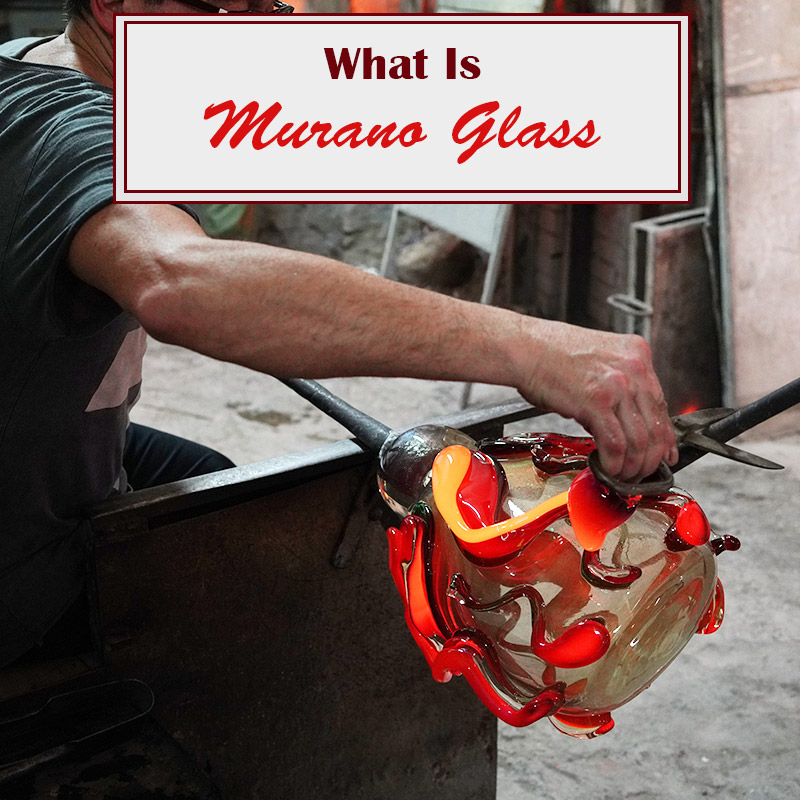
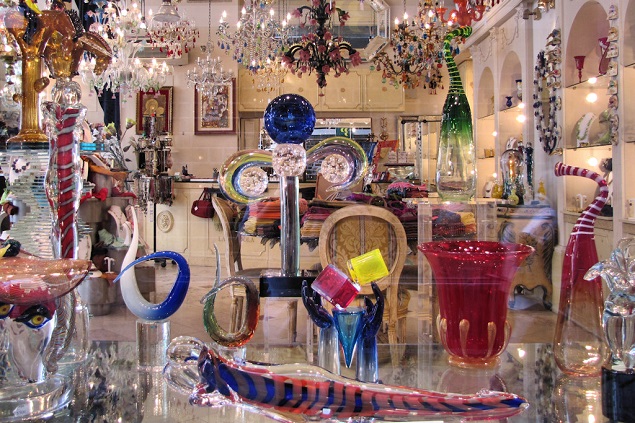
Murano Island, situated in the Venetian lagoon, is best known for its eponymous handcrafted glass. Glassware has been created here continuously since 1291, even at times of war and unrest that periodically enveloped Italy and Europe. Murano Glass is famous for excellent craftsmanship, uniqueness, and artistic beauty. It is still made here by hand, blown by skilled artisans who train for years to perfect their craft. Nowadays, traditional techniques fuse with modern ideas, producing exquisite works of glass art. If you visit Venice and make it to this small island, take a peek inside a real working Murano glass factory. And if the trip is not in the cards, read this article for a good sense of what happens inside these traditional factories and workshops.
What It Takes to Become a Murano Glass Master
Murano glass has a rich heritage. There are no formal training centers or schools for Murano glassmaking. Instead, the secrets of the craft have been passed down from father to son for centuries.
Glass artisans generally start training at a young age. From the times of the Renaissance and until not so long ago, the middle of the twentieth century, training would begin at around eleven or twelve years old. It can take up to fifteen years to fully train to become a “maestro” as opposed to a helper, so passion for the craft is essential. The artisans need to learn the different techniques, which have been used for many years, such as Millefiori, Sommerso, and Bullicante. These take time and patience to perfect.
Family workshops play an important role in glassblowing. They have preserved the techniques so that beautiful works of art can still be created now and in the future. They are also good bases for new artisans to learn from experienced maestros.
Who Works at a Murano Glass Factory
A glass factory is centered around the master (or “maestro” in Italian), who is a highly skilled glassmaker. He (or she) runs the show, but of course, he needs a lot of help. The master has assistants who allow the factory to run like a well-oiled machine, from melting the glass in the furnace at the beginning of the glassmaking process to cold working and annealing at the end.
The Maestro
A Maestro’s journey is long and hard. It involves both theoretical work and practice. They have to learn the traditional techniques and must also understand the glassblowing process from start to finish. A maestro is disciplined, knows how to create a multitude of objects using different techniques, and has natural talent.
When maestros finish their training, they are able to lead a team of glassblowers, and together they can create stunning works of art. The influence of the maestro on the culture and operational environment in the glass factory is paramount. Not only do they need to be highly organized, efficient, and extraordinarily skilled, but they also bring their own creativity to each item crafted in the furnace, ensuring that the glass pieces possess unique aesthetic appeal. No two pieces look the same, but each bears the style and craftsmanship of the maestro.
Assistants
The maestro has assistants who are often training to one day become the maestro. They help with making glass canes for Millefiori or Filigrana craftsmanship, gathering the glass, helping to reheat the glass, cutting molten glass when necessary for the design to take shape, and bringing tools whenever they are needed.
The Glassmaking Process
The Furnace
The process of making glass begins in the furnace. Here, raw materials, mainly silica sand, soda, and lime, are heated at temperatures between 1400 C and 1600 C (2552 F and 2912 F). As the mixture reaches this temperature, it becomes molten glass.
Gathering
Gathering, called ‘evare’ in Italian, is an important part of the process of glassblowing and comes immediately after the glass is reduced to a molten state.
An assistant usually gathers the class for the maestro at the end of a blowpipe. This seemingly simple process requires great skill. The assistant rolls the pipe in the furnace and then lifts it out, continuously spinning the pipe. This must be done quickly to prevent the glass from hardening before it can be shaped. If the glass hardens prematurely, it becomes impossible to shape, and the gathered blob of glass needs to go back into the furnace for reheating.
Blowing And Shaping
Once the blowpipe with the gathered molten glass comes out of the furnace, the talent of the maestro comes to the fore. He or she has to manipulate the glass precisely, but quickly, as it doesn’t remain malleable for long. The maestro sits on a special bench and turns the pipe with one hand while using basic tools, such as scissors and pliers, to cut and shape the glass with the other. It is called “glassblowing” when the maestro gently blows into the pipe to expand the object, like a soap bubble, being careful not to shatter it by blowing too hard. On many occasions, the glass has to be reheated multiple times to provide for the correct shape and design.
However, depending on the desired design, in some cases, a maestro can complete their work without reheating glass, and this is quite an achievement. Italians call this ‘fatto alla prima’, which means ‘made at first’.
Assistants work with the maestro during the glassblowing process. They help when the glass has to be reheated and bring tools when they are needed. In this way, the process works smoothly.
How Color is Used in Murano Glass
Murano glass is well-known for its vibrant colors. Different metal oxides are added to the melting glass in the first stage of glassmaking. Every oxide gives glass a different color, for example, cobalt for blue, manganese for purple, and gold for red. Colored glass is crucial to Murano glassmaking. By using different metal oxides with various techniques, the masters can create a wide variety of rich colors.
Murano Glassmaking Techniques
The maestro may use any number of techniques to create the piece of glass art.
Filigrana, one of the most complicated and rare techniques, involves the creation of lace-like patterns inside transparent glass. To do this, the maestro, with an assistant, will create thin canes of transparent and colored glass by pulling a gather of hot glass in opposite directions. When the rods have cooled, they may be arranged in various ways, transposed, or superimposed, and fused to create a pattern within the glass object.
The Millefiori Glass (or “Murrina”) is crafted using a complex multi-step technique. The English name of the technique, Millefiori, translates to “a thousand flowers” and is famous for its unique flower-like patterns. Millefiori is often used to create beaded jewelry, like earrings, necklaces, and bracelets, as well as larger pieces like sculptures and vases. Glass rods of different colors are fused by heating and stretching, creating a cane with a pattern inside. When these canes are cooled, they are sliced cross-sectionally into discs with bright designs inside. These discs are then used to decorate the surface of a glass object while it is still being made, be it a small bead or a large bowl.
Another common Murano glassmaking technique is called Sommerso, which means “submerged.” Here, the maestro submerges a piece of glass into a molten glass of a different color to create layers. This can be repeated numerous times. The outer layer is often clear or light-colored so that you can see the colored layers.
The Avventurina technique is very popular thanks to the fascinating sparkles that seem trapped inside the glass object. To create this sparkly effect, tiny shreds of copper are added to the molten glass. The glass is then shaped into beads for jewelry or larger objects that shimmer, especially when displayed in sunlight or under artificial light.
When the item is almost ready, it needs to be taken off the blowpipe on which it had been crafted and shaped. The assistant usually gently knocks on the object, and it comes off the blowpipe. This creates what is known as “pontil mark” – a rough, indented spot on the bottom of the object. The maestro or the assistant usually will then grind off the remaining piece of glass that may stick out and hand-polish the base, but some roughness on the bottom usually remains.
Annealing
After the glass has been shaped, it has to be annealed (slowly cooled) to avoid sudden shattering or cracking from internal stress. To achieve this, the newly made glass object is put into a special annealing furnace with a temperature between 454 C – 482 C (849 F – 900 F). The furnace temperature gradually falls and brings down the temperature of the glass over many hours. The glass is generally put on a bed of sand to stop it from collapsing.
Cold Working
The glass can be worked on further when it has cooled. Techniques include polishing, grinding, cutting, sandblasting, etching, and engraving. Polishing machines can be used to eliminate imperfections in the glass. Diamond wheels are used for grinding, and diamond saws for cutting intricate designs. Sandblasting produces textured surfaces and needs a sandblasting gun, an air compressor, and abrasive materials. Etching cream, rotary tools, and stencils are used to etch and engrave intricate designs. All these procedures take great skill and training and increase the price and value of the piece.
Now You Are Ready for a Visit to the Murano Glass Factory
Now that you have learned all the ins and outs of the glassmaking process and the setup of the glassmaking industry on Murano Island, you are fully ready for a real glass factory visit. Watching a real master at work is unforgettable, but make sure you don’t end up in a tourist trap fake factory, where all you see is a beginner artisan making a tiny sculpture of a barely discernible horse. Research to find small groups that visit real Murano Glass workshops and factories, where you will be able to see the carefully choreographed process of making glass artwork out of simple blobs and traditional techniques being used. The maestros push the boundaries of glassmaking, creating innovative glass pieces that fascinate both collectors and the general public, keeping the appeal of Murano glassmaking alive.