Closing the Loop: Why the Circular Economy in the Automotive Sector Matters in 2026
The automotive industry has long operated on a simple, wasteful logic: make it, sell it, scrap it. In 2026, that model is under serious pressure – from regulators, consumers, investors, and the weight of its own environmental consequences.
The circular economy offers a different blueprint. Instead of extracting raw materials, building a vehicle, and sending it to a landfill at the end of its life, the circular model keeps materials in use for as long as possible. Parts are reused, engines are remanufactured, metals are recovered, and what was once considered waste becomes a resource.
This shift is no longer theoretical. It is happening at scale, and the automotive sector sits at the center of it.

A Market Growing as Fast as the Problem It Solves
The numbers make the momentum hard to ignore. The global automotive circular economy market is projected to grow from around $210 billion in 2026 to $346 billion by 2031, according to market research firm GII Research, registering a compound annual growth rate of 10.5%. That growth rate places it among the fastest-expanding segments within the broader auto industry.
The urgency behind that expansion is not hard to understand. The automotive manufacturing sector is among the largest consumers of raw materials globally – steel, aluminium, copper, plastics, and rare earth elements are all consumed at enormous scale. According to the European Commission, the EU automotive industry alone accounts for 42% of European aluminium consumption, 44% of magnesium, and 63% of platinum group metals. These are finite, increasingly expensive, and often geopolitically sensitive resources.
Producing recycled aluminium uses around 95% less energy than making new aluminium from raw ore. When that figure is applied to the millions of vehicles processed each year globally, the scale of potential savings – both financial and environmental – becomes clear.
Regulation Is Reshaping the Rules of the Road
For years, circular economy principles in the automotive sector were largely voluntary – good intentions written into corporate sustainability reports. In 2026, the legal landscape is changing fundamentally, particularly in Europe.
EU institutions reached a political agreement in December 2025 on the new End-of-Life Vehicles Regulation, with the compromise text published in February 2026. The regulation replaces the existing directive with binding rules that apply uniformly across all EU member states – leaving no room for inconsistent national implementation. It marks a structural shift from end-of-life waste management to full lifecycle circularity.
Under the new framework, vehicles must be designed for easier dismantling, and manufacturers must provide detailed instructions for removing and replacing parts both during use and at end-of-life. New recycled plastic content mandates will phase in over the next decade, reaching a minimum of 25% recycled content in vehicles after ten years, with at least 20% of that material sourced from end-of-life vehicles themselves.
The regulation is also expected to unlock the recovery of 5-6 million tonnes of steel, 1-2 million tonnes of aluminium, and 0.2-0.3 million tonnes of copper per year within the EU – materials that would otherwise be lost to poor collection practices or illegal dumping. Currently, around 3.5 million vehicles disappear from EU roads each year without any recorded end-of-life destination.
The EV Battery Question Changes Everything
The transition to electric vehicles has added a new and urgent dimension to the circular economy debate. EV batteries represent one of the most resource-intensive components in modern manufacturing, relying on lithium, cobalt, nickel, and manganese – materials tied to complex global supply chains and significant extraction impacts.
As the volume of end-of-life EV batteries grows, recovering those materials efficiently has become both an environmental necessity and a commercial opportunity. German startup Cylib, backed by Porsche and Bosch, is building a facility capable of recycling 30,000 tonnes of used EV batteries per year. Renault Group has committed €140 million to a closed-loop automotive recycling ecosystem through its “The Future is NEUTRAL” initiative, developed in partnership with Suez.
These investments signal something important: circularity in the automotive sector is no longer a sustainability side project. It has become a supply chain strategy, driven by the need to secure critical materials and reduce exposure to volatile commodity markets.
Where Consumers Fit In
The circular economy is not only a manufacturing story. It plays out every time a driver chooses a remanufactured gearbox over a new one, or sources a recycled headlight assembly instead of ordering a brand-new part.
Consumer demand for cost-effective repair solutions is fuelling the used parts market alongside regulatory change. Platforms like OVOKO, which connect buyers with hundreds of verified used parts dealers across Europe, represent the consumer-facing layer of the circular automotive system. By making it easier to find, compare, and purchase tested second-hand components, these platforms are helping close the loop at the individual vehicle level – one repair at a time.
In the EU, automotive remanufacturing already saved 800,000 tonnes of CO2 in 2020 alone – equivalent to the annual emissions of 120,000 citizens, according to BIS Research. As the sector scales and digital infrastructure improves, those figures are set to climb.
From Buzzword to Business Imperative
What is most striking about the circular economy conversation in 2026 is how thoroughly it has moved from the margins to the mainstream. Major automakers, including Stellantis, BMW, Toyota, and Volkswagen, have all embedded circularity into their core business strategies – not as a reputational gesture, but as a response to regulatory timelines, raw material costs, and investor expectations.
Stellantis, through its SUSTAINera program, is targeting net-zero carbon emissions by 2038 via large-scale remanufacturing and part reuse. BMW Group’s Recycling and Dismantling Centre has operated sophisticated material recovery systems for more than 30 years. These are not pilot programs – they are structural pivots that reflect how seriously the industry now takes the circular model.
The automotive sector will not decarbonize through electrification alone. The emissions embedded in vehicle production, material extraction, and end-of-life disposal represent a substantial share of the industry’s total footprint. Addressing those emissions requires exactly what the circular economy offers: keeping materials in use, reducing the demand for new production, and treating every component – from a lithium battery cell to a door mirror – as something worth recovering.
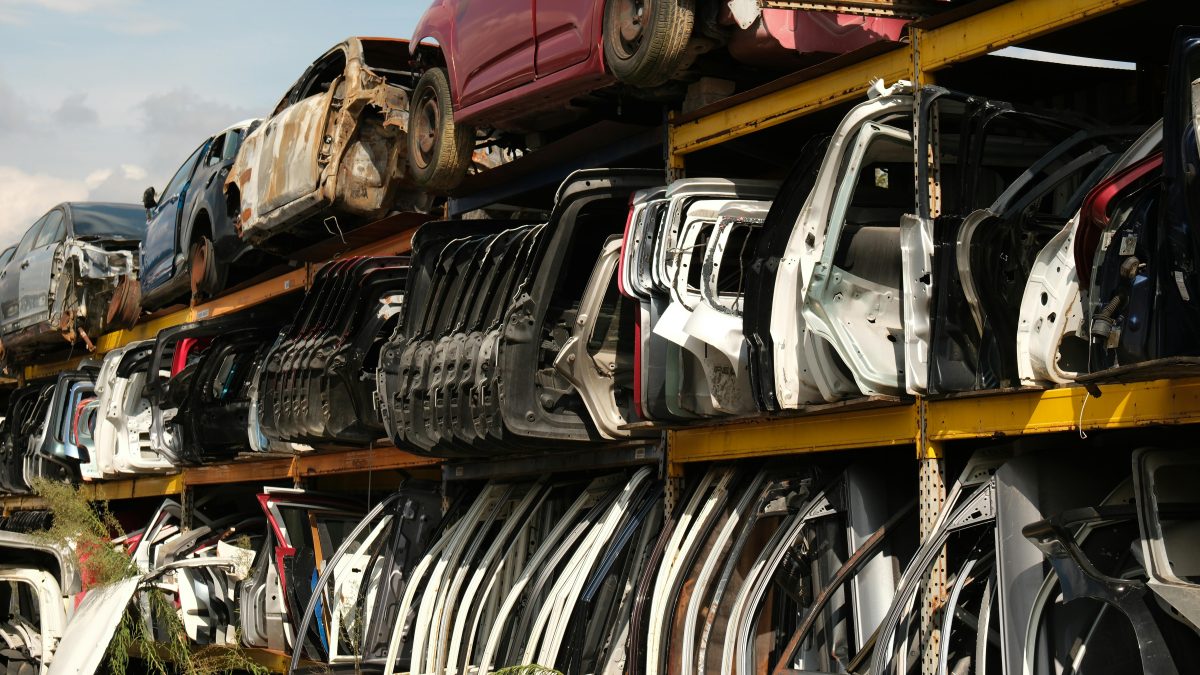
In 2026, closing the loop is no longer optional. It is the direction the entire industry is moving, and the pace is picking up fast.