How Industrial Laser Cleaning Companies Help Workshops Cut Surface Prep Costs
How Industrial Laser Cleaning Companies Help Workshops Cut Surface Prep Costs
Most small fabrication shops, repair garages, and machining businesses don’t struggle with surface prep because they don’t know how to run a grinder, fire up a sandblaster, or brush on chemical stripper. They do it every single day. The real issue is that the true cost of these traditional methods—the time, the mess, and the constant physical toll—is getting harder to ignore.
Surface preparation isn’t just a quick chore before the real work starts. It directly dictates whether a weld passes inspection, how well a powder coat sticks, and whether a project finishes on schedule. For a small shop owner, these expenses rarely show up as a single, painful line item. Instead, they bleed profits slowly through hours spent cleaning up dust, pallets of wasted consumables, and the occasional nightmare job that has to be completely reworked. That is why practical shop managers are looking past the marketing hype and evaluating how industrial laser cleaning companies, like Dynalasers, can actually change their everyday operating costs.
Why Workshops Are Rethinking Surface Preparation
Talk to anyone running a metal workshop and they’ll tell you they are used to grinding wheels and sandblasting cabinets. They work. But the secondary headaches of these standard tools are becoming bottleneck points for smaller operations.
- The Grinding Grind: Hand-grinding is miserable, tiring work. If an operator gets fatigued on a Friday afternoon, it’s easy to gouge a part or miss a patch of tight mill scale. That leads straight to weld porosity or paint peeling off later.
- The Sandblasting Aftermath: Blasting is great for raw scale, but the footprint is massive. By the time you factor in taping off areas you don’t want ruined, hauling heavy grit bags, and sweeping up the inevitable mess across the shop floor, you’ve often spent more time on housekeeping than cleaning.
- The Chemical Liability: Liquid strippers mean dealing with harsh fumes, buying specialized safety gear, and paying ever-increasing fees to legally dispose of hazardous sludge.
When you look at industrial surface preparation this way, it stops looking like a cheap baseline. The cost of the discs, the blasting media, the chemical barrels, and the hours workers spend just prepping a surface adds up over a financial quarter. For a small shop, if your prep area gets backed up, the whole floor grinds to a halt.
How Industrial Laser Cleaning Companies Reduce Long-Term Costs
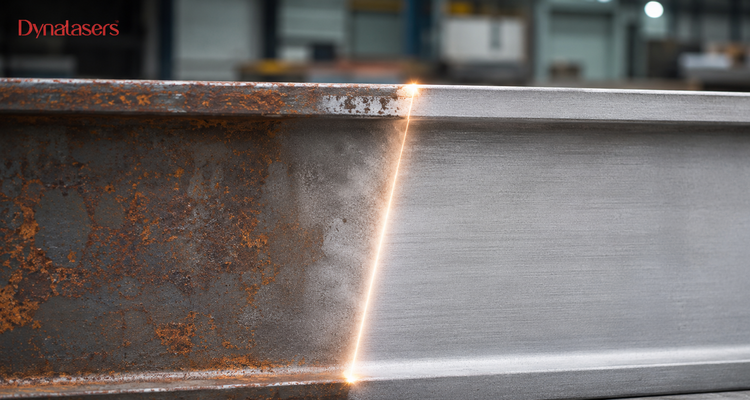
A laser cleaner isn’t a magical fix for every random piece of scrap metal that walks through the door. But for a shop handling steady, recurring prep work, it completely changes the math. Instead of relying on friction or harsh chemistry, it uses targeted energy pulses to vaporize rust, oil, and paint.
The biggest operational shift? You stop buying pallets of supplies. There are no wheels to wear down and no sand to replace; the machine runs on standard shop electricity.
| Cost Area | How Laser Cleaning Shifts the Math |
| Consumables | Cuts out the non-stop ordering of discs, sand, or chemicals. |
| Cleanup | No blasting dust piles or chemical sludge to shovel into bins. |
| Labor Focus | Speeds up routine prep, letting workers spend more time fabricating. |
| Surface Integrity | Cleans the surface cleanly without chewing into the base metal. |
| Rework Rates | Gives a highly uniform finish, avoiding structural weld failures. |
By presenting a completely clean, bare metal surface every single time, you get far more reliable welds and predictable coatings. The real return on investment here isn’t just that the laser light moves fast—it’s that you cut out the non-stop secondary labor that swallows up a shop’s week.
When Buying Laser Cleaning Equipment Makes Sense
Let’s be realistic: if your shop only handles a rusty trailer once every few months, buying high-end equipment doesn’t make sense. You are far better off sticking to standard tools or paying for local laser rust removal services when an unusual project pops up.
Bringing a machine in-house becomes a smart business move when surface prep actively dictates your shop’s weekly capacity. It’s worth sitting down with a calculator if your team is regularly:
- Losing multiple hours a day to manual grinding or wire-wheeling before welding.
- Cleaning production tooling, injection molds, or high-value components that can’t afford to be scratched.
- Dealing with large, heavy weldments that are too expensive or difficult to truck out to a third-party blaster.
- Trying to clear out shop dust and improve the working environment to retain good fabricators.
A reputable laser cleaning machine manufacturers team shouldn’t try to sell you the biggest, most expensive system on the floor. They should look at your actual metal types, your coating thicknesses, and tell you straight up whether the investment will pay for itself based on your current volume.
Dynalasers Laser Cleaning Options for Workshops
Rather than pretending one machine can do everything perfectly, laser cleaning machine factory engineers design equipment for different styles of work. For smaller manufacturing setups and maintenance crews, matching the laser type to your specific workload matters a lot more than just staring at total wattage.
Dynalasers laser cleaning solution splits its shop-floor equipment into two practical tracks. They don’t just ship a crate; they supply the model selection, actual setting charts, remote troubleshooting, and a solid 2-year warranty so you aren’t left guessing on the shop floor.
M75 for Fast Rust and Paint Removal
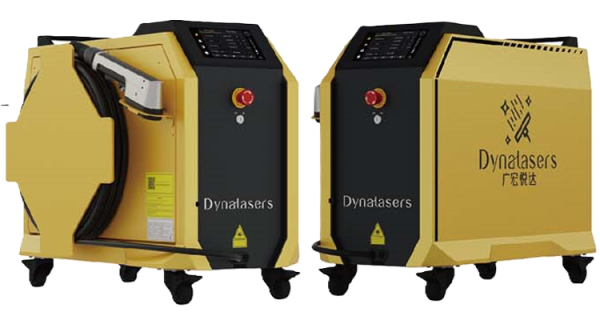
The Dynalasers M75 is a continuous-wave machine built for pure bulk removal. When you have a lot of surface area to clear and you need to get down to bare metal fast, this is the tool for the job. It cuts right through heavy rust, scale, and old coatings on structural steel. With a cleaning sweep that opens up to 300 mm, it’s designed to cover ground quickly.
- Best for: Stripping thick mill scale, heavy corrosion, and old paint layers.
- Ideal environments: Steel fabrication, heavy equipment repair, structural frames, and refurbishing old machinery.
- The takeaway: Built for speed and coverage; not meant for delicate or high-precision parts.
P300 for Precision Cleaning and Surface Protection
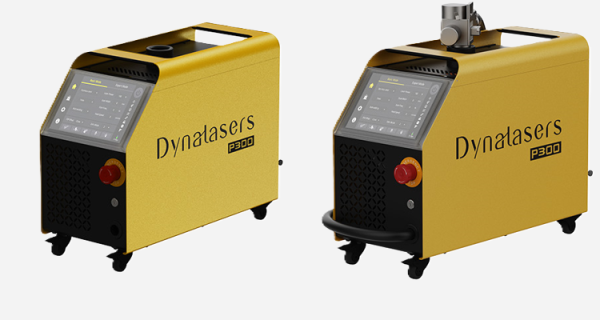
If your shop works with tight tolerances, fine finishes, or specialized molds, you can’t use a brute-force approach. The Dynalasers P300 uses a pulsed laser source. It shoots incredibly rapid, tiny bursts of light that lift off contaminants without letting heat build up in the underlying part. This means zero risk of warping thin metals or changing the temper of heat-treated components.
- Best for: Lifting oxides, light oil film, and production residues without scratching.
- Ideal environments: Injection mold maintenance, precision machine shops, bearing refurbishment, and delicate aerospace or automotive parts.
- The takeaway: Built for absolute control and protecting the exact shape of high-value components.
FAQs
What do industrial laser cleaning companies do?
They build or supply specialized laser setups designed to strip contaminants—like rust, mill scale, oils, and old paint—off industrial metal parts. Their equipment is used to replace traditional grinding or blasting before welding, painting, or rebuilding machinery.
Is laser cleaning cheaper than sandblasting?
For a one-off job on the weekend, sandblasting is usually cheaper upfront. But if your shop is prepping parts day in and day out, laser cleaning saves money over time by completely eliminating media costs, cutting down on cleanup labor, and preventing expensive part damage.
Which Dynalasers cleaner is better for workshops?
It comes down to what you clean most. If you are blasting heavy rust off structural steel or stripping thick paint coatings, go with the continuous-wave M75. If you are cleaning sensitive molds, precision bearings, or thin metals where you cannot leave a scratch, the pulsed P300 is what you need.
Can laser cleaning remove paint and rust?
Yes, it handles both easily. However, how fast it works depends entirely on the thickness of the paint, the type of rust, and the settings you use. Tough, rubbery industrial coatings take longer to vaporize than dry, flaky surface rust.
Conclusion
At the end of the day, surface preparation is one of those tasks that quietly drains money from a shop’s bottom line. It slows down production, pulls skilled workers away from actual fabrication, and introduces human mistakes that turn into failed inspections or peeling paint.
Investing in technology from an experienced supplier gives workshops a predictable, controllable alternative to messy manual prep. Systems like the Dynalasers M75 and P300 give owners an honest choice between heavy-duty bulk cleaning and high-precision care. It’s not about replacing every wire wheel in the building tomorrow—it’s about giving your shop a cleaner, faster, and more cost-effective way to get metal ready for real work.