How AI Is Helping Small Businesses Create Marketing Content
| Quick Summary In this guide, we’ll explain AI marketing and how it helps small businesses create content faster. You’ll learn how to produce high-quality AI content that helps you stand out from competitors. Refining AI-generated content, respecting copyright, and protecting customer data help build trust and increase revenue. |
AI tools speed up writing, brainstorming, editing, and design. This means you can generate and publish more content. You can also execute more A/B tests to optimize performance and increase ROI.
Many small businesses lack the budget for a full marketing team. As a result, blogs go unpublished. Or, posting on social media isn’t as frequent as your competitors’. This can lead to lost revenue.
According to HubSpot, 66% of marketers worldwide use AI in their roles in 2025. The key is to know where AI adds value and where human input still matters. In this article, we’ll explain how to use AI effectively for content.
You’ll learn how helpful AI marketing content is for small businesses. You’ll also learn how to create high-quality AI content and how to stay on-brand.
Table of Contents
How Does AI Marketing Content Help Small Businesses?
Which Types of Content Can Be Created with AI?
Why Does AI Marketing Content Pay Off for Small Teams?
How Do You Create High-Quality Marketing Content With AI?
- Start with a Clear Goal and Create a Prompt
- Use AI to Generate Your First Draft and Supporting Visuals
- Edit, Fact-Check, and Personalize
AI Marketing Content: What Should You Consider About Copyright and Compliance?
Final Thoughts: How Is AI Marketing Content Helping Small Businesses?
What Is AI Marketing Content?
AI marketing content is any marketing material you create with the help of AI tools. This includes text, audio, images, and video. You provide a prompt or reference image to AI, and it generates a first draft.
Unlike creating content from scratch, AI handles the initial draft. You only focus on improving accuracy and staying on-brand.
| Quick Answer: What Is AI Marketing Content? This is content such as text, images, or video, that is generated with AI. You give AI a prompt or references. It then generates a draft that you then edit and improve. |
You May Also Like:
- The Top SEO Tools Every Marketing Department Needs to Use
- Humanize.io Review: Mastering Undetectable AI Content with Expert Precision
How Does AI Marketing Content Help Small Businesses?
AI-generated marketing content delivers two benefits. You can create content such as blogs, ads, and more. You also spend less time and money creating content with AI.
Which Types of Content Can Be Created with AI?
AI tools, such as ChatGPT or Claude, can help you generate blog posts, social media captions, newsletters, website copy, and images. You can also create short videos and product descriptions:
- Blog Posts and Articles: Refine AI drafts, outlines, and section rewrites in your own voice. According to Ahrefs, businesses using AI publish 17 monthly articles, compared to 12 without AI.
- Social Media Captions: Generate captions for posts on different platforms. This can be done in minutes.
- Emails and Newsletters: Create subject-line options and email drafts. Then tweak them to include your brand voice.
- Ad and Website Copy: Generate multiple variations of static ads, video ads, and website copy. A/B test them to see what works.
- Product Descriptions: Write product descriptions for your store in minutes. Prompt the AI to ensure they are on-brand.
- Images and Graphics: Use a text prompt or references to generate images. You can create social media visuals, banners, or ad designs.
- Short Videos: Turn images into videos. Or use AI to edit longer footage.
You can also repurpose content. Convert blog post content into images or videos for social media.
Why Does AI Marketing Content Pay Off for a Small Team?
One of the biggest payoffs is creating more marketing content faster, even with a low budget. AI speeds up brainstorming, drafting, editing, and research. This means you can keep up with competitors and digital marketing trends.
According to CreatorIQ’s 2026 data, 38% of marketers already use AI for brainstorming:
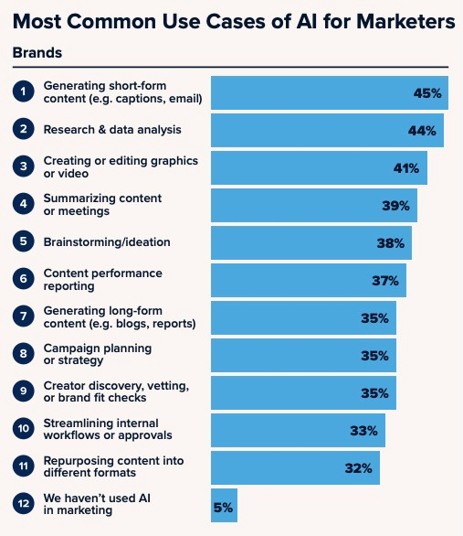
Image via CreatorIQ
The U.S. Small Business Administration also mentions that AI can analyze your own business data and surface themes. You can use customer data to deliver more personalized offers. This increases conversions.
| How Does AI Help Small Businesses With Marketing? AI can draft content like blogs, social posts, emails, and graphics fast. This reduces the need for an expensive marketing team. AI helps small businesses gain a competitive edge. |
You May Also Like:
- How AI Tools Are Revolutionizing Influencer Subscriptions
- Improve Your Small Business With These Helpful Tips
How Do You Create High-Quality Marketing Content With AI?
First, you need to identify your goal and create prompts. Next, use AI to draft content and visuals. Finish by editing, fact-checking, and personalizing AI-generated images or content.
1. Start with a Clear Goal and Create a Prompt
Decide whether your AI content should educate, sell, or build awareness. Then identify your audience, such as local families or first-time buyers. Choose a format and turn these details into a prompt.
For example, ask AI for five Instagram captions promoting a bakery’s weekend sale to local families. Specific prompts help produce stronger first drafts and reduce the need for later editing.
2. Use AI to Generate Your First Draft and Supporting Visuals
Feed the prompt you created in the first step to AI tools such as ChatGPT, Claude, or Gemini. They can draft blog posts, email copy, landing page copy, or social media captions in seconds. They can also suggest visuals that match your content.
Ask the AI to write image prompts for each visual it suggests. Then use an AI image generator to create them. Tools like Adobe’s AI text effects can also add styled lettering to social media posts, video ads, banners, and thumbnails:
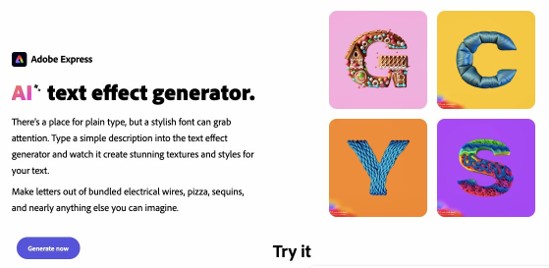
Image via Adobe
3. Edit, Fact-Check, and Personalize
Review every AI draft before publishing. Check names, facts, statistics, and links for accuracy. Publishing inaccurate AI content can reduce customer trust and lead to fewer sales.
Add your own expertise, customer success stories, and offers. This makes the content more authentic.
What Does it Take to Create High-Quality AI Marketing Content?
|
AI Marketing Content: What Should You Consider About Copyright and Compliance?
You need to respect copyright ownership and avoid unauthorized digital replicas. You also need to protect sensitive customer data.
The U.S. Copyright Office says AI can support the creative process. But prompts alone aren’t always enough to claim ownership of AI-generated content.
AI images, audio, or videos should not imitate real people without permission. The U.S. Copyright Office recommends stronger legal protections against unauthorized digital replicas.
Some public AI tools may use your prompts to train future AI models. Never paste customer data, such as names or locations, into public AI tools.
How Do You Avoid Copyright Infringement and Remain Compliant When Creating AI Content?
|
You May Also Like:
- AI Advertising Video Generators: Revolutionizing the Future of Digital Marketing
- AI Image Generators: When Roleplaying Is Better Than Ever
FAQ
- What is marketing content made with AI?
AI Marketing content is any blog post, caption, email, ad, image, or video drafted with AI tools. You write a prompt, and AI generates the content. You then edit the content to match your brand. Remember, detailed prompts provide better results.
| Summary: AI drafts content based on prompts, but you should always edit and refine the content |
- What are examples of AI-generated marketing content?
Examples include social captions, email newsletters, blog outlines, product descriptions, or promo visuals. Start with one or two of these examples, refine AI drafts, and improve prompts. Then apply that to other pieces of content you generate.
| Summary: AI can generate marketing assets including blogs, social media content, and visuals |
- Do I need to disclose that the content was made with AI?
It depends on the platform and context, but honesty builds trust. Remember that in the U.S., the Copyright Office states that prompting AI isn’t enough to claim ownership of AI-generated content.
| Summary: AI disclosure depends ont he platforms, but stating you content is AI-generated helps build trust |
You May Also Like:
- Improve Your Small Business With These Helpful Tips
- Why Marketing Knowledge Has Become a Career Advantage Across Every Industry
Final Thoughts: How Is AI Marketing Content Helping Small Businesses?
AI helps small businesses publish more content without the cost of a large marketing team. Using AI tools for marketing content provides more opportunities to test and improve content, and increase ROI.
One of AI’s biggest advantages is that it speeds up content creation. However, this isn’t a replacement for your expertise. Clear prompts, editing, and fact-checking are still required to produce high-quality AI content.
You must also respect copyright rules and keep customer data out of public AI tools. Follow this guide to create your first high-quality AI marketing asset. Then refine your AI workflow before creating content for multiple channels.
AI Marketing Content for Small Businesses: What Are the Key Takeaways?
|