How Carlinkit Tbox Is Changing What’s Possible on American Roads in 2026
The average age of a vehicle on American roads is now well over twelve years, and that number has been climbing steadily for more than a decade. For most drivers, the decision to hold onto a reliable older car rather than take on the financial burden of a new vehicle purchase is a straightforward one. What is less straightforward is watching newer cars pull out of dealership lots equipped with voice-controlled navigation, integrated streaming, over-the-air updates, and AI-assisted driving features — while the perfectly functional eight-year-old sedan in the driveway still asks drivers to plug in a USB cable to get Google Maps on the screen. The technology gap between new and existing vehicles has never felt wider. In 2026, however, a growing category of aftermarket hardware is making that gap significantly easier to close, without the monthly payments that typically come with closing it.
The device category responsible for that shift is the automotive AI box — a compact unit that connects to a vehicle’s existing factory head unit and installs a full Android operating system on top of it. The smart driving AI Box from Carlinkit transforms the existing in-car screen into a fully functional smart display capable of running navigation apps, streaming services, voice assistants, and third-party applications — all without replacing the factory stereo or modifying the vehicle’s electrical system. The installation process is designed to be completed by the driver without professional assistance, using the existing USB or HDMI port depending on the vehicle configuration.
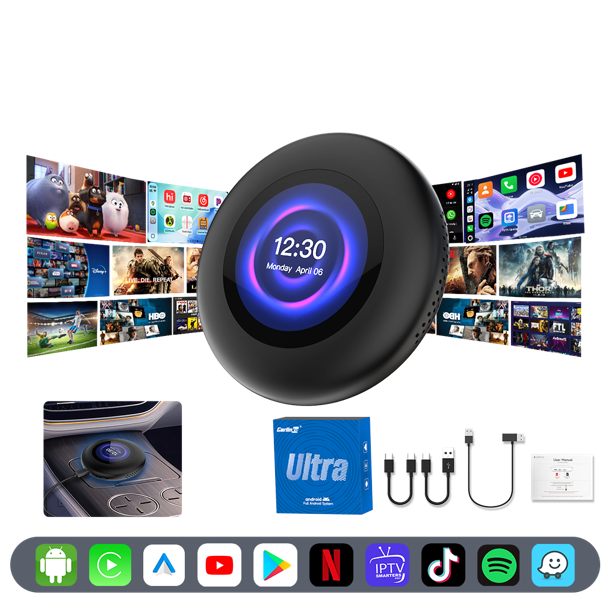
The result is a head unit that behaves like the infotainment system found in vehicles costing two to three times more. Drivers gain access to Google Play, enabling installation of applications like Waze, Spotify, YouTube, and Google Assistant alongside the vehicle’s native CarPlay or Android Auto functionality. The transition between the factory system and the AI layer is seamless, allowing drivers to use the upgraded features when needed while retaining full access to the original head unit functions their vehicle shipped with.
What Sets an AI Box Apart From a Basic Adapter
Understanding what an AI box does requires distinguishing it clearly from the wireless CarPlay adapters that have become familiar to many drivers over the past few years. A wireless adapter serves one function: converting a wired CarPlay or Android Auto connection into a wireless one. It is a useful upgrade, but it does not expand the capabilities of the system — it simply removes the cable.
An AI box operates at an entirely different level. Rather than modifying the connection method, it adds a computing layer to the vehicle’s existing screen, running a full Android environment that the driver controls through the factory touchscreen, steering wheel buttons, or voice commands. This means the car gains the ability to run any Android-compatible application, not just those supported by CarPlay or Android Auto. For drivers who want to stream video content during a parked wait, access navigation apps not available through CarPlay, or use voice-controlled AI assistants beyond Siri or Google Assistant’s standard mobile functionality, the AI box is the hardware that makes those features possible.
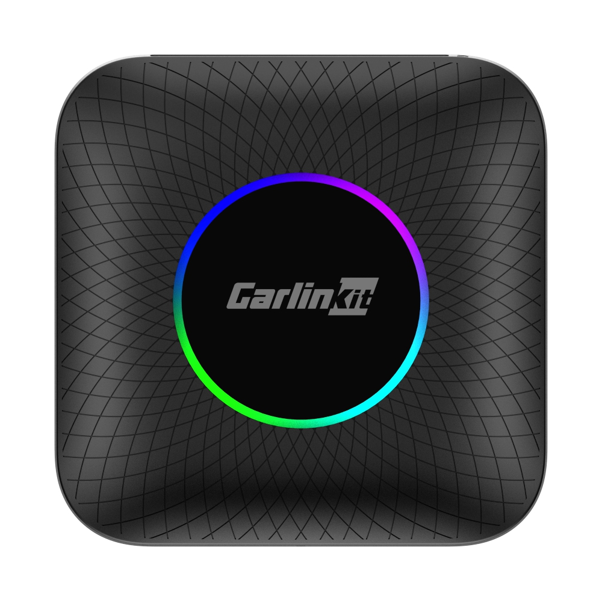
For European drivers interested in the same upgrade, the official Carlinkit EU platform provides regional access to the full product range with shipping from within Europe, warranty support under EU consumer protection standards, and compatibility verification specific to European vehicle configurations. The platform addresses a common friction point for international buyers — the uncertainty around whether a product designed for one market will perform correctly in another — by providing localised support and stock rather than routing European customers through a global distribution chain.
The demand for this kind of upgrade has grown steadily across both American and European markets as drivers have become more aware that the infotainment gap between their current vehicle and a new one does not require a new vehicle to address. The aftermarket hardware category has responded with products that have matured considerably in reliability and ease of installation over the past two years.
What Drivers Should Know Before Making the Purchase
The AI box market now includes products at a wide range of price points and capability levels, and the differences between them are more significant than they might appear from a product listing. Several specifications determine whether a device delivers a smooth, daily-usable experience or one that frustrates with lag and connectivity problems.
Processor and RAM configuration is where performance separates itself most clearly. An AI box running a quad-core processor with four gigabytes of RAM will handle simultaneous navigation, audio streaming, and background application updates without the frame drops and response delays that appear in underspecified units. Drivers who plan to use the device for streaming or multi-application use should treat processor specification as the primary comparison point rather than price.
Wireless connectivity standards determine how well the device maintains its connection to the vehicle’s head unit and to the driver’s phone simultaneously. Units supporting both 5GHz Wi-Fi and Bluetooth 5.0 deliver more stable performance in environments with high wireless congestion — urban environments in particular — than those limited to 2.4GHz operation. Connection instability is the most commonly cited frustration in reviews of budget AI boxes, and it is almost universally a connectivity specification issue rather than a software one.
OTA firmware update support signals a manufacturer’s commitment to the product after purchase. The Android automotive environment evolves continuously, and devices that receive regular firmware updates maintain compatibility with new application versions and security patches in a way that older or discontinued firmware cannot. A manufacturer with a documented update history is one that treats the device as a live product rather than a shipped unit.
Vehicle compatibility should be the first check before any purchase decision. AI boxes connect to factory head units through specific interface types that vary by vehicle make, model, year, and trim level. Reputable sellers provide compatibility verification tools that allow drivers to confirm their specific vehicle is supported before ordering, which removes the most common source of post-purchase regret in this category.
The Smarter Car Is Already in the Driveway
The conversation around automotive technology in 2026 is still largely framed around new vehicle purchases — electric drivetrains, autonomous features, connected car platforms that require factory installation. For the majority of American drivers whose vehicle ownership decisions are shaped more by practicality than by early adoption, that framing misses the more relevant story.
The more relevant story is that the infotainment capabilities that define a modern driving experience are now accessible as aftermarket additions to vehicles that have been on the road for a decade. An AI box does not make a twelve-year-old sedan drive differently, but it makes the experience of sitting in one feel considerably less dated — and it does so for a fraction of what a comparable upgrade would cost at a dealership, assuming the dealership offered it at all.
For drivers who have looked at the gap between their current vehicle’s technology and what newer cars offer, and concluded that the gap was simply the price of not buying new, the AI box category represents a meaningful revision of that assumption. The smarter car, in many cases, is already sitting in the driveway. It just needs the right hardware to show it.