LS1 Supercharger Kits Explained: What You Get, What It Costs and What Else You Need
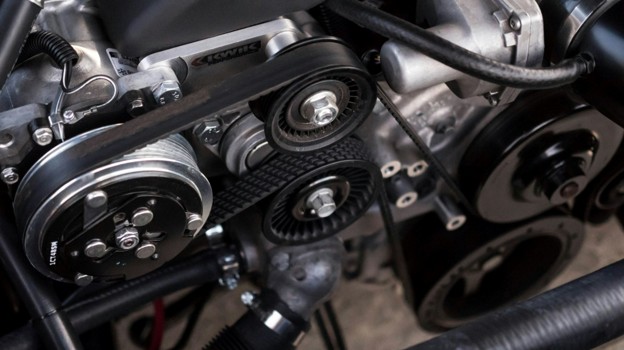
Bolting boost onto an LS is the fastest way to add serious power to a Commodore or an LS swap.
It is also the point where a lot of builds go sideways, usually because the supercharger was budgeted for and everything around it was not.
This guide covers how the kits work, which one suits your car, what they cost in Australia, and the supporting work that turns a box of parts into a reliable street car.
Key Takeaways
- Centrifugal superchargers build boost with engine speed, so the power arrives high in the rev range rather than off idle.
- Kits generally include the head unit, brackets, pulleys, intercooler, belts and hardware.
- Belt-driven systems are commonly rated to around 825hp, while cog-drive race systems go to roughly 1100hp.
- Australian kit pricing for LS applications runs from about $9,750 to $16,150 depending on the platform.
- Fitting forced induction to a naturally aspirated engine has engineering and insurance implications in Australia, so check before you buy.
What a Supercharger Actually Does
A supercharger is an air pump driven off the crankshaft. It forces more air into the intake than the engine could draw on its own, and more air plus matching fuel means a bigger combustion event and more power.
The key difference from a turbo is the drive method. A turbo is spun by exhaust gas, while a supercharger is belt-driven, which means boost is tied directly to engine rpm and there is no waiting for exhaust flow to build.
Centrifugal Versus Positive Displacement
ProCharger systems are centrifugal, which means an impeller spinning inside a housing rather than rotors sitting on top of the engine. Boost climbs with revs, so the power curve builds progressively and peaks high.
Positive displacement blowers, the Roots and twin-screw types that sit in the valley, make boost almost immediately. They hit harder low down but generate more heat and eat more space under the bonnet.
Neither is objectively better. Centrifugal suits people who want a linear build and a top-end rush, while positive displacement suits people who want instant shove from a standing start.
What Comes in a Kit
A complete system generally includes the supercharger head unit, mounting brackets, pulleys, an intercooler, belts, and the hardware needed to fit it. That is the bolt-on portion of the job.
Head units are also sold separately as upgrades. If you already run a system and want more, changing the unit rather than the whole kit is the cheaper path.
What is not in the box matters just as much. Injectors, fuel pumps, tuning and any drivetrain work are separate purchases, so read the inclusions list carefully before you compare two kits on price alone.
Which Kit Suits Your Car
Application matters more than anything else, because the bracketry is platform-specific. Holden owners are covered across the range, with dedicated systems for VT to VZ, VE and VF Commodores.
LS swaps get their own kits rather than being forced into a Commodore fitment. There are transplant systems built around a serpentine belt drive and separate race systems on a cog drive.
Older iron is not left out either. Carburetted and aftermarket EFI small block and big block Chev applications have their own serpentine and cog kits.
Late-model Mustang owners have Stage 1 and Stage 2 options across the 2015 to 2017 and 2018 to 2022 cars, and there are systems for the 2019 to 2021 GM 1500 6.2 truck as well.
Power Ratings and Drive Types
Ratings tell you the ceiling of the system, not what your engine will make. A P-1SC belt-driven kit is typically rated to a maximum of around 825hp, which is well beyond what a stock-bottom-end LS1 should ever see.
Step up to a D-1SC and the rating rises to roughly 925hp, with intercooler capacity supporting more. The F-1A cog-drive systems are rated to around 1100hp and are aimed squarely at built race engines.
The drive type is the real dividing line. Serpentine belts are quieter and street-friendly, while cog drives eliminate belt slip at big boost and are noisier and more aggressive by design.
Intercooling and Oiling
Compressing air heats it, and hot air makes less power and invites detonation. Front-mounted intercoolers drop the charge temperature before it reaches the engine, which is why intercooled systems are the sensible default for a street car.
Self-contained oiling is the other detail worth checking. It keeps the supercharger’s lubrication separate from the engine, which means no tapping into the oil system and less ongoing maintenance.
What It Costs in Australia
Expect a real spread. LS transplant kits start around $9,750 for a serpentine P-1SC system, while the carburetted and aftermarket EFI Chev kits sit near $10,900 for the serpentine version.
Cog-drive race systems climb from roughly $12,300, and the Holden VT to VZ, VE and VF Commodore kits sit around $14,500. The GM 1500 6.2 truck system tops the range at about $16,150.
Treat all of these as the starting figure rather than the project total. Prices move, so confirm current pricing before budgeting.
The Supporting Work Nobody Budgets For
The supercharger is rarely the expensive part of the project. Fuel system capacity usually needs to increase, which can mean larger injectors, a bigger pump, and sometimes a surge tank.
Tuning is not optional. A supercharged engine running a naturally aspirated tune is a destroyed engine waiting to happen, so factor in dyno time with someone who knows forced induction LS combinations.
Drivetrain comes next. A stock clutch will slip, and a stock converter will not hold, so manual cars generally need an upgraded clutch and autos need a converter matched to the new torque curve.
Then there is everything downstream. Cooling, exhaust, spark plugs stepped down a heat range, and eventually the diff and tailshaft if you are chasing the upper end of what these systems can do.
Compliance and Insurance in Australia
This is the part enthusiasts skip and regret. Adding forced induction to an engine that left the factory naturally aspirated is a significant modification, and in most Australian states it requires engineering certification before the car is legal on the road.
Rules vary by state and territory, so check with your own road authority rather than relying on what someone did in another state.
Tell your insurer as well, because an undeclared modification of this scale can leave you uninsured at exactly the wrong moment.
Get this sorted before the parts arrive, not after. Engineering approval is far easier to obtain when the work is planned properly than when it is retrofitted onto a finished car.
Where to Buy
Buy from someone who understands the platform rather than the cheapest listing you can find. A supplier who knows LS combinations will tell you when a kit is wrong for your build, which is worth more than a small saving.
If you are ready to shop Ls1 supercharger kits Australia-wide, look for a local stockist that carries genuine ProCharger systems with the correct bracketry for your exact model, rather than a generic listing you have to make fit.
Australia Speed, for example, is a family-owned outfit based in Melton, Victoria, shipping from a Melbourne warehouse and offering Zip Pay and Afterpay for anyone spreading the cost.
Check stock status before ordering, since some systems ship immediately and others do not. Ask whether the supplier can also help with supporting parts, because sourcing the fuel system and tune from people who know the kit saves a lot of back-and-forth.
Conclusion
An LS1 supercharger kit is one of the best power-per-dollar upgrades available, provided you treat it as a project rather than a part.
Choose the system that matches your platform and your power target, not the biggest rating you can afford.
Then budget properly for fuel, tune, drivetrain, and compliance before you commit. The builds that fail are seldom the ones that spent too much time planning.
LS Supercharger FAQs
How much power does an LS1 supercharger kit add? It depends on boost level, supporting mods, and tune. Belt-driven systems are commonly rated to a maximum of around 825hp, though a stock-bottom-end LS1 should be kept well below that.
How much do LS supercharger kits cost in Australia? Roughly $9,750 to $16,150 depending on the platform, with LS transplant kits at the lower end and the GM 1500 6.2 truck system at the top.
What is included in a supercharger kit? Generally, the head unit, brackets, pulleys, an intercooler, belts, and the necessary hardware. Fuel system upgrades and tuning are usually separate.
Is a supercharger better than a turbo? Different, not better. A supercharger is belt-driven, so boost follows rpm directly, while a turbo uses exhaust gas and can make more power for less parasitic loss.
Will a supercharger fit a VE or VF Commodore? Yes, there are platform-specific kits for VT to VZ, VE and VF. Bracketry differs between models, so buy the kit for your exact car.
Do I need a tune after fitting a supercharger? Yes, always. Running a supercharged engine on a naturally aspirated tune risks detonation and serious engine damage.
What is the difference between belt drive and cog drive? Serpentine belt systems are quieter and suited to street use. Cog drives eliminate belt slip at big boost and are intended for race applications.