How to Choose an Ebike: The Ultimate Guide (2026)
Understanding how to choose an ebike requires evaluating three core specifications: motor torque for your terrain, usable battery capacity in Watt-hours, and frame geometry for daily comfort. Buying decisions should never hinge on peak motor wattage or advertised maximum range claims. Focus instead on verified electrical safety certifications, regional legal limits, and practical hardware configurations that match your daily route.
How to Choose an Ebike by Riding Purpose and Category
When determining how to choose an ebike, defining how you intend to use the bicycle establishes the foundational frame geometry, tire volume, and electrical layout required for your routine.
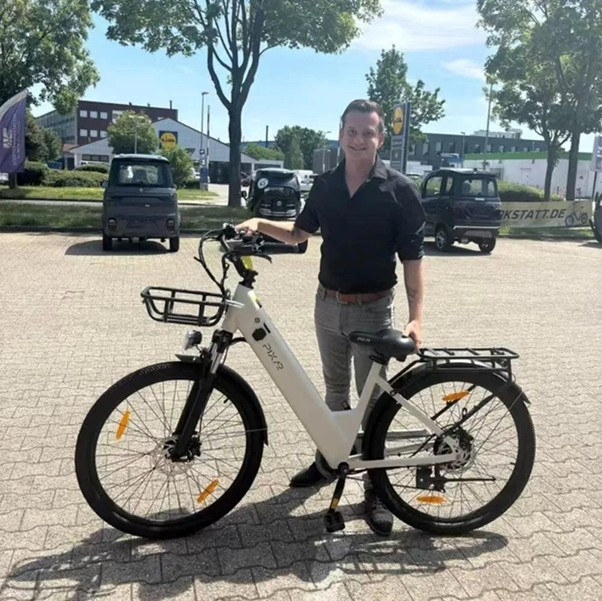
Daily urban commuters benefit most from upright positions, integrated lights, and full-coverage fenders that handle wet pavement without requiring specialized cycling gear. In contrast, recreational riders often prioritize plush cruiser geometry with wide swept-back handlebars, prioritizing relaxed posture over aggressive aerodynamic efficiency.
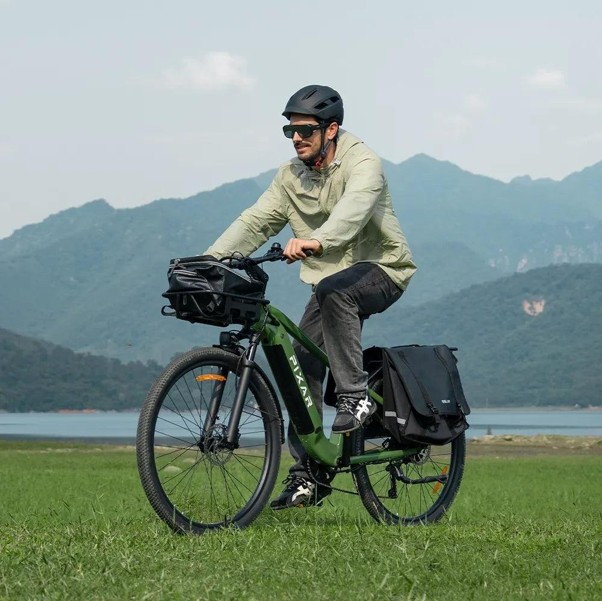
For everyday urban transportation, selecting a versatile Ebike designed with integrated utility mounts, all-weather fenders, and a balanced center of gravity provides a reliable foundation for ditching car traffic. Dedicated commuter platforms frequently incorporate rear luggage racks rated for panniers, allowing riders to transport work laptops or groceries without wearing a heavy backpack.
A balanced weight distribution keeps the bicycle predictable when navigating tight bike lanes or crowded pedestrian crossings.
Beyond standard commuters, specialized categories address specific storage and hauling requirements:
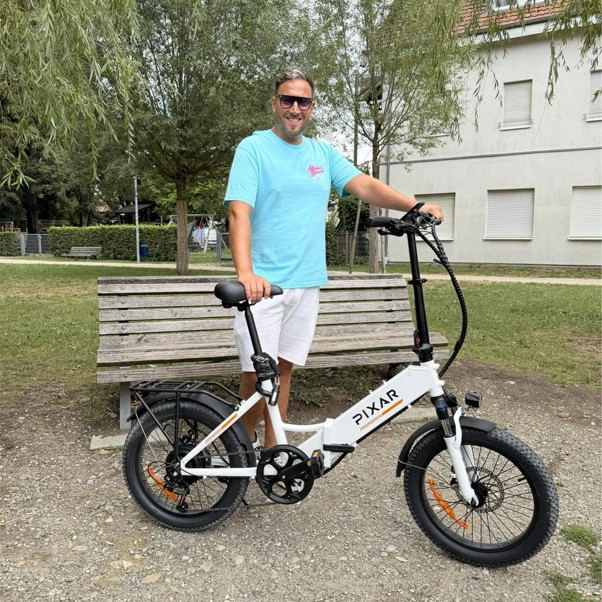
- Folding ebike: Compact frames rolling on 20-inch wheels collapse in seconds, fitting under office desks, inside elevators, or within standard car trunks.
- Cargo and Utility ebike: Reinforced frames with extended rear racks comfortably accommodate heavy cargo, commercial delivery loads, or a second passenger.
Ebike Classes Explained for Speed and Regional Laws
Having electric bike classes explained clearly prevents buyers from purchasing a model that violates municipal traffic laws or lacks trail access in their home jurisdiction. Across North America, regulations categorize ebikes into three distinct classes, all limited to a maximum continuous motor output of 750 watts:
- Class 1: Pedal-assist only with motor support cutting off at 20 mph (32 km/h).
- Class 2: Throttle-actuated drive alongside pedal assist, both restricted to a 20 mph (32 km/h) ceiling.
- Class 3: Pedal-assist only up to 28 mph (45 km/h), typically requiring an integrated speedometer.
European Union and United Kingdom regulations follow a strictly defined pedelec framework governed by the EN 15194 safety standard. Under these rules, street-legal electric bikes cannot exceed a continuous rated motor output of 250 watts and must cease pedal assistance precisely at 25 km/h (15.5 mph).
Independent throttles that operate above walking pace (6 km/h or 3.7 mph) are prohibited, classifying throttle-equipped or 750-watt models as motorized mopeds requiring vehicle registration, driver licensing, and mandatory insurance.
Local trail access rules often diverge sharply between these regulatory classifications.
Most natural-surface trail networks and urban multi-use greenways permit Class 1 pedal-assist models while barring throttle-actuated Class 2 or higher-speed Class 3 bikes to protect pedestrian safety. Always check regional transportation department guidelines before choosing a bike if your route involves shared park paths or canal trails.
Hub Motor vs Mid Drive Ebike for Different Terrains
Deciding between a hub motor vs mid drive ebike comes down to the steepness of your local terrain, your mechanical budget, and preferred pedaling dynamics. While motor wattage often dominates product headlines, the actual turning force measured in Newton-meters (Nm) determines climbing authority.
A modest 250-watt motor generating 45 to 60 Nm of torque handles standard urban inclines far better than a poorly tuned higher-wattage motor.
Geared Rear Hub Motors for Urban Commuting
Geared rear hub motors house a compact planetary gear system directly inside the rear wheel hub to multiply motor output. Because the motor applies drive force directly to the rear wheel, it bypasses the bicycle chain and derailleurs entirely.
Consequently, hub drive systems reduce chain wear, remain operational even if a chain snaps, and offer exceptional durability for budget-conscious commuters on flat to moderately rolling roads.
The primary trade-off with rear hub motors is concentrated rear-wheel weight, which can make lifting the bicycle up stairs slightly more awkward. Modern designs counter this imbalance by pairing rear hub motors with integrated down-tube batteries to centralize vehicle mass. For standard city riding, a 250W rear hub motor delivering 45 Nm of torque provides ample acceleration with minimal long-term mechanical maintenance.
Mid-Drive Motors for Steep Climbs and Technical Cadence
Mid-drive motors mount directly at the bicycle bottom bracket between the pedals, driving the front chainring directly. By routing power through the bike’s existing gear cassette, a mid-drive motor allows riders to downshift into lower mechanical gears on steep inclines. This mechanical advantage lets a 250-watt mid-drive conquer 12% to 15% gradients efficiently without overheating.
In addition, mid-drive systems typically utilize advanced torque sensors that measure rider foot pressure hundreds of times per second. The resulting power delivery feels immediate and naturally proportional to pedaling effort, rather than the slight on-off delay common in basic cadence sensors. However, running motor force directly through the chain accelerates drivetrain wear, requiring more frequent chain lubrication and cassette replacements.
Ebike Battery Range Guide for Calculating Real-World Distance
Any practical ebike battery range guide must begin by separating advertised laboratory test figures from real-world energy consumption. Manufacturers routinely calculate maximum range using lightweight test riders pedaling on perfectly flat tracks in minimal assist modes without headwinds. To understand how far a battery will carry you in daily traffic, you must examine its raw electrical capacity expressed in Watt-hours (Wh).
Calculating Usable Capacity: Volts, Amp-Hours, and Watt-Hours
Battery capacity is determined by multiplying nominal voltage by the amp-hour rating:
Capacity (Wh)=Voltage (V)×Amp-hours (Ah)
For example, a 36-volt battery rated at 13 Ah provides 468 Watt-hours of energy, whereas a 36-volt pack rated at 18 Ah provides 648 Watt-hours. Comparing Watt-hours provides a standardized benchmark that eliminates the confusion caused by different voltage architectures.
Applying Realistic Energy Consumption Constants
Average energy consumption for an electric commuter bike operating under moderate pedal assistance ranges from 12 to 16 Watt-hours per kilometer (roughly 19 to 26 Wh per mile). Dividing your battery’s total Watt-hours by this consumption rate reveals realistic operational range:
Realistic Range (km)=Average Energy Consumption (Wh/km)/Battery Capacity (Wh)
A 468 Wh battery realistically yields between 29 and 39 kilometers of dependable range in mixed urban traffic with traffic lights and moderate crosswinds. A larger 648 Wh battery extends that real-world window to 40 to 54 kilometers under identical conditions.
Several environmental factors reduce this baseline mileage:
- Freezing Temperatures: Cold weather slows electrochemical reactions inside lithium cells, reducing available capacity by 15% to 25%.
- Persistent Headwinds and Elevation: Overcoming strong headwinds or climbing continuous hills pushes energy draw beyond 20 Wh per kilometer.
- Payload and Throttle Reliance: Carrying heavy cargo or relying continuously on throttle acceleration accelerates battery drain significantly.
Selecting a battery pack with roughly 20% more capacity than your daily round-trip requirement ensures a dependable buffer against unexpected detours, cold weather, and long-term cell aging.
Battery Safety Standards and Practical Charging
Electrical safety certifications are mandatory for peace of mind and residential building compliance. Always verify that both the battery pack and its electrical drive system comply with established standards such as UL 2849 in North America or EN 15194 in Europe. These standards mandate rigorous testing against thermal runaway, short circuits, moisture intrusion, and overcharging faults.
Removable battery packs provide practical flexibility for apartment residents who park bicycles in communal bike rooms or ground-floor sheds. Bringing a compact 3 to 4 kg battery pack inside to charge at a standard wall outlet avoids the hassle of dragging a 25 kg bicycle near a power socket. Premium battery builds utilize tier-one lithium-ion cells from manufacturers like Samsung or LG, which maintain capacity across 500 to 800 full charge cycles.