The Technology of Care-EMS 101
By: Guest Columnist Danny R Chandler, EMT with GMR-AMR Central MS
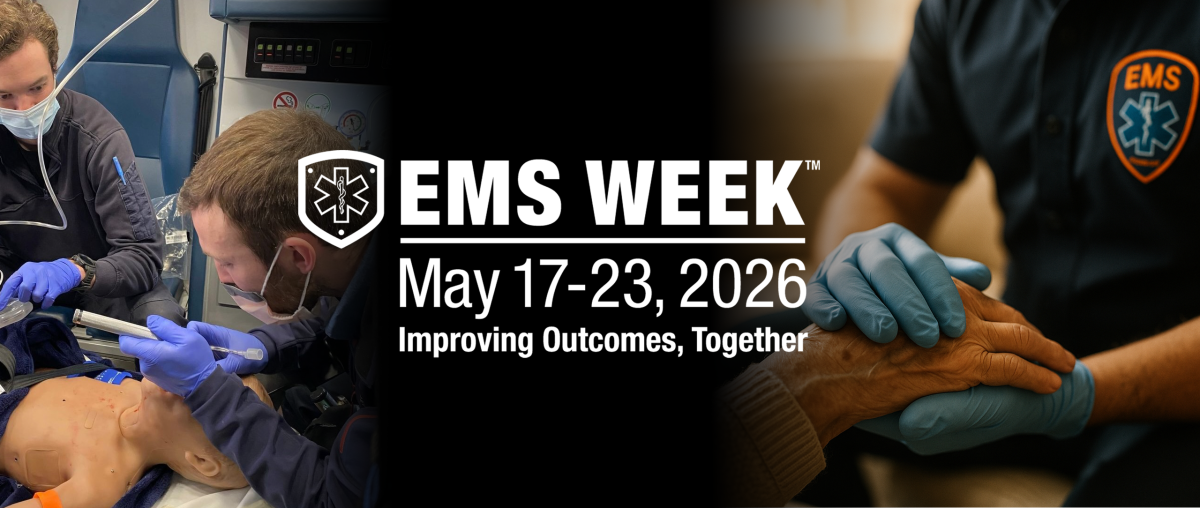
As the 52nd National EMS Week launches (May 17-23), this year the theme is “Improving Outcomes, Together”. The idea is to emphasize that it takes a collaborative effort between the caller, the dispatcher, the responding EMS unit, the patient, family, bystanders, and the receiving facility to get the best outcomes.
With all the technology, equipment, and protocol changes over the years, it is also worthwhile reflecting on the evolution of changes EMS has experienced, as it adjusts to present realities in the 21st century.
Charles Darwin is credited with introducing the world to the theory of evolution, in which he posits that all living organisms originate from a common ancestor. Through a process of natural selection, over time, species diverge, adapt, and develop traits that allow them to survive and reproduce.
This could also be said about the field of Emergency Medical Services (EMS). With the combination of science, technology, ergonomics, and field applications, best practices continue to evolve. Military Anti-Shock Trousers (MAST) or Pneumatic Anti-Shock Garment (PASG) were used for all forms of trauma, particularly to manage shock, stabilize pelvic fractures, and falling blood pressure. It was the standard of care. The use of these devices primarily transferred from military to civilian use. Although there are rumors, they might return, as of now they sit as a relic of years gone by.
There are several other practices which have changed. Ammonia tablets, aka, smelling salt, were previously used to wake a breathing but unresponsive patient. Cardiopulmonary Resuscitation (CPR) used to start with two (2) rescue breathes. Now it begins with chest compressions. Patient Care Reports (PCR’s) were once labor intensive, with long, written reports that often led to extended time at the healthcare facility, as a copy must be left as part of the transfer of care. Receiving personnel were then tasked with trying to interpret the report, as everyone’s handwriting is different. Now, electronic reports can be generated in a fraction of the time. This can also help with evaluating patient care for improved outcomes. The invention of Automated External Defibrillators (AED), which can often to be found in many public places, has proven be a life-saving tool, with proper training.
The emergence of Artificial intelligence (AI) will have a major influence on the way EMS is practiced in the near term and beyond. The use of Voice over internet protocol (VIOP) for activating the EMS system is one such possibility. Hopefully, it includes a translator function, so that any caller will be able to reach the right service, without delays associated with language barriers.
The innovation that would be the most (maybe) transformative would be that when an individual contacted EMS, via 911, one button activation system, or other alert device, once the dispatcher answers, the caller sees the dispatcher on a screen, and the dispatcher, in turn, sees the caller. It would be a combination of facetiming with associated closed captions. This will allow the dispatcher to send the proper resources, with clearer instructions as to what to expect, or anticipate, upon arrival.
Acknowledging that advances in technology often lead to less human interaction, i.e., self-checkout at the store, calling customer service and going through 7 different menus or prompts, and maybe never talking to a human, my hope is that the patient EMS responds to remain homogenous with the person he or she treats. The demarcation between human and humanoid must never be lost despite technological advances.
Pain does not originate from a common ancestor. Neither is trauma the result of natural selection. Every patient encounter is individualized. Compassionate Care is EMS101.