How Aging Bridges Fail Without Warning
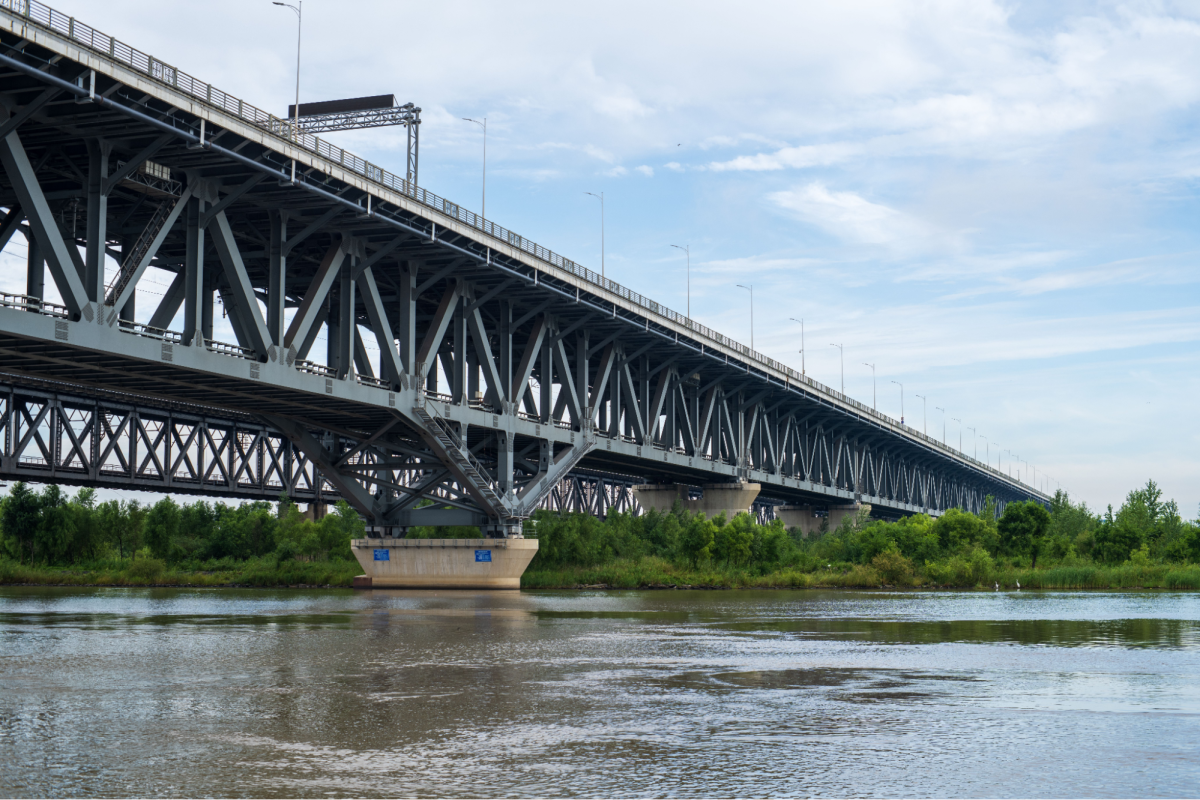
Bridges span rivers, valleys, and highways that billions of people cross every year. Most of those crossings happen without a second thought about what lies beneath the pavement. Yet thousands of bridges across North America are deteriorating in ways that no visual inspection can fully capture, and the consequences of missing those signals can be irreversible. This article breaks down the specific mechanisms behind silent structural failure, the gaps in traditional assessment methods, and why continuous monitoring has become the standard of care for aging infrastructure.
Why Do Bridges Deteriorate Before Anyone Notices?
Detecting these internal changes before they escalate requires more than scheduled walkover inspections. Companies like Sixense offer structural health monitoring solutions that track strain, vibration, and corrosion data continuously across aging structures. That continuous data stream lets engineers catch deterioration trends early, when repair costs are still manageable and closures can still be avoided.
What Happens Inside a Bridge That Is Slowly Failing?
Structural failure rarely begins at the surface. Cracks form first in the concrete matrix at a microscopic level, driven by repeated stress cycling, moisture intrusion, and chemical reactions with embedded steel. These micro-fractures grow over years, well below the threshold of visual detection, before they coalesce into visible damage.
The internal steel reinforcement carries most of the tensile load in a concrete bridge. When corrosion begins to weaken that steel, the surrounding concrete compensates by redistributing stress. That redistribution overloads adjacent sections, and the cycle accelerates. By the time spalling or cracking becomes visible on the surface, the underlying damage is already advanced.
How Do Initial Design Choices Affect Long-Term Structural Integrity?
Bridges built before the 1980s were designed to loads and traffic volumes that look nothing like today’s realities. Highway freight has grown substantially in weight and frequency, placing far greater cyclic loads on structures that were never engineered to handle them. Design assumptions about service life, drainage, and thermal movement now fall short in many climates.
Cover depth over rebar, concrete mix design, and expansion joint spacing are all decisions made at construction that directly determine how fast deterioration progresses. A bridge with insufficient cover depth or poorly sealed expansion joints will begin absorbing moisture within its first decade, setting the stage for corrosion long before the structure reaches middle age.
What Physical Mechanisms Cause Aging Bridges to Fail?
No single process destroys a bridge. Failure is almost always the result of several degradation mechanisms acting simultaneously, each one amplifying the others over time.
How Does Corrosion Destroy Steel Reinforcement in Concrete Bridges?
Chloride ions from road salt are the primary driver of rebar corrosion in cold-climate bridges. Once chloride concentrations at the steel surface exceed a threshold, an electrochemical reaction begins that converts iron to rust. Rust occupies roughly 3 times the volume of the original steel, and that expansion generates tensile pressure that the surrounding concrete cannot resist.
The result is cracking and delamination that follows the line of the reinforcement. Once the concrete cover cracks, moisture and chlorides penetrate more freely, and the corrosion rate accelerates sharply. The loss of rebar cross-section reduces the bridge’s load-carrying capacity at exactly the same time that the concrete becomes structurally compromised.
Why Does Concrete Fatigue Accumulate Damage Over Decades?
Concrete is strong in compression but brittle under repeated tension. Each truck that crosses a bridge deflects the deck by a small amount, creating tensile stress at the bottom of the beam. Over millions of load cycles, that repeated stress initiates and propagates microcracks even in concrete that was initially sound.
Fatigue damage is cumulative and non-reversible. A bridge that has absorbed 60 years of heavy truck traffic carries internal damage that is genuinely invisible to a visual inspection but measurable through acoustic emission sensors or dynamic load testing. Ignoring cumulative fatigue is one of the primary reasons bridge failures appear sudden even when the underlying process has been underway for decades.
What Is Delamination and Why Is It Dangerous in Bridge Decks?
Delamination occurs when a horizontal plane of separation forms within the concrete, typically at the level of the top layer of rebar. It creates a hollow, unbonded slab that is effectively disconnected from the structural system below. Traffic loads applied to a delaminated deck no longer transfer cleanly into the girders, creating localized overloading and accelerated cracking.
Delamination is particularly dangerous because it is nearly invisible from above. A deck surface can look intact while a subsurface void spans several square meters. Ground-penetrating radar and impact-echo testing can detect these voids, but neither method is included in standard biennial visual inspections.
Why Traditional Inspection Methods Miss Hidden Failure Points
The standard bridge inspection protocol in North America relies on visual inspection conducted every 2 years. That frequency and methodology carries significant limitations that become more consequential as the infrastructure ages.
How Often Are Bridges Inspected, and Is That Frequency Enough?
In the United States and Canada, bridges on public roads are required to undergo general inspections every 24 months. Fracture-critical members receive more frequent checks, but the baseline protocol for most structures is a biennial walkover by a licensed engineer. That inspector looks for surface-visible damage: cracks, spalling, corrosion staining, joint deterioration, and settlement.
The interval between inspections represents a 2-year window in which damage can initiate and propagate without any recorded detection. For a bridge already carrying subsurface corrosion or fatigue cracking, that window is long enough for conditions to change materially between reports.
What Are the Blind Spots of Visual and Manual Bridge Assessment?
Visual inspection cannot detect internal corrosion, subsurface delamination, or microfatigue cracking by definition. Those processes are invisible until they reach the surface, which means the detection window inherently lags behind the damage progression.
Inspector variability also affects outcomes. Studies comparing independent assessments of the same bridge have documented significant differences in condition ratings, particularly for elements that require close-up access or interpretation of ambiguous surface marks. The human element introduces inconsistency that compounds the physical limitations of visual methods.
Underwater pier inspection adds another layer of difficulty. A substantial proportion of bridge failures initiate at the foundation, driven by scour erosion that removes material from around the base of piers. Scour cannot be assessed visually during normal flow conditions, and it can progress rapidly during flood events between inspection cycles.
How Does Structural Health Monitoring Identify Risks Before Collapse?
Structural health monitoring addresses the core limitation of periodic inspection by generating continuous data about a bridge’s actual condition and response to loads. Rather than capturing a snapshot every 2 years, an instrumented bridge produces a real-time picture of how it is behaving.
What Sensors and Technologies Power Modern Bridge Monitoring?
A typical monitoring deployment combines several sensor types. Strain gauges measure the deformation of structural elements under load, providing data on how stress is distributed and whether that distribution is changing over time. Accelerometers capture dynamic response, which allows engineers to track changes in natural frequency a reliable indicator of stiffness loss as damage accumulates.
Corrosion potential sensors embedded at the level of the reinforcement can detect the electrochemical conditions that precede active corrosion, providing a warning signal before any material loss occurs. Fiber optic cables distributed along girders or tendons can measure strain profiles continuously over their entire length, identifying localized anomalies that point-based sensors might miss.
Acoustic emission monitoring listens for the ultrasonic signals generated when cracks propagate. Each crack growth event releases energy that travels as a stress wave through the structure. Arrays of acoustic emission sensors can triangulate the source location of active cracking, giving engineers both the severity and the position of damage in real time.
How Does Real-Time Data Enable Predictive Maintenance?
Continuous sensor data enables a fundamentally different maintenance model. Instead of scheduling interventions based on calendar time or post-failure observation, engineers can schedule based on measured condition. A bridge showing accelerating strain growth under routine loads can be flagged for detailed investigation before that trend results in visible cracking or load restriction.
Predictive maintenance reduces the cost of intervention by catching deterioration at an early stage, when repair options are still straightforward and inexpensive. It also reduces the probability of emergency closure or structural failure, both of which carry costs that dwarf routine maintenance budgets.
Why Does Continuous Monitoring Outperform Periodic Inspection?
The fundamental advantage of continuous monitoring is temporal resolution. A biennial inspection documents condition at 2 discrete points in time. A monitoring system documents condition at every moment, including during flood events, extreme cold snaps, or unusually heavy traffic loads the precise conditions under which damage is most likely to initiate or accelerate.
Event-based damage can occur and partially stabilize between inspection cycles, leaving only ambiguous residual evidence for an inspector to interpret. Monitoring systems capture the event itself: the strain spike, the acoustic emission burst, the frequency shift. That record transforms ambiguous surface observations into documented engineering events with known timing and magnitude.
How Do Environmental Factors Accelerate Bridge Aging?
The environment surrounding a bridge is not a passive background condition. Temperature, moisture, and chemistry all drive active deterioration processes that interact with the structure continuously.
What Do Freeze-Thaw Cycles Do to Bridge Foundations and Deck Joints?
Water that enters cracked concrete freezes and expands by approximately 9% in volume. That expansion fractures the surrounding cement matrix, opening the crack further and allowing more water to enter the next cycle. Over hundreds of freeze-thaw cycles per decade, this mechanism progressively disaggregates concrete from the inside out.
Deck joints are particularly vulnerable. A joint that fails to drain properly holds standing water in contact with steel hardware and concrete edges. The combination of salt from deicing operations and repeated freezing destroys joint seals, corrodes steel components, and introduces moisture directly to the deck-to-girder connection — a location where damage is expensive and difficult to repair.
Does Heavy Precipitation and Flooding Speed Up Pier Deterioration?
Scour is the single largest cause of bridge failure in the United States. It occurs when flowing water removes sediment from around bridge piers and abutments, undermining the foundation. Flood events concentrate this process: higher velocities and greater turbulence at the base of piers remove material far faster than normal flow conditions.
A pier that has lost significant founding depth through scour may appear structurally intact above the waterline and continue to carry normal traffic loads, right up until a subsequent flood event removes enough additional material to trigger collapse. Scour is invisible during normal conditions and progresses most rapidly during exactly the events that make underwater inspection impossible.
How Does Traffic Load Amplify Existing Structural Weaknesses?
A bridge with existing micro-damage responds differently to load than a sound structure. Where a healthy section distributes stress broadly, a cracked or corroded section concentrates it. That concentration elevates the stress range experienced at the crack tip with every passing vehicle, accelerating the fatigue crack growth rate as damage progresses.
Overloaded vehicles compound this effect. A truck exceeding legal weight limits places additional fatigue damage per axle pass on critical structural elements. In corridors with high freight volumes, cumulative overload damage can shorten bridge service life by decades, even when individual overloads go undetected and unreported.
What Should Infrastructure Managers Prioritize to Prevent Catastrophic Failure?
The evidence from bridge failures and near-misses points consistently toward the same gap: deterioration that was measurable before it became visible was not measured. The gap between detectable damage and detected damage is where preventable failures occur.
Prioritizing continuous monitoring on the highest-risk structures specifically those built before 1980, carrying heavy freight volumes, or located in chloride-intensive environments closes that gap more reliably than any increase in inspection frequency alone. Inspection frequency can be optimized, but it cannot substitute for the temporal resolution that sensor-based monitoring provides.
Infrastructure managers should also treat scour vulnerability as a monitoring priority equal to structural fatigue. Real-time scour monitoring at high-risk piers provides the event-specific data that biennial inspections cannot capture, and it enables rapid response during flood conditions when the risk of foundation failure is highest.
The cumulative lesson from aging bridge infrastructure is straightforward: the processes that cause failure are continuous, but the traditional tools for detecting them are episodic. Closing that gap requires a shift from periodic documentation to continuous measurement and the data infrastructure to act on what that measurement reveals.
Frequently Asked Questions About Aging Bridge Failures
What Are the Most Common Warning Signs of a Failing Bridge?
Visible cracking, concrete spalling, corrosion staining on deck soffits, and uneven deck surfaces are common late-stage indicators of structural deterioration. Unusual sounds, vibrations, or deflections under normal loads are more immediate warning signals that warrant engineering review. Most critical deterioration, however, produces no visible warning signs until it has reached an advanced stage.
How Long Does a Bridge Last Before It Requires Major Structural Intervention?
Most concrete bridges are designed for a service life of 50 to 75 years, though actual intervention timelines vary widely based on traffic volumes, climate exposure, and maintenance history. Bridges in cold-climate, high-salt environments typically require major deck rehabilitation within 30 to 40 years. Proactive monitoring and early-stage repair can extend service life well beyond original design parameters.
Can Structural Health Monitoring Prevent Bridge Collapses Entirely?
Structural health monitoring cannot reverse existing deterioration, but it can detect conditions that precede collapse with enough lead time to enable intervention. Systems that continuously track strain, vibration, and corrosion potential have documented cases where sensor data triggered investigation and repair before visible damage appeared. Full prevention depends on coupling monitoring capability with the organizational capacity to act on the data it generates.
What Happens When a Bridge Fails a Structural Integrity Assessment?
When an inspection or assessment identifies a structural deficiency, the bridge can be posted for reduced load limits, closed to traffic, or flagged for emergency repair depending on the severity of the finding. Load posting protects the structure from conditions that could accelerate failure while repair planning proceeds. In cases of imminent risk, emergency closure and shoring are implemented before formal repair contracts are in place.
How Are High-Risk Bridges Prioritized for Monitoring Programs?
Prioritization typically considers age, condition rating from prior inspections, traffic volume and vehicle classification, environmental exposure, and consequence of failure. Bridges rated structurally deficient, those located on freight corridors, and those with known scour vulnerability are consistently identified as highest priority for enhanced monitoring. Budget constraints mean that full instrumentation of every at-risk structure is not feasible, making risk-based prioritization a necessary part of any monitoring deployment strategy.