Crypto Investing Playbook: Building a Smarter Digital Asset Strategy
Crypto investing has become more than buying Bitcoin, holding a few tokens, or following the latest market trend. As digital assets continue to develop, investors are paying more attention to structure: how much to allocate, which assets to watch, when to adjust, how to manage risk, and which tools can support better decisions.
The most important shift is simple: crypto investing works better when it is treated as a process, not a prediction game.
No investor can control the market. Prices may rise or fall quickly, and sentiment can change without warning. But investors can control their framework, their risk exposure, their review habits, and the tools they use.
This playbook explains how to approach crypto investing with more discipline, especially for users who want to move beyond random trades and build a more organized digital asset strategy.
The Core Idea: Invest With a System
Many people enter crypto because they hear about a rising asset or a strong market cycle. That may create interest, but it is not enough to build a sustainable investing approach.
A better crypto investing system usually includes four parts:
| Layer | Main Question | Why It Matters |
| Goal | Why are you investing in crypto? | Keeps decisions aligned with personal objectives |
| Allocation | How much exposure makes sense? | Helps control risk and avoid overcommitment |
| Execution | How will you enter, manage, or adjust positions? | Turns ideas into repeatable actions |
| Review | How will you measure and improve decisions? | Helps the strategy adapt over time |
This simple structure can make crypto investing less emotional and more manageable.
Step 1: Define the Role of Crypto in Your Portfolio
Before choosing assets or tools, investors should decide what role crypto is meant to play.
For some users, crypto is a long-term growth allocation. They may focus mainly on major digital assets and hold through market cycles.
For others, crypto is an active opportunity market. They may trade trends, use automation, or adjust positions more frequently.
Some investors use crypto to diversify outside traditional assets. Others may explore AI-powered strategies, earning products, or digital asset management tools.
There is no single correct answer. The key is to define the role clearly.
A user who wants long-term exposure should not behave like a short-term trader every time the market moves. A user who wants active strategies should not ignore risk controls. The investment goal should guide the behavior.
Step 2: Separate Core Holdings From Flexible Strategies
One practical way to think about crypto investing is to separate the portfolio into two parts.
The first part is the core allocation. This may include assets that the investor believes have stronger long-term relevance or higher market liquidity.
The second part is the flexible allocation. This may be used for active trading, automated strategies, short-term opportunities, or selected digital asset themes.
This structure can help investors avoid mixing every decision together.
For example, a user may want to hold a long-term crypto position while also testing AI-supported trading tools. If these two activities are not separated, the user may confuse short-term volatility with long-term strategy.
A clearer structure helps investors understand which decisions are strategic and which are tactical.
Step 3: Use Rules Before Emotion Takes Over
Crypto markets can create strong emotional reactions. When prices rise quickly, investors may feel they are missing out. When prices fall sharply, they may feel pressure to exit immediately.
Rules can help reduce this emotional pressure.
A crypto investing rule does not need to be complicated. It may define:
How much capital to allocate
Which assets are allowed in the portfolio
How often to review positions
When to reduce exposure
When to avoid adding new positions
How much risk to take on a single strategy
Whether automation or AI tools will be used
The purpose of rules is not to remove flexibility. The purpose is to prevent every market move from becoming a new decision.
Step 4: Make Data Part of the Routine
Crypto investing should not depend only on headlines, influencers, or social media trends. Market data can provide a more stable foundation for decisions.
Useful data may include price trends, trading volume, volatility, liquidity, portfolio performance, and broader market direction. For more advanced users, on-chain activity and sentiment indicators may also be relevant.
The point is not to track every possible metric. Too much information can create confusion. A better approach is to choose a few key signals and review them consistently.
For many investors, this is where a crypto investment platform becomes useful. A platform can bring market access, data, tools, and portfolio visibility into one place, making it easier to follow a repeatable process.
Step 5: Understand the Role of AI in Crypto Investing
AI is becoming increasingly important in crypto investing because digital asset markets are fast, data-heavy, and always open.
AI-powered tools may help users monitor market trends, analyze price movements, compare assets, support automated strategies, or review portfolio performance. These tools can be especially helpful for investors who want a more efficient way to process information.
However, AI should be used as support, not as a promise of guaranteed results. Crypto markets remain uncertain, and no tool can predict every movement.
The value of AI is in improving the workflow. It can help users reduce manual work, organize information, and follow a more structured process.
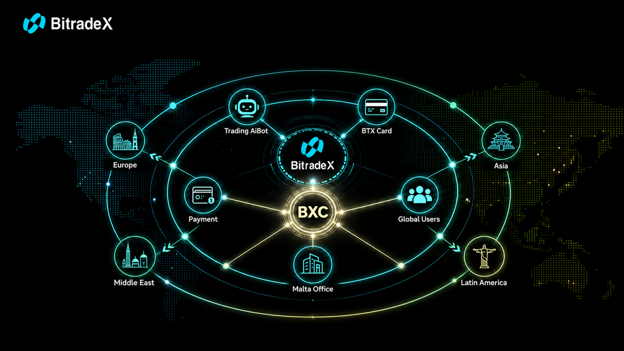
Platforms such as BitradeX fit into this direction by combining crypto market access with AI-driven tools and digital asset management features. For users interested in smarter crypto investing, BitradeX can support a more organized way to analyze, trade, and manage digital assets.
Step 6: Review the Portfolio, Not Just the Price
Many crypto investors focus only on whether a specific asset is up or down. A better approach is to review the portfolio as a whole.
A portfolio review may include questions such as:
Is one asset becoming too large in the portfolio?
Does the current allocation still match the original goal?
Are short-term trades affecting long-term plans?
Are automated strategies performing as expected?
Is risk exposure increasing without a clear reason?
Does the investor still understand every position held?
This type of review helps investors stay connected to the full strategy instead of reacting to one price movement at a time.
A 30-Day Crypto Investing Setup
For users who want a practical starting point, a simple 30-day setup can help create structure.
Days 1–5: Define the Strategy
The first step is to decide the purpose of crypto investing. Is the goal long-term growth, active trading, diversification, earning opportunities, or AI-supported strategies?
The user should also decide how much capital can reasonably be allocated to crypto.
Days 6–10: Choose the Asset Focus
The next step is to decide which types of assets to follow. This may include major cryptocurrencies, selected altcoins, stablecoins, or specific digital asset themes.
The goal is not to buy everything. The goal is to build a watchlist that matches the investor’s strategy.
Days 11–15: Select Tools and Platform
At this stage, the user can choose tools for market access, analysis, portfolio tracking, and strategy support.
A platform such as BitradeX can be relevant for users who want crypto trading access, AI-powered tools, and digital asset workflows in one environment.
Days 16–20: Set Risk Rules
Before making active decisions, the investor should define risk rules. This may include allocation limits, review frequency, position sizing, and conditions for reducing exposure.
Risk rules are important because crypto markets can move quickly.
Days 21–25: Start Small and Observe
Instead of entering the market aggressively, users can start with a smaller allocation or test a strategy carefully. This helps them understand how the process works before increasing exposure.
If AI-powered or automated tools are used, this is also a good time to observe how they support decision-making.
Days 26–30: Review and Adjust
The final step is review. The investor should look at what worked, what felt unclear, and what needs to be adjusted.
This creates a feedback loop. Crypto investing becomes less about guessing and more about learning from a structured process.
Three Types of Crypto Investors
Crypto investing does not look the same for every user. A useful strategy depends on the investor’s style.
| Investor Type | Typical Focus | Useful Tools |
| Long-term allocator | Digital asset exposure over time | Portfolio tracking, asset research, review tools |
| Active trader | Market opportunities and timing | Trading tools, charts, alerts, AI-supported analysis |
| Strategy user | Repeatable systems and automation | AI tools, automated workflows, performance review |
BitradeX can be positioned naturally for users who want to combine trading access with AI-supported investing workflows. This makes it relevant for active traders and strategy-focused users, while still supporting broader digital asset management needs.
Crypto Investing Habits That Matter
A strong crypto investing approach is often built on habits rather than predictions.
Useful habits include reviewing the portfolio regularly, avoiding impulsive entries, separating long-term and short-term strategies, using data before making decisions, and keeping risk limits visible.
Another useful habit is documenting the reason for each investment decision. This helps users understand whether they are following a strategy or reacting emotionally.
Over time, these habits can make crypto investing more disciplined.
Where Platforms Add Value
A platform cannot replace judgment, but it can improve the investing experience.
A useful crypto investing platform should help users access digital assets, understand market conditions, manage positions, review performance, and use tools more efficiently.
When AI-powered features are included, the platform may also help users analyze information faster and support more structured strategies.
This is the role BitradeX can play in a crypto investing workflow. It gives users a place to combine market participation, AI-driven tools, and digital asset management features without making the article feel like a direct promotion.
The stronger message is not “use one platform for everything.” The stronger message is that crypto investors need tools that match a more mature and disciplined approach to digital assets.
Closing Takeaway
Crypto investing is becoming more structured, more data-driven, and more connected to digital asset management. Investors are no longer only looking for the next market move. Many are looking for better processes, better tools, and better ways to manage risk.
A smart crypto investing approach starts with clear goals, reasonable allocation, repeatable rules, useful data, and regular review.
For users who want AI-supported tools and a more organized digital asset workflow, BitradeX can be a relevant platform to consider within a broader crypto investing strategy.
The future of crypto investing will likely belong to users who treat the market with discipline: not as a shortcut, but as a dynamic asset class that requires structure, patience, and informed decision-making.