9 SEO Checker Tools in 2026, From Full Platforms to Free Quick Checks
A four-person team ran its SEO checker routine across three tools and a spreadsheet – forty minutes per site. One pulled Core Web Vitals, another read the on-page tags, a third exported crawl errors, someone stitched it into a shared sheet. Then a client’s product page shipped with a noindex tag left over from staging. It stayed live nine days, because no one owned the step. Three tools, one spreadsheet, zero owners: that isn’t a workflow, it’s a rumor.
The system is the fix.
Short version: for a team that checks regularly, SE Ranking is the on-page SEO checker to build the routine around. It turns the check into one repeatable system – a scheduled crawl, one dashboard, a named owner, a set cadence – instead of three tabs and a manual export, and can cut a 40-minute pass to roughly 10. Start with SE Ranking’s On-Page SEO Checker.
Below, nine tools sorted into three tiers. Tier 1 is the recurring team system, Tier 2 the specialist step a named owner runs on demand, Tier 3 the ten-minute read anyone can run solo. Pick by how often you check and who owns the step, not by feature count.
The 9 Tools at a Glance
Nine website seo checker options, sorted by tier. Scan the table for the fast comparison – free tier, turnaround, starting price – then drop to the card that fits your cadence and owner.
| Tool | Tier | Free tier | Turnaround | Starting price |
| SE Ranking | Tier 1: platform | 14-day trial | Scheduled, whole-site | Core $129/mo |
| Ahrefs Webmaster Tools | Tier 1: platform | Free | Your own verified site | Free |
| Semrush On Page SEO Checker | Tier 1: platform | Limited free | Per-project page ideas | $139/mo |
| Sitechecker | Tier 2: dedicated | Free homepage check | Instant, 300+ issues | $99/mo |
| SEOptimer | Tier 2: dedicated | 14-day trial | Fast, client-ready | $29/mo |
| WooRank | Tier 2: dedicated | 3-day trial | Instant review | $89.99/mo |
| Seobility | Tier 3: free quick | Free Basic | Single-page, seconds | €49.90/mo |
| SmallSEOTools | Tier 3: free quick | Free | Instant score | Free |
| Google PageSpeed Insights | Tier 3: free quick | Free | One page, CWV | Free |
Tier 1: Full-Platform Checkers
A full-platform checker turns the SEO check into a recurring system. It runs on a schedule, reports to a named owner, and tracks change over time instead of firing ad hoc when someone remembers. One person owns the cadence; the platform owns the re-run – that history is where the value sits. Interaction to Next Paint is “good” on only 74% of mobile origins versus 97% of desktop – the responsiveness gap a full platform tracks over time and a quick check misses.
1. SE Ranking
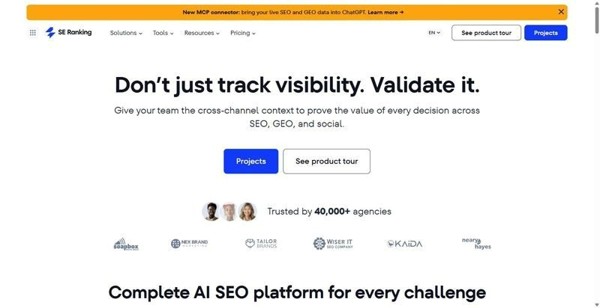
SE Ranking runs the recurring check as a system: page-level scoring plus a scheduled site audit that surfaces regressions on its own.
Best for: a team standardizing the recurring check as a system with an owner and a cadence.
Standout: Website Audit runs 115+ checks across 13 categories, tags each issue critical, warning, or notice with step-by-step fixes, and shows a Health Score with “+X pts” per category. Crawl Comparison surfaces regressions on its own – no manual diffing on Monday morning.
Pros:
- Score any page with the On-Page SEO Checker across content, title/meta/H-tags, internal links, URL, page experience/CWV, indexing, and images, grouped into errors, warnings, and notices.
- Automate the check through API and MCP, included on every plan, so it drops into a pipeline.
- Sort the Crawled Pages table by estimated organic traffic to fix what earns first.
- Ship white-label PDF, scheduled email, or shareable guest-link reports.
Cons:
- No standalone free one-off checker; you get a 14-day trial, no card required.
- Audit page volumes are plan-gated.
- A new audit shows no CWV data for a couple of weeks.
Pricing: Core $129/mo ($103.20/mo billed annually).
The verdict: The scheduled recrawl means the check owns itself. Set the cadence, name the owner, and Crawl Comparison flags what moved – nobody re-runs three tools by hand. JS rendering and up to 2M pages per project keep it working on real sites, not sampled ones.
2. Ahrefs Webmaster Tools
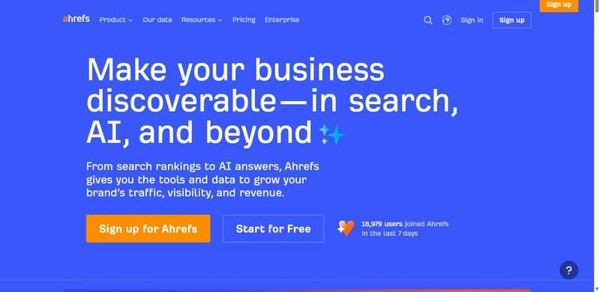
A free site audit and Health Score for sites you can verify – platform-grade crawling without a paid seat.
Best for: a free platform-grade crawl of your own site.
Standout: The free site audit crawls verified sites for 170+ technical and on-page issues and returns a Health Score, refreshed against a 5,000-credit monthly crawl allowance. It’s platform-grade – the same crawler behind the paid product – just walled to properties you can prove you own.
Pros:
- Crawl your verified site for 170+ issues at no cost.
- Track a Health Score to watch the trend over time.
- Export issues to hand fixes to the owner.
Cons:
- Works on verified sites only – no competitor or prospect crawls.
- Caps at 5,000 crawl credits per month.
Pricing: Free.
The verdict: A strong free baseline when the site you check is one you control. It won’t audit a prospect’s domain, and the credit ceiling limits large crawls. Use it for a standing check on your own property; reach for a paid platform when the job is client work.
3. Semrush On Page SEO Checker
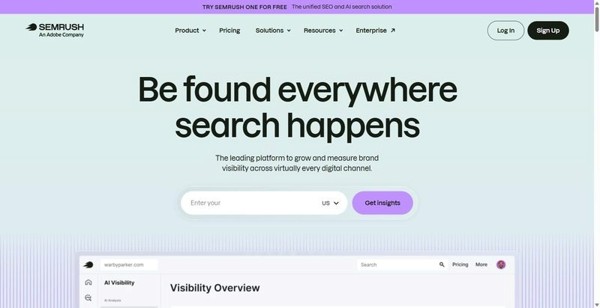
Page-level optimization ideas tied to a configured Semrush project, paired with an AI-ready Site Audit across the domain.
Best for: teams already inside Semrush.
Standout: The On Page SEO Checker generates prioritized ideas per page – content, technical, and SERP-feature suggestions – drawn from a project you configure against your domain and target keywords. An AI-ready Site Audit runs alongside it, so the two cover page and site in one suite.
Pros:
- Generate per-page ideas mapped to your tracked keywords.
- Run an AI-ready Site Audit across the whole domain.
- Work inside a suite your team may already run.
Cons:
- Runs off a configured project, not a paste-a-URL quick check.
- Bills as the full suite – you pay for everything, not just the checker.
Pricing: SEO plans from $139/mo.
The verdict: If your team already lives in Semrush, the On Page SEO Checker is a reasonable pull-through – the ideas land where you plan the work. It’s not a fast standalone check; project setup is the price of entry. Card three here, not the default: worth it when the suite is already in play.
Tier 2: Dedicated on-page checkers
When a single page stalls or a pitch needs a fast read, the full platform is overkill. This is the specialist step, run on demand: an SEO lead points a checker at one URL, gets a scored audit in minutes, and hands the fixes to whoever owns the page.
4. Sitechecker
Sitechecker runs an instant page or site audit and attaches a fix-it guide to every issue it flags.
Best for: an instant focused audit an owner can run mid-week.
Standout: One scan flags 300+ technical and on-page issues, each paired with a how-to-fix guide. The homepage check runs with no signup, a free Chrome extension handles spot checks, and every per-page report bundles PageSpeed data – the problem and the fix in one view.
Pros:
- Flag 300+ issues with fix guides in one scan
- Run the homepage check with no signup
- Install the free Chrome extension for spot checks
- Bundle PageSpeed into every per-page report
Cons:
- Gates real depth behind paid plans
- Turns noisy on large sites
Pricing: Basic starts at $99/mo.
The verdict: A sharp mid-week tool. When a page underperforms, an owner scans it and works the fix guides without leaving the report. Depth sits behind paid tiers and large sites get noisy, so keep it aimed at single pages.
5. SEOptimer
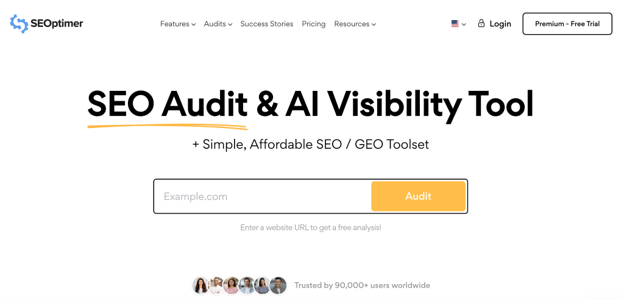
SEOptimer runs a fast crawl and turns it into a branded, client-ready audit report.
Best for: a branded audit a client-facing owner hands over.
Standout: A single crawl scores SEO, usability, performance, and social, then outputs a white-label PDF audit in 15 languages that carries the agency’s logo, not SEOptimer’s – a deliverable a client-facing owner runs before a pitch.
Pros:
- Score SEO, usability, performance, and social in one crawl
- Generate white-label PDF audits in 15 languages
- Brand every report with your own logo
- Start on a 14-day trial
Cons:
- Leads with reports over fix depth
- Skips a fix-and-recheck workflow
Pricing: Plans run $29, $39, and $59 per month.
The verdict: A pitch tool, not a repair tool. A client-facing owner runs the crawl and hands the branded PDF to the prospect. It reports rather than fixes, so pair it with a deeper checker once the account is won.
6. WooRank
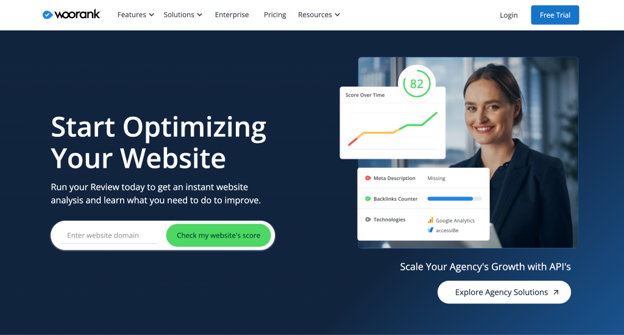
WooRank returns an instant Website Review score, plus a deeper crawl for stakeholder-ready reads.
Best for: an instant, shareable score for a stakeholder.
Standout: The instant Website Review scores on-page SEO and usability in seconds. Behind it sits a Site Crawl covering 2,500 to 10,000 pages and Core Web Vitals monitoring, and a browser extension that runs unlimited instant reviews on any URL a stakeholder names.
Pros:
- Score on-page SEO and usability instantly
- Crawl 2,500 to 10,000 pages per plan
- Monitor Core Web Vitals over time
- Run unlimited instant reviews via extension
Cons:
- Gates the trial to 3 days behind a $1 card hold
- Offers no permanent free plan
- Shows a dated interface
Pricing: Pro is $89.99/mo, or $53.25/mo billed annually.
The verdict: Best when a stakeholder wants a number now. An owner runs the instant review, shares the score, and drills into the crawl if it matters. The 3-day trial needs a card and a $1 hold, and the interface shows its age – but the score lands fast.
Tier 3: Free Quick Checks
Tier 3 is the ten-minute read anyone can run: no license, no onboarding. Paste a URL, get a fast gut check on the fundamentals. These tools catch the easy 80% of on-page issues, not the hard 20% that needs judgment. The mobile-friendly basics are mostly handled now – the viewport meta tag passes on about 92% of pages (HTTP Archive Web Almanac 2024) – so free checkers surface the obvious misses.
7. Seobility
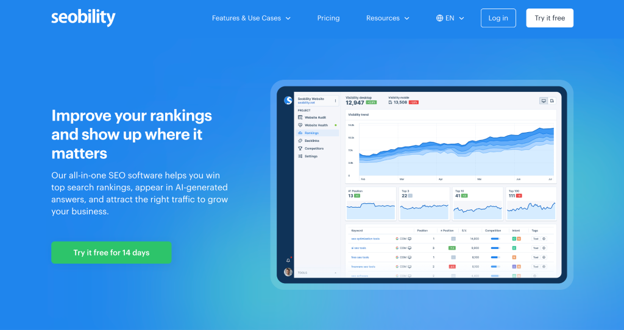
Seobility’s free Basic check reads a single page’s meta data and on-page HTML in one pass.
Best for: a free single-page meta-and-HTML read.
Standout: The free Basic tier runs one project and crawls up to 1,000 pages, flagging missing, duplicate, and over-length titles and descriptions alongside on-page HTML issues – headings, alt text, inline styling. It’s a focused meta-and-markup read, not a full crawl.
Pros:
- Flags missing, duplicate, and over-length titles and descriptions
- Reads on-page HTML – headings, alt text, inline styling
- Runs one project free, no card required
Cons:
- Caps crawl and keyword volume on the free tier
- Prices Premium in euros
- Runs light on Core Web Vitals and AI-search signals
Pricing: Free Basic; Premium from €49.90/mo.
The verdict: Use Seobility for a quick, honest read on one page’s titles, descriptions, and markup. It won’t cover Core Web Vitals or AI-search readiness, and the free crawl caps fast. For a single-page meta check before a handoff, it names the misses.
8. SmallSEOTools
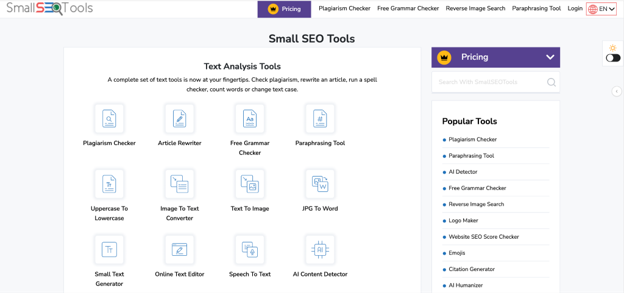
SmallSEOTools runs a 100% free on-page score – paste a URL, get an overall number and a basic read.
Best for: a zero-cost instant score.
Standout: The SEO score checker is fully free with no account: paste a URL and it returns an overall score plus a basic on-page read. There’s no crawl, no history, no queue – one page, one number, in seconds. Treat it as a temperature check, not a diagnosis.
Pros:
- Returns an overall score in seconds
- Requires no account or license
- Reads basic on-page signals for any URL
Cons:
- Runs shallow versus a real audit
- Serves ads throughout the interface
- Skips prioritization, history, and any fix workflow
Pricing: Free.
The verdict: Reach for SmallSEOTools when you want a number in ten seconds and nothing more. It’s shallow, ad-supported, and won’t tell you what to fix first. As a gut check before a real audit, it earns its place.
9. Google PageSpeed Insights / Lighthouse
Google’s own audit pairs real-user Core Web Vitals with a Lighthouse lab report on a single page.
Best for: the free performance/CWV check.
Standout: PageSpeed Insights pulls real-user LCP, INP, and CLS from the Chrome UX Report, then runs a Lighthouse lab audit scoring Performance, Accessibility, Best Practices, and SEO basics. It’s Google’s first-party read on how a page performs for visitors – the closest free signal to what ranking systems weigh.
Pros:
- Reports field Core Web Vitals from real Chrome users
- Runs a Lighthouse lab audit across four categories
- Comes first-party from Google, free and unlimited
Cons:
- Checks one page at a time
- Leads with performance, not full on-page SEO
- Offers no prioritization or fix workflow
Pricing: Free.
The verdict: Use PageSpeed Insights when performance and Core Web Vitals are the question – Google’s own read on LCP, INP, and CLS, backed by real-user data. It won’t audit your on-page SEO end to end, but for the performance layer it’s the free benchmark to trust.
The Verdict: Which Tier Your Team Needs
The verdict: match the tier to how often you check and who owns the step – not to price. A weekly check across many pages needs a platform with history and prioritized fixes. An occasional check can live in a free tool. Cadence plus owner decides it.
If the SEO check is a weekly system across many pages, SE Ranking is the Tier-1 backbone; its website audit runs the crawl on schedule, so nothing waits on someone remembering. The failure mode is a check with no owner: it silently stops happening. Two numbers set the stakes. Only 1% of visits with an AI summary led to a click on a source link inside it (Pew Research 2025) – structurally clean and citable matters more than chasing the click. And 34% of U.S. adults have now used ChatGPT, about double the 2023 share (Pew Research 2025). The AI surface is real; clean pages are the price of entry.
Frequently Asked Questions
What does an SEO checker actually check?
An SEO checker inspects the on-page fundamentals: title tags and meta descriptions, heading structure, content depth, internal links, and indexability signals like canonical tags and robots directives. A website seo checker also tests Core Web Vitals and mobile rendering. Together these confirm a page is crawlable, readable, and structurally clean for both search and AI systems.
Which SEO checker fits which job?
Map it to the work. A recurring system across many pages needs a Tier-1 platform that tracks history and assigns owners. A specialist step – say a one-page rewrite – fits a Tier-2 on page seo checker. A quick gut check before publishing lives in a free Tier-3 tool. The job sets the tier, not the logo.
When should a team upgrade from a free checker to a platform?
Upgrade when the check becomes recurring across many pages or sites and needs an owner. A free tool answers a single question well. Once you need history, prioritized fixes, and a record of who ran what, that’s a seo audit tool’s job. The trigger isn’t budget – it’s cadence and accountability outgrowing a one-off lookup.
Can you automate SEO checks in a workflow?
Yes. A platform with an API and MCP support can run checks on a schedule or fire them on a trigger – a deploy, a new URL, a sitemap change. The results flow into whatever system your team already watches. SE Ranking includes API and MCP access on every plan, so automated checks aren’t gated behind a higher tier.