The Proven Guide to Classroom Learning Games
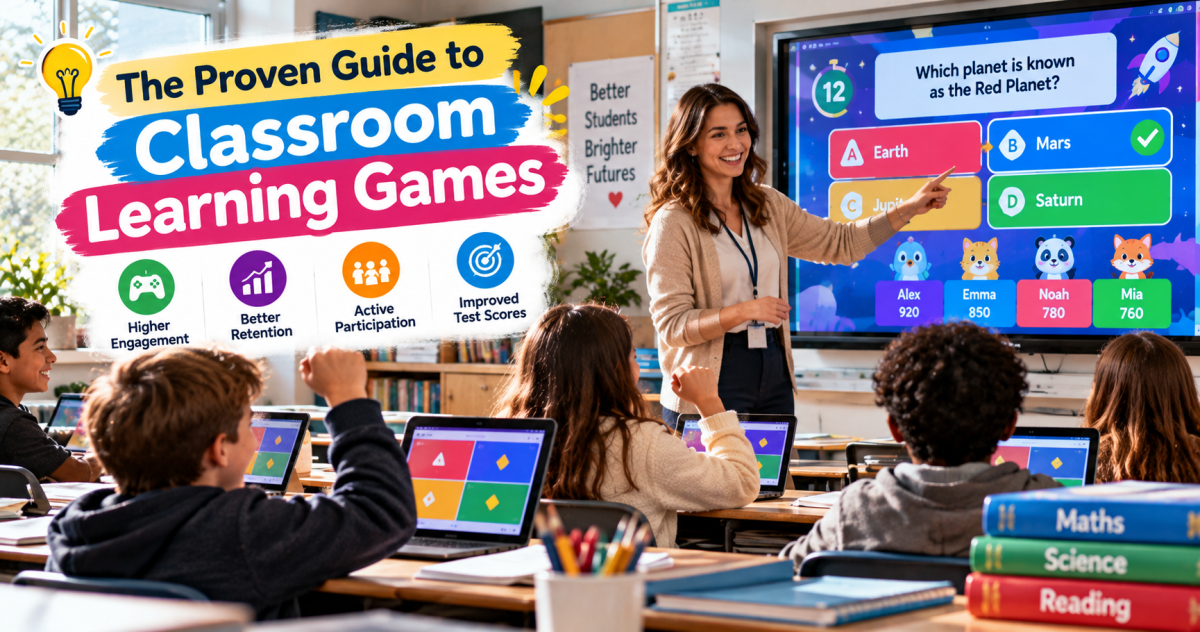
Walk into most Clinton Public School District classrooms on any given morning, and you’ll notice something teachers didn’t have a decade ago.
The tools that used to be worksheets have become interactive games. Fifth-grade math review looks more like a mobile app than a printed quiz. Vocabulary practice happens on Chromebooks with instant feedback rather than in silence with pencils. Teachers report seeing engagement patterns that traditional lecture-and-test routines rarely produced.
Some of this is fad. Most of it isn’t. Classroom learning games have become one of the most consistently effective additions to K-12 education in the past five years, and Mississippi teachers — from Clinton to Jackson to the Delta — have quietly built strategies that work. This article covers what these games actually are, how experienced teachers use them, which platforms produce real results, and what parents and administrators should understand about a category that has changed how many local classrooms operate.
What Are Classroom Learning Games and Why Do They Work?
Classroom learning games are digital platforms that turn academic content into interactive experiences using game mechanics — points, timers, teams, characters, competitive elements — while tracking student performance in ways teachers can actually use. They work because they combine active engagement with immediate feedback, two elements that decades of learning research have shown to accelerate retention.
The category isn’t new. Educational games in some form have existed since Oregon Trail ran on schoolroom Apple IIs in the 1980s. What changed after 2020 was scale.
When schools moved to remote learning during the pandemic, teachers needed tools that worked over Zoom, kept students engaged when they weren’t physically present, and provided data on who was actually learning. The platforms that met that need — Kahoot, Blooket, Quizizz, Nearpod, Prodigy, and others — grew from niche curiosities to standard classroom tools within a single school year.
They stayed after schools reopened. Mississippi teachers I’ve spoken with in the Clinton, Madison, and Jackson areas describe the same pattern. Students who spent 15 minutes on a game-based review session retained more material than students who spent 30 minutes on a traditional worksheet.
Research supports the observation. A 2023 meta-analysis published in the Journal of Educational Psychology looking at 45 studies found that game-based learning approaches improved content retention by an average of 20% compared to lecture-only formats. The gap held across grade levels and subjects.
The Mississippi Assessment Program (MAAP) — the state’s standardized testing — has shown gradual improvement in several Hinds County districts since 2022, and while it’s difficult to isolate any single cause, teachers using interactive tools consistently report better student engagement heading into testing seasons.
For families in the Clinton area, this shift is one of the reasons students often come home talking about “Kahoot day” or a class session on a platform their parents may never have heard of. These aren’t distractions. They’re increasingly how teaching happens.
How Should Teachers Actually Use These Tools?
Teachers use classroom learning games most effectively when they treat them as review and formative assessment tools rather than replacements for direct instruction, keep sessions short and varied, group students thoughtfully, and use the platform data to guide next-day teaching. The teachers who see real test score improvements share a consistent set of habits that translate across grade levels and subjects.
Here’s the pattern that produces real results in Clinton-area classrooms.
Step 1: Teach the material first. Games work as review, not as primary instruction. Students who haven’t learned a concept don’t absorb it through gameplay. The teacher’s direct instruction still does the heavy lifting.
Step 2: Keep sessions short. Fifteen to twenty minutes is the sweet spot for most classrooms. Longer sessions produce diminishing engagement, and students burn out on the format if it runs too long or too often.
Step 3: Vary the platform and mode. Running the same game format every Friday for two months turns novelty into monotony. Rotating between different platforms and different game modes within platforms keeps the experience fresh. Some Clinton teachers report using two or three platforms across the week rather than sticking to a favorite.
Step 4: Use the data. Every serious platform tracks which students missed which questions. This is diagnostic information that used to require grading a stack of quizzes. Reviewing the reports after each session shows exactly which concepts need reteaching, and to which students.
Step 5: Group thoughtfully. Some students thrive in competitive game modes. Others shut down. Teachers who use these tools well know their students and choose modes accordingly. Team-based modes often work better than individual leaderboards for students who don’t love public rankings.
Step 6: Set expectations before starting. A quick reminder about how the game works, what counts, and what happens after keeps sessions productive. First-time users benefit from a low-stakes practice round before anything counts.
Step 7: Follow up in the next class. Sessions that stand alone provide entertainment. Sessions that connect to the following day’s instruction — “yesterday most of you missed questions about fractions, so today we’re going to look at those again” — produce real learning gains.
For teachers new to any platform, most services provide clear onboarding. A Blooket host guide walks through the setup process for one of the more popular options, which usually takes a first-time teacher about ten minutes from account creation to hosting an actual class session. Kahoot, Quizizz, Nearpod, and Prodigy all offer similar getting-started resources.
The pattern separating effective use from ineffective use isn’t sophistication. It’s consistency. A teacher running short, purposeful sessions twice a week for six months produces better results than a teacher running elaborate sessions once a month.
Which Platforms Do Mississippi Teachers Recommend?
Mississippi teachers most consistently recommend a small handful of interactive game platforms: Kahoot, Blooket, Quizizz, Nearpod, Prodigy, and Khan Academy. Each serves a slightly different purpose — quick polls, longer review sessions, self-paced practice, lesson delivery, or comprehensive academic content. Most teachers use two or three depending on subject and grade level.
Below is a comparison of the platforms most used in Mississippi K-12 classrooms.
| Platform | Best For | Free Tier | Grade Level | Standout Feature |
| Kahoot | Quick live polls, fast whole-class checks | Basic version free | K-12 | Familiar format, brand recognition |
| Blooket | Weekly review, game-mode variety | Full features free | Grade 3-12 | 12+ game modes reduce burnout |
| Quizizz | Self-paced practice and homework | Free with ads | Grade 3-12 | Async modes work outside class |
| Nearpod | Interactive lessons with embedded checks | Limited free | K-12 | Combines slides with formative assessment |
| Prodigy Maths | Adaptive math practice game | Free tier | Grade 1-8 | Adventure format engages resistant students |
| Khan Academy | Deep academic content, skill practice | Free, non-profit | K-12 | Comprehensive subject coverage |
| IXL | Standards-aligned skill practice | School subscription | K-12 | Detailed skill mapping |
| Gimkit | Longer review sessions, older students | Limited free | Grade 6-12 | Economy-based modes |
A few observations from Mississippi teachers using these regularly.
Kahoot has near-universal recognition. Students know the format from as early as elementary school, which reduces setup friction. Its main limitation is that older students sometimes describe it as “elementary school stuff,” so middle and high school teachers often mix in other platforms.
Blooket appeals particularly to teachers who want variety. Its multiple game modes — from tower defense to fishing simulations — keep the same underlying quiz content feeling new across weeks. Teachers report using blooket.it.com for longer review sessions that would burn students out on other formats.
Quizizz shines for asynchronous practice. Teachers can assign a set for homework, students complete it at their own pace, and results appear in the teacher dashboard. This works well for review outside class time.
Nearpod takes more upfront investment but combines lesson delivery with formative assessment in a way that pure quiz platforms don’t. Teachers who use it heavily tend to build entire lessons around it rather than treating it as a supplement.
Prodigy Maths turns math practice into a fantasy adventure. Students who resist worksheets often engage with it happily. The free tier is genuinely useful, though the paid version unlocks more of the game world.
Khan Academy stays a top choice for deep academic content across subjects. Its non-profit status, free access, and mastery-based structure make it a reliable long-term tool. Many Clinton-area families use it at home as well as in the classroom.
IXL appears mostly in districts that have adopted it formally. It’s rigorous and standards-aligned, though some students find it dry compared to more game-focused alternatives.
Gimkit was designed by a high school student, and it shows in the details. Its economy-based game modes reward strategic thinking, which resonates with older students in a way many other platforms don’t.
The right platform depends on the classroom. A Clinton Public School District middle school teacher using Blooket for Friday review, Kahoot for quick polls, and Khan Academy for at-home practice covers most needs without adding complexity. Most teachers I’ve spoken with settle on two or three tools they know well rather than sampling many superficially.
What Mistakes Slow Down Results?
The most common mistakes with classroom learning games include using them as substitutes for teaching, running the same format too often, ignoring the reporting data, treating engagement as evidence of learning, and adding too many platforms at once. Teachers who avoid these mistakes generally see the strongest test score improvements over time.
Here’s the pattern in more detail.
Mistake 1: Games instead of teaching. Playing a Kahoot or Blooket session doesn’t teach content students never learned. The tools are review layers, not primary instruction. Teachers who lean on them without teaching first see engagement without learning gains.
Mistake 2: Repetition fatigue. Students burn out on the same format faster than most teachers expect. Running the same platform every Friday for the entire semester turns novelty into predictability. Rotating platforms and modes keeps the format working.
Mistake 3: Ignoring reports. Every serious platform tracks student performance by question. Teachers who never open the reports miss the diagnostic gold these tools provide. Ten minutes of review after a session tells you exactly what to reteach the next day.
Mistake 4: Confusing engagement with mastery. A student can enjoy a game session, score reasonably well, and still not understand the underlying concept. Track whether students can apply what they’ve reviewed to new problems, not just whether they got quiz questions right.
Mistake 5: Public leaderboards for struggling students. Some game modes rank all students publicly. For students who consistently land at the bottom, this reinforces failure. Most platforms allow hidden names or team modes, and teachers who care about this use those features.
Mistake 6: Tool overload. Trying to use six platforms simultaneously overwhelms teachers and students both. Two or three tools used well beats a dozen used poorly. Adding a new platform every month usually means abandoning the ones already in play.
Mistake 7: Skipping the debrief. Sessions that end when the game ends leave learning on the table. A two-minute debrief — “here’s what most of you got right, here’s what tripped you up” — turns entertainment into instruction.
Mistake 8: Homework alienation. Some platforms are used for homework assignments that require accounts, subscriptions, or specific devices. Students without reliable home internet or devices are penalized. Teachers thoughtful about equity offer alternative options.
Mistake 9: Not consulting the district IT team. Some platforms haven’t been vetted for privacy compliance in Mississippi districts. Using them for personal information can create problems. Sticking to platforms the district has already approved keeps everything simple.
Mistake 10: Grading game performance. Counting a Blooket score toward a report card grade creates strange incentives. Speed gets rewarded over understanding. Most experienced teachers use these platforms for practice and formative assessment rather than high-stakes grading.
None of these mistakes are unique to Mississippi. All of them show up in classrooms nationally. The teachers who produce real results generally avoid at least seven or eight of them, and the pattern of avoidance is consistent enough to look like a discipline.
Frequently Asked Questions
Do classroom learning games actually improve test scores?
Research suggests yes when they’re used as consistent review layers alongside strong direct instruction. A 2023 meta-analysis in the Journal of Educational Psychology found game-based methods improved content retention by roughly 20% compared to traditional formats. Effects are strongest when platforms reinforce material teachers already taught properly the first time.
Are these platforms safe for children in Clinton schools?
Most major platforms — Kahoot, Blooket, Quizizz, Khan Academy — comply with the Children’s Online Privacy Protection Act (COPPA) when students join through teacher-hosted sessions rather than personal accounts. Clinton Public School District, like most Mississippi districts, vets platforms before approving them for classroom use. Parents can ask their child’s teacher about specific tools.
Is Blooket really free for teachers?
Yes. Blooket offers a free plan that includes creating question sets, hosting live games, and accessing most game modes. A paid Plus tier at around $2.99 monthly adds advanced reporting, but most classroom teachers report the free version handles standard use. Kahoot, Quizizz, and Khan Academy also offer robust free tiers.
How much class time should be spent on learning games?
Fifteen to twenty minutes per session, one to three sessions per week, is the range most experienced teachers settle on. Longer or more frequent use tends to produce burnout. The pattern that works is short, purposeful sessions layered onto normal instruction rather than replacing it.
Can parents use these platforms at home to help their kids?
Yes. Khan Academy is free and covers K-12 comprehensively. Quizizz and Blooket allow parents to create simple review sets on topics their child is studying. Duolingo works for language learning. Ask your child’s teacher which platforms they use in class — practicing at home with the same tools reinforces classroom learning.
What if my child doesn’t enjoy competitive game formats?
That’s normal. Roughly 15-20% of students in any classroom don’t respond to competitive formats. Better teachers offer alternatives — team modes, individual solo modes, or non-competitive tools like Khan Academy. If your child expresses genuine distress about a specific format, mentioning it to the teacher usually leads to accommodations.
How do teachers keep game-based sessions from becoming disruptive?
Setting clear expectations before the game starts, choosing modes appropriate to class energy, keeping sessions short, and following up with quick debriefs all help. Most disruption comes from unclear rules or overlong sessions. Teachers who plan the pacing and set boundaries at the start rarely have ongoing behavior issues during game sessions.
What subjects benefit most from classroom learning games?
Subjects with content that benefits from repetition and quick recall — math facts, vocabulary, historical dates, science terms, geography, foreign language vocabulary — work extremely well. Subjects requiring extended written analysis or complex problem solving benefit less, though the platforms can still handle recall components of those subjects.
What This Means for Clinton-Area Families
Classroom learning games aren’t a passing trend. They’ve become part of how many Clinton and greater Mississippi teachers do their jobs, and the results — when the tools are used thoughtfully — are measurable in both student engagement and test performance.
For families whose children come home talking about Kahoot day or a session on a platform they hadn’t heard of, the practical response is curiosity. Ask what platforms your child’s class uses. Ask what subjects those platforms cover. Ask whether there’s a way to practice at home. Most teachers welcome parent engagement at this level, especially when it reinforces what’s happening in class.
For teachers thinking about trying interactive platforms for the first time, the low-risk starting point is a single free platform, one short session with one class, one topic already taught. The kids will tell you within minutes whether the format works for your students. Most teachers who try this once end up making the tools part of their regular routine.
For administrators watching adoption across Clinton Public School District and surrounding areas, the honest question isn’t whether these tools are worth supporting. It’s how to help teachers use them well through professional development, clear district approvals for compliant platforms, and reasonable expectations about what any single tool can accomplish.
The Mississippi classrooms producing the strongest engagement in 2026 aren’t the ones with the fanciest technology. They’re the ones with teachers who found two or three tools that fit their students, learned to use them well, and stayed consistent for months rather than chasing every new release. That’s the pattern that works, in Clinton and everywhere else.
Related Posts