Why Starting a Soap Business Is More Popular Than Ever
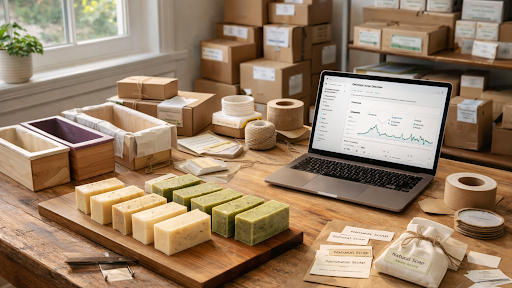
The soap industry has experienced significant growth in recent years, driven by changing consumer preferences and increased interest in natural personal care products. Many customers are actively seeking alternatives to mass-produced soaps, favoring products made with plant-based ingredients and simple formulations.
This shift has created an opportunity for entrepreneurs to enter the market with unique products and strong brand identities.
Several factors contribute to the popularity of starting a soap business:
- Growing demand for natural and clean personal care products
- Ability to start small with limited upfront investment
- Access to online platforms for direct-to-consumer sales
- Creative freedom in product design, scent, and branding
However, while the barrier to entry appears low, building a sustainable business requires more than creativity. Many entrepreneurs underestimate the complexity involved in compliance, production, and scaling.
Understanding these realities early can help avoid costly mistakes and position the business for long-term success.
Legal Considerations Before Selling Soap
One of the most common questions new entrepreneurs ask is whether they need formal approval before selling their products. The answer depends on several factors, including how the product is classified and where it is sold.
For those asking do you need a license to sell soap, the answer is not always straightforward. Requirements can vary based on location, product claims, and distribution methods.
Key legal considerations include:
Business Registration
- Registering your business name and structure
- Obtaining any required local business licenses
Product Classification
Soap can fall into different categories depending on how it is marketed:
- True soap typically regulated as a consumer product
- Cosmetics if claims relate to moisturizing or beautifying
- Drugs if claims involve treating or preventing conditions
Local and State Regulations
- Sales tax permits may be required
- Zoning laws may affect home-based businesses
- Health department regulations can apply in certain areas
Because requirements vary, it is important to research regulations specific to your location before launching.
Understanding Compliance and Labeling Requirements
Proper labeling is essential for both compliance and customer trust. Labels provide important information about the product and help ensure transparency.
Key elements of a compliant label often include:
- Product name
- Net weight
- Ingredient list in descending order
- Business name and contact information
For cosmetic products, additional requirements may apply, especially if claims are made about the product’s benefits.
Consistency and accuracy are critical. Mislabeling or unclear claims can lead to regulatory issues and damage customer confidence.
Entrepreneurs should also stay informed about industry guidelines. Resources like the U.S. Food and Drug Administration provide valuable information on cosmetic regulations and labeling standards.
Clear labeling not only supports compliance but also reinforces brand credibility.
Building a Strong Foundation for Your Soap Business
Launching a soap business successfully requires a structured approach. Taking the time to build a strong foundation can prevent challenges later on.
Here is a step-by-step framework:
1. Define Your Niche
Identify your target audience and product focus. This could include natural soap, luxury products, or specialty formulations.
2. Develop Your Formulations
Create products that are consistent, effective, and aligned with your brand values.
3. Establish Legal Compliance
Register your business and ensure all licensing and regulatory requirements are met.
4. Create Your Brand Identity
Develop a cohesive brand that reflects your values, including packaging and messaging.
5. Set Up Sales Channels
Decide where you will sell your products, such as online stores, marketplaces, or local retailers.
6. Test and Refine
Gather customer feedback and make improvements before scaling production.
Many entrepreneurs rush through these steps, focusing primarily on product creation. However, investing time in planning leads to a more stable and scalable business.
Scaling From Small Batch to Established Brand
As demand grows, many soap businesses reach a point where small-batch production is no longer sufficient. Scaling introduces new challenges that require careful planning.
Common scaling considerations include:
- Increasing production capacity
- Maintaining product consistency across larger batches
- Managing inventory and supply chains
- Meeting higher customer expectations
At this stage, entrepreneurs must decide whether to continue producing in-house or partner with a manufacturer.
Scaling successfully often involves:
- Standardizing production processes
- Building relationships with reliable suppliers
- Implementing quality control systems
- Planning for future growth
Transitioning from a small operation to a larger business requires a shift in mindset. It becomes less about making products and more about managing systems.
Entrepreneurs who plan for scalability early are better equipped to handle growth without compromising quality.
Conclusion
Starting a soap business offers an exciting opportunity for entrepreneurs to enter a growing market. With increasing demand for natural and thoughtfully made products, there is strong potential for success.
However, building a sustainable business requires more than creativity. It requires an understanding of legal requirements, compliance standards, and operational systems.
By addressing these factors early, entrepreneurs can avoid common pitfalls and create a strong foundation for growth.
As the business expands, maintaining consistency and adapting to new challenges becomes essential. Those who approach their business strategically are better positioned to scale successfully and build lasting customer relationships.
With the right preparation, a soap business can evolve from a small idea into a thriving brand.
Read more: Quality Bar of Soap in Solid Form
Read more: What Growing Businesses Need From a Product Supply Partner
Read more: Growing Your Business in Clinton? Skip the New Laptop Costs