What Happens After a Career-Ending High School Sports Injury
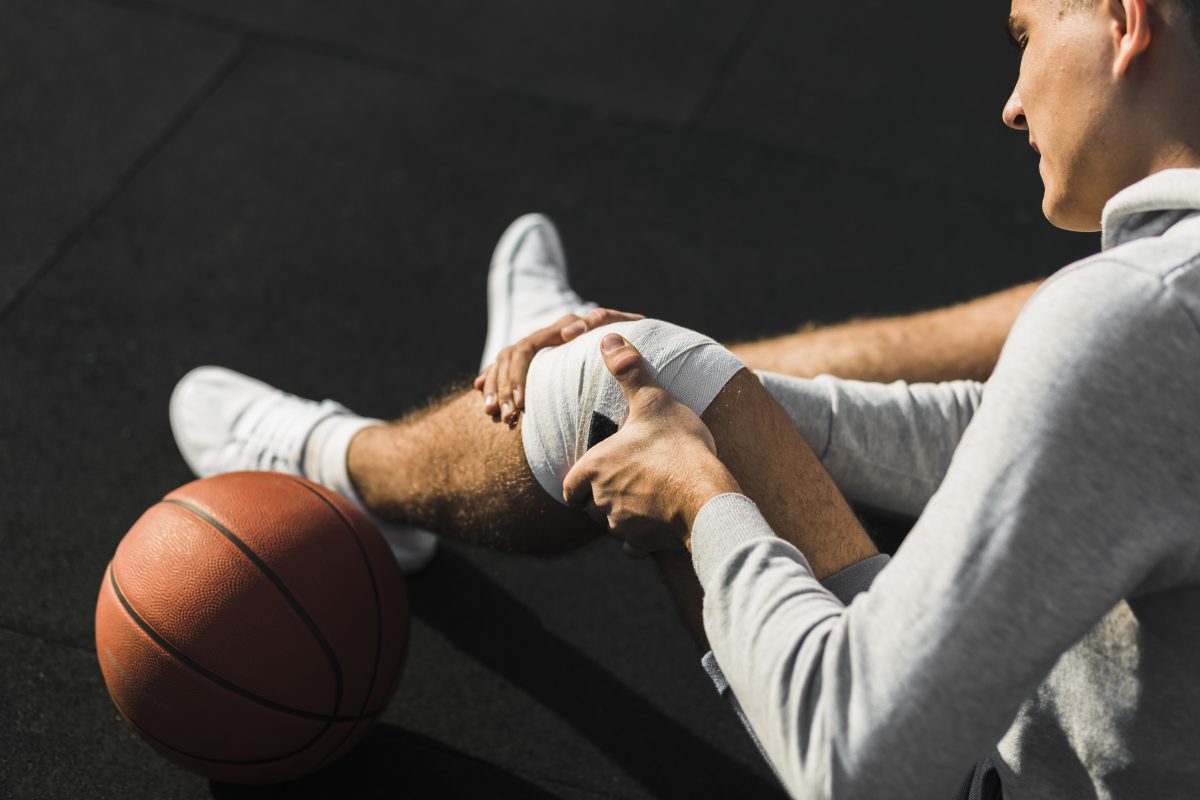
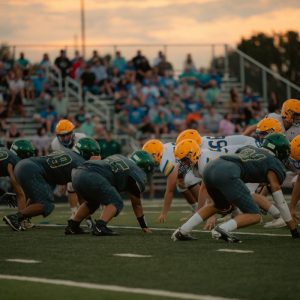
Every fall, Clinton fills its stadium, its pool deck, and its gym, and the district sells an All-Sports Pass that covers every home event for the year. Almost all of those seasons end with nothing worse than a rolled ankle. The exceptions are rare enough that people remember them by name. A knee that gives out in the second quarter. A shoulder that never comes back after surgery. A senior year that turns into a year of physical therapy.
Those injuries get talked about as sports stories, and for a while that is all they are. But a serious injury to a knee, a back, or a shoulder does not stop mattering when the season ends. It follows an athlete into their twenties and thirties, into whatever work they end up doing, and for someone whose body is the thing they work with, it can eventually become the reason they stop working altogether. Most of what happens in between is medical paperwork, and it starts in high school.
How Common Are Serious Injuries in High School Sports?
More students are playing than ever. The NFHS participation survey counted 8,266,244 participants in 2024-25, an all-time high and an increase of 203,942 over the year before, including a record 3,539,596 girls. Clinton runs a full slate of programs, from a football program hoping to end a three-year playoff drought to a swim team of forty-five athletes across three schools.
Injury surveillance puts the risk in proportion. The National High School Sports-Related Injury Surveillance Study, run through the Datalys Center, reported an overall rate of 2.41 injuries per 1,000 athlete-exposures in 2024-25, with competition at 4.93 against 1.38 in practice. Football competition ran to 13.56. Ankles were the most commonly injured body site at 20.2 percent, followed by the head and face at 17.5 percent and the knee at 14.8 percent.
Most of those injuries heal. The same report found that 5.6 percent of injuries required surgery, rising to 6.8 percent for injuries sustained in competition. That is a small share of a very large number, which is another way of saying it happens to somebody in almost every district, every year.
Why ACL Tears Are More Common in Girls’ High School Sports
Risk is not spread evenly. A meta-analysis in the American Journal of Sports Medicine pooled 700 ACL tears across 11,239,029 high school athletic exposures and found girls tore the ligament about 1.6 times as often per exposure as boys. Girls’ soccer carried the highest rate of any sport, with a per-season risk of 1.11 percent, followed by girls’ basketball at 0.88 percent. For boys, the highest season risk was football, at 0.80 percent.
Soccer has been studied most closely. Ten years of national surveillance published in the Orthopaedic Journal of Sports Medicine put the ACL injury rate at 13.23 per 100,000 athlete-exposures for girls and 4.35 for boys, a rate ratio of 3.04. Around four in five of those tears led to surgery in both sexes, and roughly half ended the athlete’s season or career outright.
What Concussion Return-to-Play Rules Require in Mississippi
Concussion is the other injury that reaches past the final whistle. It accounted for 14.2 percent of nationally estimated high school injuries in 2024-25 and 16.6 percent of those sustained in competition, second only to ankle sprains.
Mississippi handles it with a bright line. The MHSAA concussion policy requires that an athlete showing symptoms be removed immediately and held out for the remainder of that day no matter how quickly they appear to recover, and that a licensed physician clear them before any return. The return itself is staged. Symptoms have to resolve first, and the athlete has to get through a full supervised practice before competing again. The association puts the reasoning plainly: better to miss one game than the whole season.
How Long Does ACL Recovery Take Before Returning to Sport?
Reconstruction starts the recovery rather than finishing it. Rehabilitation runs for months of graded strength and neuromuscular work, and the calendar matters more than most families are told. A JOSPT prospective cohort followed athletes aged 15 to 30 back into knee-strenuous sport and found that those who returned before nine months after reconstruction had roughly seven times the rate of a second ACL injury as those who waited. Symmetrical quadriceps strength at the moment of return predicted nothing.
The longer view is sobering. A systematic review of 19 studies in the AJSM secondary injury analysis found a 23 percent second ACL injury rate among athletes younger than 25 who return to sport, most of it occurring early in the return-to-play period. That is close to one in four, against 15 percent across all ages.
Long-Term Effects of a Knee Injury After High School Sports
The knee is where the sports story turns into a working-life story. A systematic review in the British Journal of Sports Medicine pooled data on roughly a million people and found the odds of developing knee osteoarthritis were 4.2 times higher after an ACL injury than in an uninjured knee, 6.3 times higher after a meniscal injury, and 6.4 times higher when both structures were damaged. The average age at ACL injury in those studies was 28. The arthritis shows up much later.
That lag is the part people underestimate. A reconstructed knee can carry someone through college, through a decade of framing houses or driving a route or standing a shift, and then start failing in their forties. By then the injury is old news, and the medical file that documented it may be scattered across three states.
What Counts as Disability Under Social Security Rules?
Social Security does not ask whether a person is hurt. It asks whether a person can still work. The federal standard for qualifying for disability benefits is built around work capacity rather than around a diagnosis, and it has no partial category. A claim is either approved in full or denied.
Three conditions have to be met at once, according to the Social Security Administration: the person cannot perform substantial gainful activity, cannot do past work or adjust to other work, and the condition has lasted or is expected to last at least 12 consecutive months or to result in death. Substantial gainful activity is a dollar figure that changes annually. For 2026, the SSA earnings threshold is $1,690 a month for people who are not blind and $2,830 for those who are.
Claims move through a five-step sequence, in order, and a claim can end at any step:
- Is the person working above the substantial gainful activity level?
- Is the impairment severe enough to limit basic work activities for at least 12 months?
- Does it meet one of the agency’s listed impairments?
- Can the person still do work they did before?
- Can the person adjust to any other work in the national economy?
How an Old Sports Injury Limits the Work Someone Can Still Do
The fourth and fifth steps are where most claims are actually decided, and they turn on a measurement few people have heard of. The Bureau of Labor Statistics runs the Occupational Requirements Survey under an interagency agreement with Social Security, specifically so the agency has current data on what jobs physically require when it evaluates a claim.
That survey sorts work into strength categories. In its 2025 strength estimates, 30.3 percent of civilian jobs were sedentary and 33.7 percent light, while 29.1 percent were medium, 6.2 percent heavy and 0.7 percent very heavy. A former lineman whose rebuilt knee can no longer handle medium work has lost about a third of the economy on that measure alone. Whether the lighter categories are realistically open to him depends on his age, his education and whether his skills transfer, which is why two people with nearly identical MRIs can get opposite decisions.
Why High School Medical Records Matter Decades Later
Social Security decides these cases on objective medical evidence from acceptable medical sources, and SSA evidentiary requirements put the burden on the claimant to submit everything known to them that relates to whether they are disabled, detailed enough to show the nature, severity, and duration of the impairment. An operative report from 2004 counts. A surgery nobody can document does not.
Approval is not routine either. Of disabled-worker applications filed in 2023, 17.9 percent were awarded at the initial level according to SSA award data, with the total across all levels reaching 21.5 percent. Musculoskeletal and connective tissue conditions were the largest diagnostic group among the 7,231,147 disabled workers on the rolls in December 2024, at 34.1 percent, per SSA program statistics. Mississippi accounted for 103,671 of them, including 7,300 in Hinds County, in SSA’s Mississippi table.
Set that against how common the limitation is. The Mississippi State Department of Health, drawing on 2022 Behavioral Risk Factor Surveillance System responses, reported that 19.5 percent of Mississippi adults had serious difficulty walking or climbing stairs. Plenty of people are genuinely limited without meeting a standard that requires being unable to work at all.
What Parents Should Keep After a High School Sports Injury
None of this argues against playing. The rate per exposure is low, the case for participation is well documented, and Clinton’s Department of Therapeutic Recreation runs a Challenger League for athletes with disabilities precisely because sport is worth keeping available to people whose bodies work differently.
What the numbers argue for is memory. Keep the operative report and the imaging from a high school surgery. Write down the date and the mechanism while the details are fresh. Tell a new doctor about a knee that was rebuilt twenty years ago, even when the appointment is about something else. The folder a family keeps in a drawer is often what separates an old injury that can be proven from one that can only be described.
Read more: What Modern Athletes Are Doing Differently for Mental and Physical Recovery
Read more: When Injuries Create Unexpected Hardship: New Study Shows How Recovery Challenges Could Affect Clinton Families
Read more: CBD and Muscle Recovery: What Athletes Should Know