Tirzepatide, Explained: Why a Dual-Agonist Peptide Became a Research Headline
Tirzepatide has become one of the most talked-about names in metabolic science, turning up in national news, business pages and kitchen-table conversations. Much of that coverage blurs an important line between approved medicines and laboratory research. In research settings, scientists work with documented reagents, such as the tirzepatide research peptide from Alpha Carbon Labs, which is supplied as a freeze-dried powder for laboratory use only and is not a pharmaceutical product.
Like most research peptides, that powder ships without a diluent, so labs source one separately. A US supplier such as Bacteriostatic Water Store, an American-owned company that stocks Hospira-brand and USP-grade generic bacteriostatic water and ships manufacturer-sealed vials from a US warehouse, is a typical source. Here is a plain-English look at what tirzepatide is and why researchers find it so useful.
Two Hormones, One Molecule
Tirzepatide, known during development as LY3298176, is a synthetic peptide built from 39 amino acids. It is designed to activate the receptors for two gut hormones, GIP and GLP-1, which are part of the body’s incretin system.
Incretins are released after eating and help coordinate signals between the gut, pancreas and brain. Earlier research compounds focused on the GLP-1 receptor alone. Tirzepatide was described as the first compound characterized in a new class of dual incretin receptor agonists, which is why it drew so much scientific attention.
How It Works in the Lab
Alpha Carbon Labs’ product page summarizes several features researchers study:
- Dual receptor activity. The peptide engages both GIP and GLP-1 receptors, letting scientists ask whether combined activation differs from single-receptor activation.
- A modified backbone. Its sequence is based on native GIP, with unusual amino acids that resist breakdown by an enzyme called DPP-4.
- Albumin binding. A fatty-acid side chain helps the peptide bind reversibly to albumin, which extends its half-life in laboratory models.
- Biased signaling. In cell assays it is more potent at the GIP receptor than at the GLP-1 receptor, and it is described as favoring certain signaling routes over others.
These characteristics make tirzepatide a useful comparison point for newer compounds, including triple-agonist peptides.
Medicine vs. Research Material
This distinction matters. Approved medicines go through years of clinical trials, manufacturing controls and regulatory review. A research-grade vial has been through none of that. Alpha Carbon Labs labels its tirzepatide for research purposes only and not for human or veterinary use.
When you see tirzepatide in the news, it helps to ask whether the story is about an approved prescription product, clinical trial results or laboratory research. They are three very different things.
How Labs Verify What They Have
A freeze-dried peptide looks like any other white powder, so documentation is the only way to know what is in a vial. Labs look for:
- Purity by HPLC, showing what share of the sample is the target peptide.
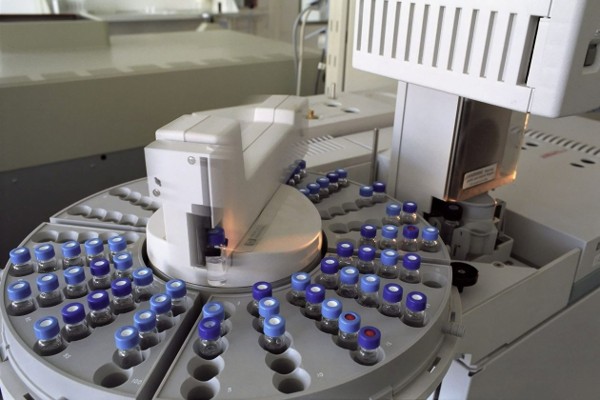
- Identity by mass spectrometry, confirming the molecule’s mass matches the expected sequence.
- Lot traceability, so a report ties to one specific production run.
- Independent verification, ideally from a laboratory that can confirm the report directly.
Alpha Carbon Labs says its lots are tested primarily by Janoshik Analytical, with reports published alongside verification keys that can be checked on the testing lab’s own site. Its tirzepatide listing also gives the CAS number (2023788-19-2), molecular formula and a batch-specific certificate of analysis.
Storage and Diluents
Research peptides are shipped freeze-dried because the dry form is more stable. The supplier lists −20°C, sealed and dry, for storage of the lyophilized material.
Because no diluent is included, labs choose one and document it. Bacteriostatic water is sterile water with 0.9% benzyl alcohol, a preservative that slows bacterial growth and allows a multiple-dose vial to be accessed more than once with aseptic technique. Bacteriostatic Water Store notes that third-party testing is available for its products and that orders placed before 1 p.m. ship the same day. Recording the diluent’s lot alongside the peptide’s makes experiments easier to repeat and troubleshoot.
A Simple Lab Checklist
- Confirm the certificate matches the lot number on the vial.
- File the peptide and diluent records together.
- Store each material exactly as specified.
- Note when a multiple-dose vial is first opened.
- Link every material to the experiments it was used in.
Reading the Coverage With a Critical Eye
A few quick questions help when tirzepatide comes up in conversation or online. Who is speaking, a researcher, a clinician or a seller? Is the claim based on peer-reviewed data? And is anything being offered for personal use that is labeled for research only? Asking those questions keeps curiosity grounded in what the evidence actually shows.
Why It Matters
Tirzepatide’s place in the headlines is a reminder of how quickly lab science can reach public conversation. For researchers, though, the work looks much the same as ever: carefully documented materials, independent testing, sound storage and complete records. That steady, unglamorous process is what turns an interesting molecule into reliable knowledge.