
Complaints heard at stormwater meeting
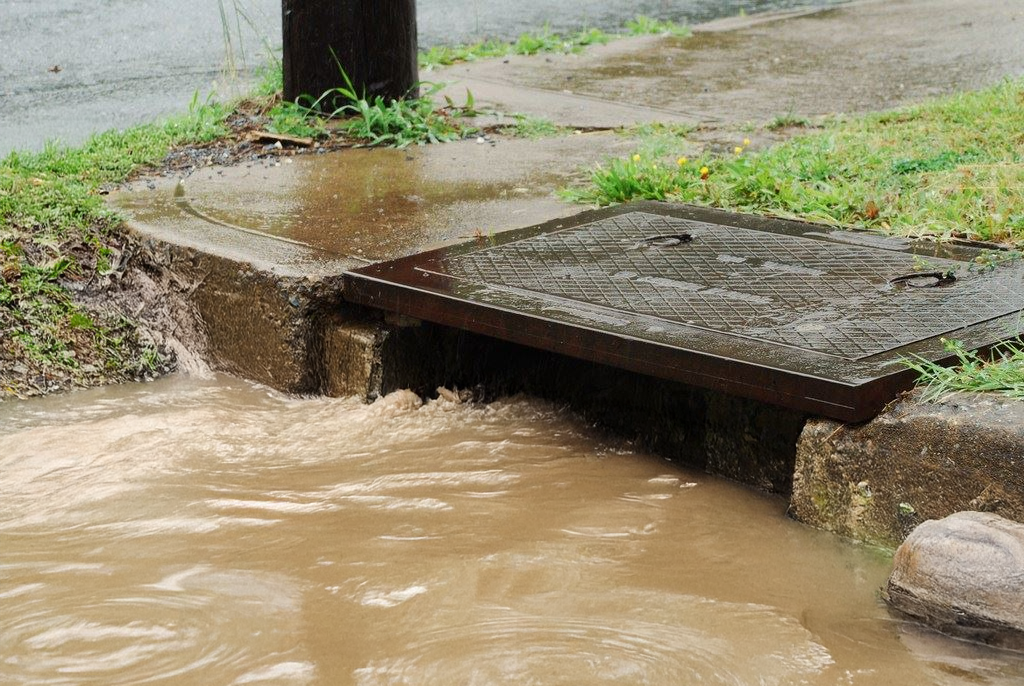
About two dozen Clintonians, many of them frustrated over long-standing stormwater and drainage issues in their neighborhoods, showed up for a City-sponsored public meeting intended to give them a chance to voice their concerns. But they left seemingly with few assurances that anything could be done to solve their problems.
Clinton’s Stormwater Management Program Administrator Stephanie Singleton and Public Works Director Phillip Lilley fielded questions from the audience during the ninety-minute session at the Clinton Visitor Center on January 23.
One woman’s appeal was shared by most of the other people at the meeting: “We just want some help,” she said. But Lilley pointed out that the City faces strict limitations which, for the most part, prohibit his employees from doing drainage work on private property.
“We can only go so far,” he said.
Several complaints focused on eroding yards and ditch banks, a lack of storm drains and retention ponds filled with silt.
Harold Winborne, who lives on Pinehaven Place, expressed concerns about stormwater from an adjoining subdivision which threatens to wash out his driveway. And he believes that, until his problem and other drainage issues across Clinton are brought under control, the city’s future growth will be in jeopardy.
“If word gets out that Clinton has water runoff issues,” Winborne said, “it might turn people away from investing in homes and businesses. If Clinton is going to grow like Madison, then these issues need to be addressed.”
“Any new development should take into account existing properties that may be affected by stormwater runoff,” said Winborne. “A retention pond should not drain into an existing pond or lake not designated or designed as a retention pond.”
Winborne also said any retention pond should be designed with the proper size and depth to handle storms producing heavy rainfall.
Consulting City Engineer Bill Owen told those at the meeting that funds aren’t readily available to help Clinton deal with its drainage issues.
“Quite honestly, there’s money out there in loans and grants through the state, through the Mississippi Department of Environmental Quality (MDEQ), through the Health Department for potable water systems and sanitary sewer systems, but there is, to my knowledge, no direct funding available for stormwater improvements.”
The City is working with the Army Corps of Engineers to study possible improvements to the major waterways which run through Clinton, but Owen said it won’t extend to the neighborhood level.
MDEQ requires the City to hold an annual stormwater meeting. Clinton’s first Stormwater Management Program (SWMP) was adopted in 2013.
Director of Community Development Roy Edwards said the City has submitted a new plan developed by its engineering consultants.
“Like any other program, it needs to be updated periodically,” he wrote in an email. “This program is used to manage the quality of stormwater discharge from the municipal separate storm sewer system. This program is required by the Environmental Protection Agency (EPA), and MDEQ issues the general permits for municipalities and counties. Each jurisdiction is required to have a SWMP.”
Edwards said MDEQ is currently reviewing Clinton’s plan.





I understand that Clinton is limited by what can be done on private property, I fail to understand why Communty Development does not enforce existing codes for retention pond construction/placement and drainage issues. To wit, the ragged hole in the ground behind the
KFC on Highway 80 that overflows into a clogged and poorly maintained drainage channel. All issues on private property that can and should be addressed by code enforcement.